Self-guided itinerary · free
Izmir and Ephesus in 2 days: a self-guided itinerary
Day one covers historic Izmir on foot: Kadifekale, the Agora, Kemeraltı, Konak, the Historic Elevator and a sunset walk on the Kordon. Day two moves to Selçuk for the ancient city of Ephesus, the Terrace Houses, the Ephesus Museum and Ayasuluk Hill, with an optional late-afternoon stop in Şirince. Opening hours, closing days and entry rules link to the official source with the date we last checked them.
Prepared by: Kolay Seyahat content teamLast updated 22/10/2026Every fact links to an official source

This is not a package tour. This itinerary is free information. Flights, hotels and experiences are each sold separately, under their own seller’s terms, with separate payment and a separate contract. Prices are never linked to one another.
Day by day
Progress is saved on this device only. Your location is never sent.
Day 1 · Izmir: from Kadifekale to the Kordon
A day that runs downhill from ancient Smyrna to the bay: Kadifekale and the Agora in the cool of the morning, the inns and narrow lanes of Kemeraltı at midday, Konak Square and the Historic Elevator in the afternoon, and a long sunset walk along the Kordon.
Day 1 · 1 · 09:00–09:45
Kadifekale (Mount Pagos)
Start the day at the highest historic point in the city. Known in antiquity as Mount Pagos, this is the hill the Agora below leans against, and the remains of its walls now stand in the middle of a busy residential neighbourhood. From the foot of the walls you take in the whole bay at once: the shoreline from Konak to Karşıyaka and the ships coming into the port. In the morning the sun lights the city from behind you, so this is the best hour for photographs; haze builds over the bay towards noon.
Getting there
- Walk · Kadifekale
Tips
The streets up the hill are steep and winding; take a taxi up and walk down towards the Agora to save both time and energy. Visiting hours could not be confirmed officially; check on site.
Day 1 · 2 · 10:00–11:00
Smyrna Agora Archaeological Site
Closed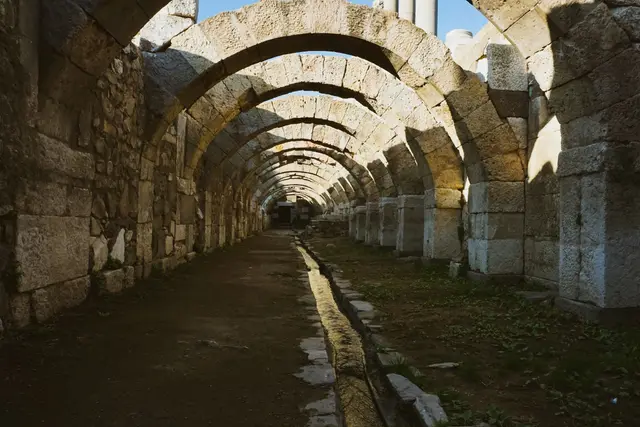
On the northern slope of Kadifekale, the Agora was the ancient city's state agora: a large central courtyard framed by colonnaded galleries. Most of what you see today belongs to the Roman rebuilding after the earthquake of AD 178. The real surprise is underground: in the vaulted basement of the basilica on the north wing you walk through cool corridors and see Roman-era graffiti and drawings scratched or inked onto the plastered walls. Look for the portrait relief of Faustina, wife of Emperor Marcus Aurelius, on the arch of the monumental gate on the west side.
Getting there
- Walk · Kadifekale → Agora
Opening hours
Open 08:30–17:30; the ticket office closes at 17:00.
Source: muze.gov.tr · last checked 2026-10-22
Closed
Open every day.
Source: muze.gov.tr · last checked 2026-10-22
Good to know
MüzeKart is valid for Turkish citizens.
Source: muze.gov.tr · last checked 2026-10-22
Tips
Light is low in the basement corridors; keep a phone torch handy, but do not hold it directly on the graffiti for long. Shade in the courtyard is limited, so finish before noon if you can.
Day 1 · 3 · 11:15–13:30
Kemeraltı Bazaar, Hisar Mosque and Kızlarağası Han
The lanes running down from the Agora deliver you straight into Kemeraltı. This is not a bazaar you tour like a museum but a working market: coppersmiths, nut sellers, fabric shops and coffee roasters trade side by side in the same street. Step into Hisar Mosque to see its painted interior, then sit in the two-storey courtyard of Kızlarağası Han a few steps away for a tea or a Turkish coffee brewed in hot sand. Havra Sokağı, the street where several old synagogues stand, is close by. Eat lunch in one of the bazaar's tradesmen's restaurants, and do not leave Izmir without trying boyoz, the local flaky pastry.
Getting there
- Walk · Agora → Kemeraltı
Tips
The side lanes look very alike, so use Hisar Mosque as your meeting point. Carry your bag in front of you in the crowds, and cover shoulders and knees when entering the mosque.
Day 1 · 4 · 13:45–14:30
Konak Square, the Clock Tower and Yalı Mosque
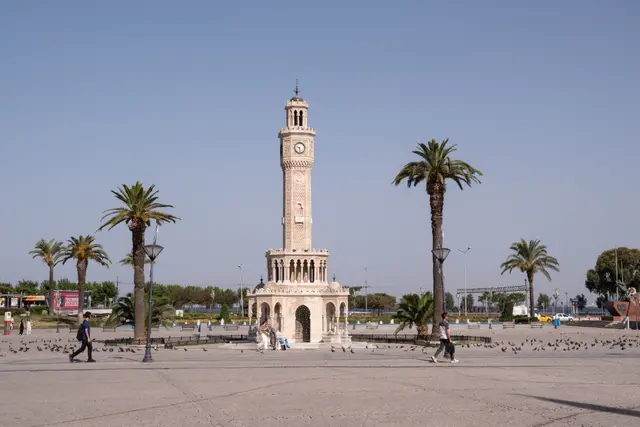
The seaward exit of the bazaar brings you out in front of the Clock Tower, the emblem of the city. The fountains around its base and its late-Ottoman ornament repay a few minutes of close looking. Right beside it, the small Yalı Mosque, its exterior covered in tiles, is the most photogenic corner of the square. Walk to the water's edge and look across the bay: Karşıyaka faces you, and to the right runs the Karataş shore you will walk this afternoon.
Getting there
- Walk · Kemeraltı → Konak Meydanı
Tips
The square is wide open and sunny at midday; keep the stop short and take a break in the shade before the next walk.
Day 1 · 5 · 15:00–16:15
The Historic Elevator and Dario Moreno Street
Walk south from Konak along Mithatpaşa Caddesi towards Karataş; it takes about half an hour and passes streets that still carry traces of the city's old Jewish quarter. The Historic Elevator is a brick tower built to link the street below with the neighbourhood on the hillside, and its terrace at the top gives one of the finest views over the bay. On the way back, take the stairs beside the elevator down into the street named after the singer Dario Moreno: colourful façades, small cafés and steep steps make this short stretch one of the highlights of the day.
Getting there
- Walk · Konak Meydanı → Asansör
Tips
If you would rather not walk, a short taxi ride from Konak to Karataş works too. The elevator's operating hours could not be confirmed from an official source; check on site or with the municipality before you go.
Day 1 · 6 · 17:15–19:15
Sunset on the Kordon: from Pasaport to Alsancak
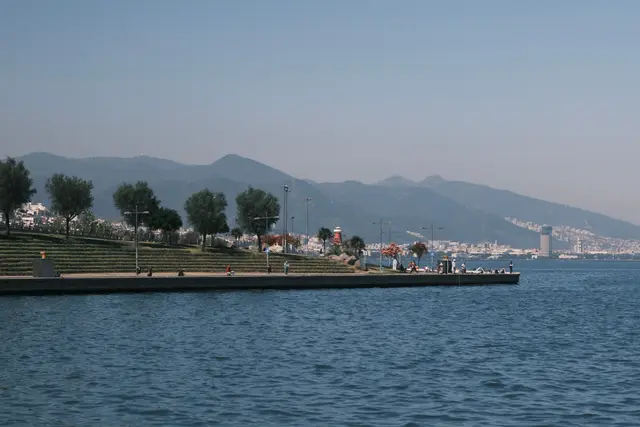
End the day the way Izmir likes to: with a walk on the Kordon. Once back at Konak, follow the shore north from the Pasaport pier towards Alsancak. As the sun drops over the west of the bay, families on the grass, cyclists and people fishing fill the waterfront. When you reach Gündoğdu Square, the side streets of Alsancak open up behind you; head in for dinner or stay a while longer by the water. Remember that tomorrow starts early.
Getting there
- Walk · Asansör → Alsancak
Tips
You can walk back from Karataş to Konak along the shore or take a short taxi ride. The evening breeze on the waterfront can be cool, so bring a light layer.


Day 2 · Ephesus, Selçuk and Ayasuluk
Get to Selçuk early and walk the ancient city downhill, from the upper gate to the lower one, seeing the mosaics of the Terrace Houses, the Library of Celsus and the Great Theatre before the midday heat. In the afternoon, the Ephesus Museum, the Basilica of St John and Ayasuluk Castle in Selçuk; if there is time, Şirince at dusk.
Day 2 · 1 · 08:45–10:15
Ephesus: the upper gate, State Agora and Curetes Street
Closed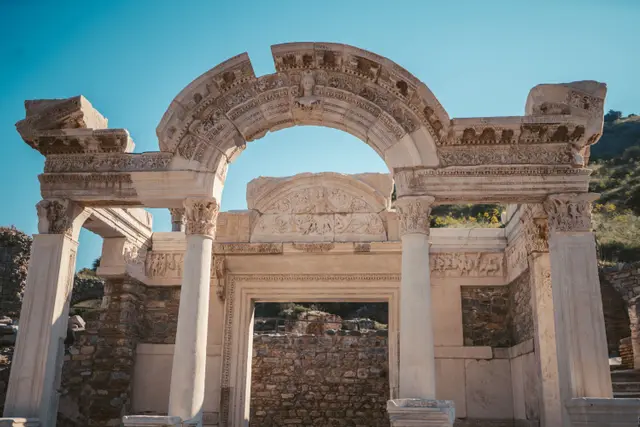
Come from Izmir to Selçuk by suburban train, regional train or road; set off early and you will be inside shortly after the gates open. From Selçuk it is a short taxi or minibus ride to the ancient city. Starting at the upper gate on the south side means walking the whole city downhill, which saves your energy for Celsus and the theatre. See the State Agora first, then the small Odeon where the city council met and performances were held, before heading down the marble-paved Curetes Street. The fountains, monuments and temple façades lining the street show, step by step, how grand this provincial capital of the Roman era was.
Getting there
- Train · İzmir → Selçuk
- Bus · Selçuk → Efes üst kapı
Getting there
Selçuk is on the İzmir–Aydın highway, 74 km south of İzmir; the ancient city of Ephesus is 3 km from present-day Selçuk.
Source: İzmir İl Kültür ve Turizm Müdürlüğü (izmir.ktb.gov.tr) · last checked 2026-10-22
Opening hours
Ephesus Archaeological Site open 08:00–18:00; the ticket office closes at 17:30.
Source: muze.gov.tr · last checked 2026-10-22
Closed
Open every day.
Source: muze.gov.tr · last checked 2026-10-22
Entrance fee
Non-Turkish citizens pay 40 euros to enter the ancient city of Ephesus; entry to the Ephesus Experience Museum is included in this price.
Source: muze.gov.tr · last checked 2026-10-22
Good to know
MüzeKart is valid for Turkish citizens. An audio guide service is available.
Source: muze.gov.tr · last checked 2026-10-22
Tips
There is very little shade in the ancient city and the marble reflects the sun; bring a hat, sunscreen and at least a litre of water per person. Worn marble is slippery, so wear closed shoes with good grip. In summer, being inside at opening time is the only way to beat both the crowds and the midday heat; allow at least three hours for the site.
Day 2 · 2 · 10:15–11:00
The Terrace Houses
Closed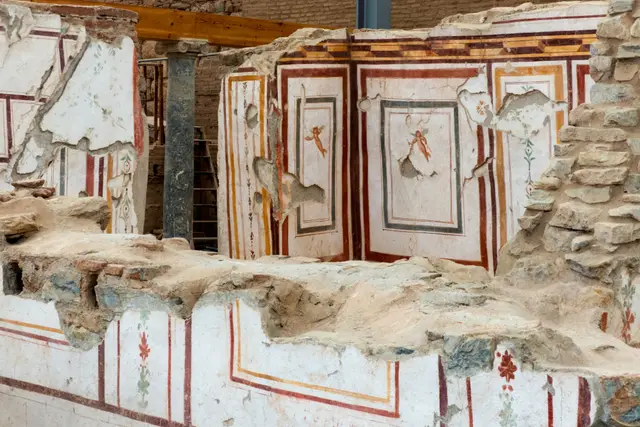
Halfway down Curetes Street, under a protective roof, are seven Roman houses where the city's wealthy families lived. Built in terraces on the slope of Mount Koressos, they are arranged around open colonnaded courtyards. Coloured floor mosaics, marble-clad walls and frescoes of mythological scenes show a domestic life you will not see anywhere else in the ruins. The houses even had fountains and underfloor heating. Walkways under the roof let you look down into the rooms.
Getting there
- Walk · Kuretler Caddesi → Yamaç Evler
Opening hours
Terrace Houses open 09:00–17:00; the ticket office closes at 16:30.
Source: muze.gov.tr · last checked 2026-10-22
Closed
Open every day.
Source: muze.gov.tr · last checked 2026-10-22
Good to know
Turkish citizens can buy a discounted ticket. An audio guide service is available.
Source: muze.gov.tr · last checked 2026-10-22
Tips
The Terrace Houses have their own entry control and visiting hours that differ from the rest of the site; see the official page for details. It is shaded under the roof but can feel stuffy, so do not rush.
Day 2 · 3 · 11:00–12:15
The Library of Celsus and the Great Theatre
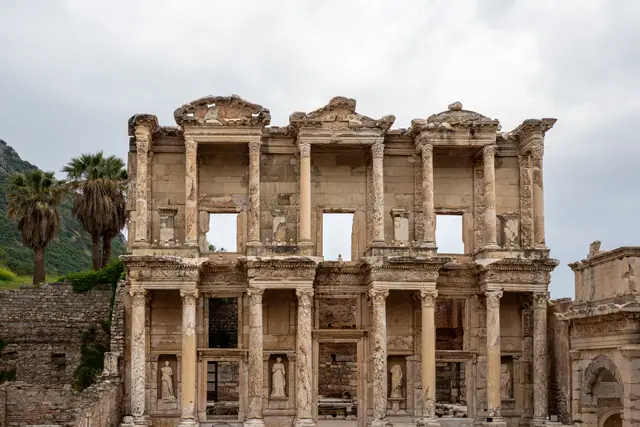
Where Curetes Street ends, the two-storey façade of the Library of Celsus, the best-known building in Ephesus, rises in front of you. Look at it from a little distance, from the last steps of the street, where the proportions of the columns and the statues in their niches read best. Right beside the library is the monumental gate into the commercial agora. Then walk north along Marble Street and climb into the Great Theatre, cut into the slope of Mount Panayır. From the upper rows, look down the Harbour Street that once ran to the sea and picture the city's link with the water. Opposite the theatre, the Ephesus Experience Museum rebuilds the city in digital form if you want to see it.
Getting there
- Walk · Yamaç Evler → Büyük Tiyatro
Opening hours
The Ephesus Experience Museum has the same visiting hours as the Ephesus Archaeological Site.
Source: muze.gov.tr · last checked 2026-10-22
Tips
The area in front of Celsus is where tour groups gather most by mid-morning; wait a few minutes for a gap before taking photos. Leave by the lower (north) gate and return to Selçuk by taxi or minibus.
Day 2 · 4 · 12:30–13:15
Central Selçuk and the Byzantine aqueduct
Back in Selçuk, have lunch in the town centre at a shaded table. The remains of a Byzantine aqueduct, standing near the railway station and along both sides of the main road, give the town's ordinary streets an unexpected historic backdrop; you may spot storks nesting on top of the arches. This short break is also a good chance to rest before the museum and the hill in the afternoon.
Getting there
- Walk · Selçuk merkezi
Tips
Refill your water here; the afternoon stops are within walking distance, but the climb to Ayasuluk is exposed to the sun.
Day 2 · 5 · 13:15–14:30
Ephesus Museum
ClosedThis is where the finds that once filled the buildings you saw in the ancient city are kept. The museum is organised by theme and find group: the Hall of Fountain Finds, the Hall of Terrace Houses Finds, ancient coins, finds from the Temple of Artemis and artefacts of the imperial cult. Seeing objects from the houses you walked through in the morning ties the two visits together. Do not miss the statues of Ephesian Artemis decorated with fertility symbols, the resting warrior found at the Pollio Fountain, and the marble portrait of Marcus Aurelius.
Getting there
- Walk · Selçuk merkezi → Efes Müzesi
Opening hours
Open 08:30–17:30; the ticket office closes at 17:00.
Source: muze.gov.tr · last checked 2026-10-22
Closed
Open every day.
Source: muze.gov.tr · last checked 2026-10-22
Good to know
MüzeKart is valid for Turkish citizens. An audio guide service is available.
Source: muze.gov.tr · last checked 2026-10-22
Tips
The museum is compact and cool inside, which makes it ideal for the hottest part of the day. An hour is usually enough.
Day 2 · 6 · 14:45–15:55
The Basilica of St John and Ayasuluk Castle
ClosedFrom the museum, a short but sunny climb leads up Ayasuluk Hill. The basilica on the southern slope was built over the tomb of John, one of the apostles of Jesus; what stands today belongs to the great church Emperor Justinian had built in the 6th century. Walk the marble-paved nave and see the area of the tomb and the baptistery. Then climb to the castle on the summit: from its partly restored walls and tower you see the Selçuk plain, the İsa Bey Mosque and the flat ground where the Artemision stood. Excavations have shown that one of the earliest settlements of Ephesus was on this hill.
Getting there
- Walk · Efes Müzesi → Ayasuluk Tepesi
Opening hours
Basilica of St John open 08:00–18:00; the ticket office closes at 17:30.
Source: muze.gov.tr · last checked 2026-10-22
Opening hours
Ayasuluk Archaeological Site open 09:00–16:30, ticket office closes at 16:00; Ayasuluk Castle can be visited between 09:00 and 16:00.
Source: muze.gov.tr · last checked 2026-10-22
Closed
Open every day. MüzeKart is valid for Turkish citizens.
Source: muze.gov.tr · last checked 2026-10-22
Entrance fee
The Ayasuluk Archaeological Site page lists the entrance fee as 130 TL.
Source: muze.gov.tr · last checked 2026-10-22
Tips
Access to the castle ends earlier than to the basilica, so put this stop early in the afternoon if you want to see the castle. There is little shade on the hill and the ground is stony.
Day 2 · 7 · 16:05–16:30
The Artemision (Temple of Artemis)
On your way down from the hill, stop at the site of the Temple of Artemis, counted among the seven wonders of the ancient world. All that remains today is a single re-erected column and scattered marble blocks in a marshy field, yet behind the column the outlines of Ayasuluk Castle and the İsa Bey Mosque gather the region's different eras into one view. With the Artemis statues from the museum in mind, this modest site means far more.
Getting there
- Walk · Ayasuluk Tepesi → Artemision
Tips
Visiting hours could not be confirmed from an official source. Late-afternoon light is the best time to photograph the column.
Day 2 · 8 · 17:00–18:45
Optional: Şirince village
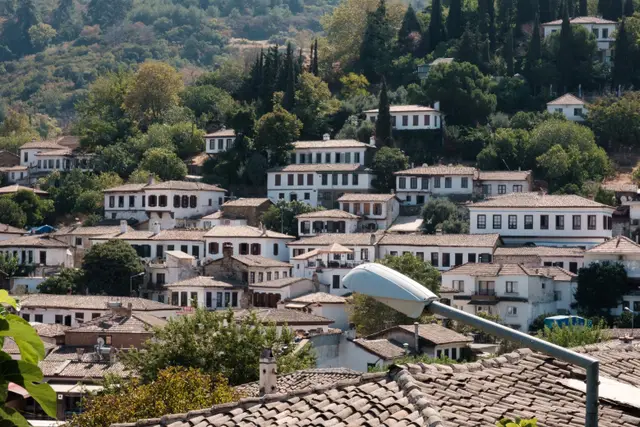
If you still have energy before heading back to Izmir, go up to Şirince, a village in the hills behind Selçuk that has kept its heritage. Stone houses spread across the slope, narrow cobbled lanes and views over olive groves and vineyards close a tiring day among the ruins with a calm evening. A short walk, a tea on the village square and a viewpoint before sunset are enough. Return to Izmir from Selçuk the same way you came, and check the last departures before you set off.
Getting there
- Bus · Selçuk → Şirince
Getting there
Şirince village is 8 km from Selçuk.
Source: İzmir İl Kültür ve Turizm Müdürlüğü (izmir.ktb.gov.tr) · last checked 2026-10-22
Tips
The village lanes are steep and can get busy in the late afternoon, so keep your comfortable shoes on. If you are returning to Izmir late, keep Şirince short.


Getting around
Getting there
Selçuk lies on the İzmir–Aydın highway, 74 km south of İzmir.
Source: İzmir İl Kültür ve Turizm Müdürlüğü (izmir.ktb.gov.tr) · last checked 2026-10-22
Photos: Pexels (Mehmet Turgut Kirkgoz, Bluemorphotos Experimental, Doğan Alpaslan Demir, Taryn Elliott, P Keller, Murat Halıcı, Esra Nurdoğan)
