Self-guided itinerary · free
Mardin in 2 days: the old city, Midyat and the monasteries
Mardin's old city is a hillside of golden stone buildings rising tier on tier above the Mesopotamian plain, and most of it is best seen on foot; day one is given entirely to it. Start at the Kasımiye Madrasa, which opens onto the plain, then climb to the Zinciriye Madrasa, the Mardin Museum and the Great Mosque to complete the historic core. In the afternoon walk the bazaar and First Street to the city museum, and end the day with a guided tour of the Deyrulzafaran Monastery east of town. Day two heads into Tur Abdin: the stone houses of Midyat, the city museum in an old han, the guest house terrace, then the Mor Gabriel Monastery, a living community for centuries. Most museums close on Mondays, so do not start on a Monday. Opening hours and rules link to the official source with the date we last checked them.
Prepared by: Kolay Seyahat content teamLast updated 22/10/2026Every fact links to an official source

This is not a package tour. This itinerary is free information. Flights, hotels and experiences are each sold separately, under their own seller’s terms, with separate payment and a separate contract. Prices are never linked to one another.
Day by day
Progress is saved on this device only. Your location is never sent.
Day 1 · Old Mardin: madrasas, museums and Deyrulzafaran
Start at Kasımiye above the plain, climb to Zinciriye, the Mardin Museum and the Great Mosque; walk the bazaar to the city museum in the afternoon and finish with a guided tour at Deyrulzafaran. Not on a Monday.
Day 1 · 1 · 08:45–09:45
Kasımiye Madrasa
Begin the day at this madrasa below the old city on the southern slope, while its courtyard is still quiet. Building began under the Artuqids and was completed under the Akkoyunlu; it is part of a complex with a mosque and a tomb. Its south front opens onto the plain, and looking out over the Mesopotamian flatlands from the courtyard explains at once why Mardin climbs this hillside. GoTürkiye notes symbols of astronomy and medicine on its walls; look for them as you walk slowly around the courtyard.
Opening hours
Winter 08:30–17:30, summer 08:30–19:00.
Source: Mardin İl Kültür ve Turizm Müdürlüğü · last checked 2026-10-22
Entrance fee
80 TL (no year given on the page; check at the entrance). Free for under-12s, over-65s, families of martyrs and veterans, and disabled citizens.
Source: Mardin İl Kültür ve Turizm Müdürlüğü · last checked 2026-10-22
Good to know
Begun in the Artuqid period, it was completed in 1457–1502 under the Akkoyunlu ruler Cihangiroğlu Kasım Padişah; it forms a complex with a mosque and a tomb.
Source: Mardin İl Kültür ve Turizm Müdürlüğü · last checked 2026-10-22
Tips
The madrasa sits below the old city; arriving by taxi and then heading up to Zinciriye makes the walking easier.
Day 1 · 2 · 10:00–10:45
Zinciriye (Sultan İsa) Madrasa
High in the old city and known for its domes and tall portal, this madrasa was built by the last Artuqid ruler of Mardin. The view from its courtyards and terraces over the plain is one of the city's most familiar sights; with Mardin Castle closed to visitors, this is one of the best places to look down from above. The Mardin Museum's collection was once shown here; you will see its new home at the next stop.
Getting there
- Walk
Opening hours
Winter 08:30–17:00, summer 08:30–18:30.
Source: Mardin İl Kültür ve Turizm Müdürlüğü · last checked 2026-10-22
Entrance fee
100 TL (no year given on the page; check at the entrance).
Source: Mardin İl Kültür ve Turizm Müdürlüğü · last checked 2026-10-22
Good to know
The madrasa was built in 1385 by Melik Necmettin İsa, the last Artuqid ruler of Mardin.
Source: Mardin İl Kültür ve Turizm Müdürlüğü · last checked 2026-10-22
Tips
The steps up to the terraces are steep and unrailed in places; take care with children. Morning light shows the plain most clearly for photos.
Day 1 · 3 · 11:00–12:15
Mardin Museum
ClosedThe museum on Cumhuriyet Square gathers the thousands of years of Mardin and Upper Mesopotamia under one roof; according to GoTürkiye it holds more than 45,000 objects. The building itself is worth the visit: built at the end of the 19th century as a Syriac Catholic patriarchate, its stone façade is among the most elegant in the old city. An hour here before exploring gives context to the inscriptions, arches and churches you will meet in the streets.
Getting there
- Walk
Opening hours
Summer season (1 April–1 October 2026) 08:30–17:30, ticket office closes 17:10. Check muze.gov.tr for winter hours.
Source: DÖSİMM · last checked 2026-10-22
Closed
Closed on Mondays.
Source: Mardin İl Kültür ve Turizm Müdürlüğü · last checked 2026-10-22
Entrance fee
The Müzekart museum pass is valid.
Source: Mardin İl Kültür ve Turizm Müdürlüğü · last checked 2026-10-22
Good to know
The building was put up in 1895 as the Syriac Catholic Patriarchate and opened as the Mardin Museum in 2000, when the collection moved here from the Zinciriye Madrasa.
Source: Mardin İl Kültür ve Turizm Müdürlüğü · last checked 2026-10-22
Tips
Closed on Mondays. Winter hours have not been published, so check muze.gov.tr before you go.
Day 1 · 4 · 12:30–13:00
The Great Mosque (Ulu Cami)
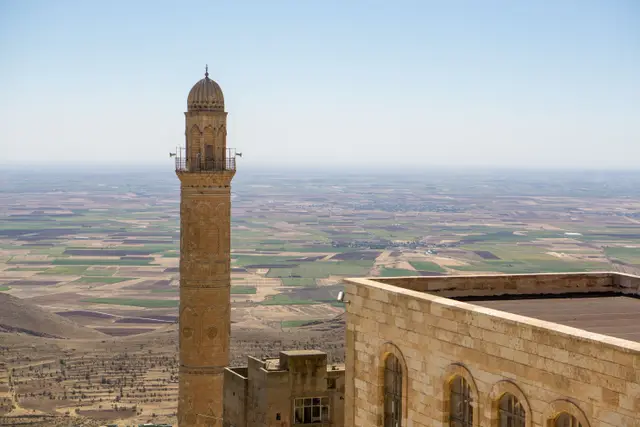
Easy to spot in the old city's skyline by its single minaret, the Great Mosque was built under the Artuqid dynasty and, with its wide courtyard, is one of Mardin's best-known buildings. It sits right next to the bazaar, so a short visit before lunch is enough. From the courtyard you can frame the minaret's stonework and the surrounding rooftops in one view.
Getting there
- Walk
Good to know
Built in the 12th century under the Artuqid dynasty, it stands out for its single minaret and wide courtyard.
Source: Mardin İl Kültür ve Turizm Müdürlüğü · last checked 2026-10-22
Tips
It is a working mosque; avoid prayer times. Carrying a scarf to cover up is a good idea.
Day 1 · 5 · 13:00–14:30
The bazaar and First Street: lunch
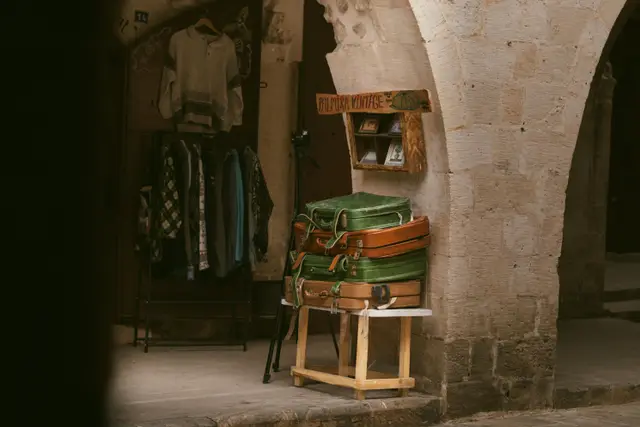
First Street is the old city's main artery, its arched stone shops selling soap, spices, sugared almonds and silverwork. Have lunch around here; stuffed ribs or stuffed bulgur dumplings are the easiest introduction to the Mardin table. After lunch, slip into the side lanes: the coppersmiths' and silversmiths' benches are still busy, and crafts here are part of daily life rather than museum pieces.
Getting there
- Walk
Good to know
According to Türkiye's official tourism portal, filigree, coppersmithing and traditional tattooing remain part of daily life in Mardin, and more than 200 kinds of soap are made from local plants.
Source: GoTürkiye · last checked 2026-10-22
Tips
Soap and sugared almonds are light and travel well. When buying silver, watching the work at the craftsman's bench makes choosing easier.
Day 1 · 6 · 14:30–15:30
Sakıp Sabancı Mardin City Museum
ClosedReached on foot along First Street to the east, this museum tells of Mardin's daily life, crafts and civic memory. The building went up at the end of the 19th century as a cavalry barracks and later served as a gendarmerie and a tax office; you read that layered past in its stone corridors too. The art gallery on the lower floor brings a contemporary note to the old city with changing exhibitions.
Getting there
- Walk
Opening hours
09:00–17:00, except Mondays.
Source: Mardin İl Kültür ve Turizm Müdürlüğü · last checked 2026-10-22
Closed
Closed on Mondays.
Source: Mardin İl Kültür ve Turizm Müdürlüğü · last checked 2026-10-22
Entrance fee
Adults 125 TL, students 65 TL (no year given on the page; check at the entrance).
Source: Mardin İl Kültür ve Turizm Müdürlüğü · last checked 2026-10-22
Good to know
The building was put up in 1889 as a cavalry barracks to designs by Sarkis Elyas Lole; it later housed the gendarmerie and, from 1991 to 2003, a tax office.
Source: Mardin İl Kültür ve Turizm Müdürlüğü · last checked 2026-10-22
Tips
Closed on Mondays. The museum's old web address no longer carries official information; use only the provincial culture and tourism directorate page for current details.
Day 1 · 7 · 15:45–17:00
Deyrulzafaran Monastery
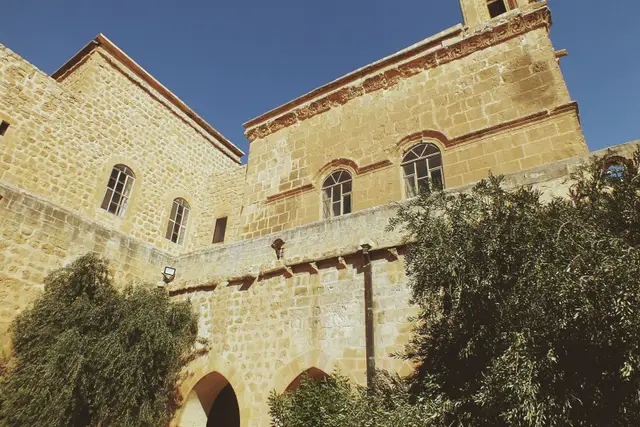
The day's last stop is a living monastery on a hill east of the city, looking over the plain. The site served first as a sun temple and then as a Roman fortress, and takes its name from the saffron that grew around it. It holds the tombs of Syriac patriarchs and is today one of the main centres of the Syriac Orthodox Church. Visits are only with the monastery's own guides; according to GoTürkiye, Aramaic is still used in the liturgy. Its late-afternoon view over the plain gives the day a fitting close.
Getting there
There is no public transport to the monastery, about 4 km east of Mardin. Toilets, a café and souvenir shops are at the entrance.
Source: Mardin İl Kültür ve Turizm Müdürlüğü · last checked 2026-10-22
Opening hours
Open every day, with hourly tours led by the monastery's guides; the provincial directorate page gives 09:00–17:00. Call the monastery for the first tour time: +90 482 208 10 61.
Source: Mardin İl Kültür ve Turizm Müdürlüğü · last checked 2026-10-22
Entrance fee
The Müzekart museum pass is not valid.
Source: Mardin İl Kültür ve Turizm Müdürlüğü · last checked 2026-10-22
Good to know
The monastery took the name Deyrulzafaran in the 15th century from the saffron (zafaran) growing around it; it holds the tombs of 52 Syriac patriarchs and is the residence of the Metropolitan of Mardin.
Source: Mardin İl Kültür ve Turizm Müdürlüğü · last checked 2026-10-22
Tips
The monastery's old website is not reliable; use only official sources and the monastery's phone. It is a living place of worship, so keep your voice down and ask the guide before taking photos. Agree in advance whether your taxi will wait for the return.


Day 2 · Midyat and Mor Gabriel
Drive to Midyat in the morning for the city museum in an old han, the guest house terrace, stone houses and filigree workshops. In the afternoon visit the Mor Gabriel Monastery south-east of Midyat with its guide, then return to Mardin.
Day 2 · 1 · 10:00–11:00
Midyat Estel Han City Museum
Your first stop in Midyat is the city museum inside a historic han. The three-storey building around a single courtyard tells of Midyat's daily life and crafts in its own setting, and its basement is cut into the rock. With no inscription its date is unknown; the municipality restored it faithfully. The context you pick up here makes the streets of old Midyat easier to read later.
Opening hours
Every day 08:00–17:00.
Source: Mardin İl Kültür ve Turizm Müdürlüğü · last checked 2026-10-22
Good to know
A three-storey U-plan han around a single courtyard, with a basement cut into the rock. Midyat Municipality restored it faithfully in 2021; it stands in the Ulu Camii neighbourhood.
Source: Mardin İl Kültür ve Turizm Müdürlüğü · last checked 2026-10-22
Tips
The Mardin–Midyat drive takes about 1.5 hours, so leave early. If you would rather stay near Mardin, an alternative is the ancient city of Dara south-east of town (closed on Mondays), with lunch back in the old city.
Day 2 · 2 · 11:15–12:00
Midyat Guest House
Closed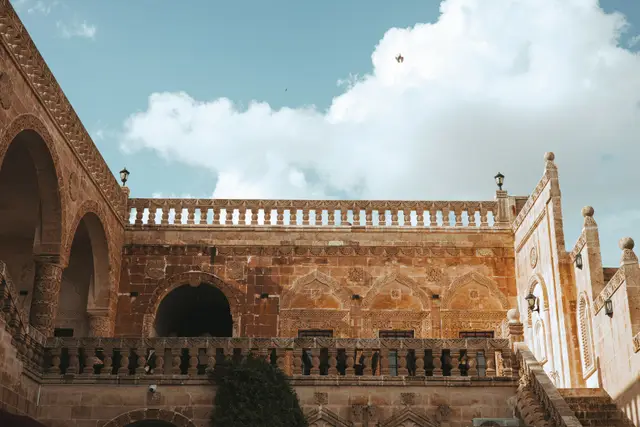
This guest house is the easiest way to see Midyat mansion architecture from the inside. The bottom of its three floors is carved from the bedrock, with rooms set around the courtyard. The real reward is the roof, from which most of Midyat, its church towers and stone rooftops, opens up at a glance. It is known as a location for television series, so it may look familiar.
Getting there
- Walk
Closed
Open every day; two official pages give different closing times, so check at the entrance.
Source: Mardin İl Kültür ve Turizm Müdürlüğü · last checked 2026-10-22
Good to know
It has three floors, the lowest carved from the bedrock; it was bought by the Midyat district governorship, and most of Midyat can be seen from its roof.
Source: Mardin İl Kültür ve Turizm Müdürlüğü · last checked 2026-10-22
Tips
There is no shade on the roof; bring a hat and water in the midday sun.
Day 2 · 3 · 12:00–13:30
Midyat's lanes, filigree workshops and lunch
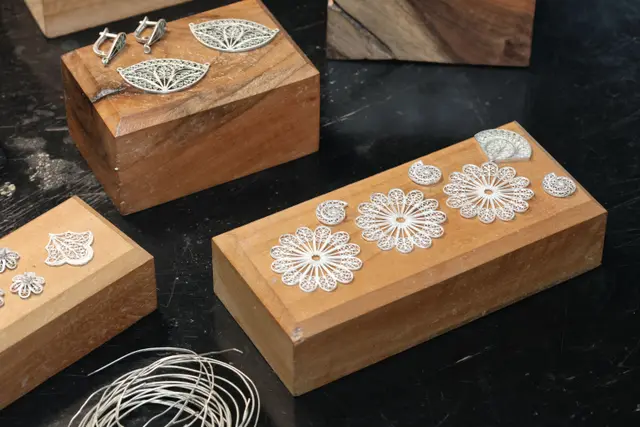
With stone houses, mansions and arched passages like Mardin's, and church bell towers rising like minarets, Midyat recalls a medieval town. Walk down through the lanes to the bazaar: Midyat is famous for silverwork, and a few filigree masters still work here. Filigree is the craft of twisting and weaving fine silver wire into jewellery, and watching a master at the bench shows how much patience it takes. Have lunch around the bazaar.
Getting there
- Walk
Good to know
With its stone mansions, arched passages and church bell towers rising like minarets, Midyat recalls a medieval town; it is famous for silverwork, and a few filigree masters still work in the bazaar.
Source: Mardin İl Kültür ve Turizm Müdürlüğü · last checked 2026-10-22
Tips
When buying filigree, ask the craftsman how weight and workmanship affect the price, and take your time deciding.
Day 2 · 4 · 14:00–15:30
Mor Gabriel Monastery
Closed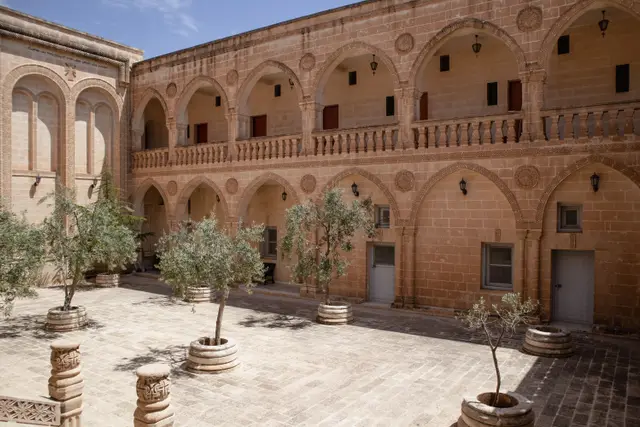
On an oak-covered hill south-east of Midyat, Mor Gabriel is a monastery founded at the end of the 4th century and lived in ever since; GoTürkiye describes it as the oldest surviving Syriac Orthodox monastery in the world. Visits are with its own guides; a quiet walk through the courtyards, church and gardens is the most respectful way to understand Tur Abdin's spiritual heart. The monks tend the gardens and the monastery still lives as a community today.
Opening hours
Check the official site for current information
Source: Mardin İl Kültür ve Turizm Müdürlüğü · last checked 2026-10-22
Closed
Open every day except on religious holidays; visits are with the monastery's guides.
Source: Mardin İl Kültür ve Turizm Müdürlüğü · last checked 2026-10-22
Good to know
It lies 23 km south-east of Midyat; it was founded in 397 by Mor Shmuel and Mor Shemun and is named after Mor Gabriel, Metropolitan of Tur Abdin (634–668).
Source: Mardin İl Kültür ve Turizm Müdürlüğü · last checked 2026-10-22
Tips
The visiting hours on the official page are unclear and there may be a midday break; call the monastery before you go: +90 482 213 75 13. It is closed on religious holidays. Wear clothes that cover shoulders and knees.


Getting around
Getting there
Mardin Prof. Dr. Aziz Sancar Airport is 13 km from the city centre; it is served by city buses, the Havaş shuttle, licensed taxis, car rental and private cars. Check Mardin Metropolitan Municipality for current bus lines.
Source: DHMİ · last checked 2026-10-22
Getting there
Midyat is about 1.5 hours from Mardin; plan a car or taxi for day two.
Source: Mardin İl Kültür ve Turizm Müdürlüğü · last checked 2026-10-22
Good to know
Mardin Castle is closed to visitors because it is used as a military radar station.
Source: Mardin İl Kültür ve Turizm Müdürlüğü · last checked 2026-10-22
What and where to eat
What to eat and where to look
Breakfast and stuffed ribs (kaburga dolması)
The narrow lanes around First Street and the bazaar in the old city
Source: GoTürkiye · last checked 2026-10-22
Trout
Beyazsu Valley (on the way to Midyat on day two)
Source: GoTürkiye · last checked 2026-10-22
Local wine tasting
Midyat bazaar
Source: GoTürkiye · last checked 2026-10-22
Saffron tea
The Deyrulzafaran Monastery garden, after the tour
Source: GoTürkiye · last checked 2026-10-22
Local specialities
Stuffed ribs (kaburga dolması)
Lamb ribs stuffed with rice and almonds and slow-cooked; seen as a symbol of the local kitchen.
Source: TÜRKPATENT Coğrafi İşaret · Geographical indication (reg. no 123) · last checked 2026-10-22
Sembusek
Also known as a "closed lahmacun": a baked pastry folded around a minced-meat filling.
Source: TÜRKPATENT Coğrafi İşaret · Geographical indication (reg. no 120) · last checked 2026-10-22
İkbebet
A boiled stuffed bulgur dumpling; with the fried irok, one of the city's signature local dishes.
Source: TÜRKPATENT Coğrafi İşaret · Geographical indication (reg. no 121) · last checked 2026-10-22
İmlebbes (sugared almonds)
Almonds roasted with sugar and plants and made in colours such as blue and brown.
Source: TÜRKPATENT Coğrafi İşaret · Geographical indication (reg. no 124) · last checked 2026-10-22
Kiliçe
A Mardin pastry registered with a geographical indication.
Source: TÜRKPATENT Coğrafi İşaret · Geographical indication (reg. no 776) · last checked 2026-10-22
Mardin kebab
The kebab registered under the city's name; ask for the local way of making it.
Source: TÜRKPATENT Coğrafi İşaret · Geographical indication (reg. no 1538) · last checked 2026-10-22
Harire
A traditional dessert made with fresh grape juice.
Source: TÜRKPATENT Coğrafi İşaret · Geographical indication (reg. no 1543) · last checked 2026-10-22
Mırra coffee
A very bitter, strong coffee drunk from tiny cups.
Source: GoTürkiye · Official tourism source · last checked 2026-10-22
Opening hours and prices vary by venue; check the venue’s own site before you go. Recommendations are not paid placements.
Where to stay
Candidates were picked by distance to the area, star rating, guest rating (weighted by number of reviews) and completeness of hotel details. Ratings, review counts and details come live from our catalogue. Tiers follow the star rating.
Sample dates: 26.11–27.11 (1 night), 2 adults. Prices change with dates; choose your own dates on the hotel page.
Old Mardin (around First Street and the bazaar)
Most day-one stops, from Zinciriye to the Mardin Museum and from the Great Mosque to the bazaar and city museum, are within walking distance, and you stay among stone mansions with a view of the plain. Lanes are narrow, steep and stepped, so reaching the door by car and carrying luggage can be hard.
Good for: First-time visitors, couples who like to explore on foot and international travellers
Budget


Yenişehir (Artuklu's newer district)
The newer district served from the airport by city buses, minibuses and the Havaş shuttle; setting off by car for the Midyat and monastery day is easier from here.
Good for: Families travelling by car, guests with accessibility needs and business travellers


Midyat
A night here makes day two easier and keeps you close to Mor Gabriel, with Tur Abdin's quiet evening hours to yourself.
Good for: Travellers continuing for a third day and anyone after a quiet evening


Photos: Pexels (Osman Karagöz, Onur Burak Akın, Ferat Söylemez, Zülfü Demir📸, Muhammed Mahsum Tunç, Tahir Xəlfəquliyev)
