Self-guided itinerary · free
Şanlıurfa in 2 days: Göbeklitepe, the museums and Balıklıgöl
Two days in Şanlıurfa run from some of the oldest pages of human history to today's bazaars. Day one is given to prehistory: in the morning you walk among the giant T-shaped pillars of Göbeklitepe east of the city, in the afternoon you see its finds in the Şanlıurfa Museum and Roman mosaics in neighbouring Haleplibahçe, and in the evening you drink mırra coffee in the courtyard of Gümrük Han. Day two is on foot in the historic centre: Balıklıgöl with its sacred fish, the cave at Mevlid-i Halil and the castle that shapes the skyline. The beehive houses of Harran are an afternoon option; the archaeological site is currently closed after the earthquake, so check before you go. Hours link to the official source with the date we last checked them.
Prepared by: Kolay Seyahat content teamLast updated 22/10/2026Every fact links to an official source

This is not a package tour. This itinerary is free information. Flights, hotels and experiences are each sold separately, under their own seller’s terms, with separate payment and a separate contract. Prices are never linked to one another.
Day by day
Progress is saved on this device only. Your location is never sent.
Day 1 · Göbeklitepe and the museums
Head out to Göbeklitepe by municipal bus or car in the morning, see its finds at the Şanlıurfa Museum in the afternoon, continue to the Haleplibahçe mosaics and end the evening with mırra at Gümrük Han.
Day 1 · 1 · 09:45–12:00
Göbeklitepe
Closed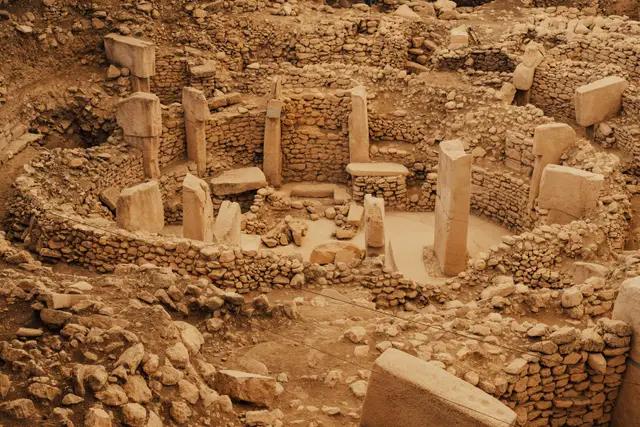
On a hill east of the city, giant T-shaped pillars rise from the ground, a find that has made us rethink what we knew about the human move to settled life. Some of the stones carry animal reliefs; looking at them closely in the early morning, while the site is still quiet, is the most powerful moment of the visit. Think of Göbeklitepe not as a museum but as a place where people gathered thousands of years ago: the finds you see in the museum this afternoon will give meaning to the layout you see here.
Getting there
It lies 17 km east of the city centre. Municipal buses leave from in front of the Şanlıurfa Museum and from Abide; check current times via ALO 153 or "Nasıl Giderim".
Source: Şanlıurfa Büyükşehir Belediyesi · last checked 2026-10-22
Opening hours
08:30–17:30, ticket office closes 17:00. Hours may change by season; check the official site before you go.
Source: muze.gov.tr · last checked 2026-10-22
Closed
Open every day.
Source: muze.gov.tr · last checked 2026-10-22
Entrance fee
The Müzekart is valid for Turkish citizens.
Source: muze.gov.tr · last checked 2026-10-22
Good to know
Göbeklitepe was added to the UNESCO World Heritage List in 2018.
Source: muze.gov.tr · last checked 2026-10-22
Tips
An audio guide is available. The site is exposed with little shade, so bring a hat and water. Check the return bus time before you go.
Day 1 · 2 · 13:30–15:30
Şanlıurfa Museum
ClosedAfter lunch, come here to complete the context of the morning's site. Göbeklitepe's finds are displayed in this museum, which GoTürkiye says holds the world's largest Neolithic collection. Large halls and animation areas tell the story step by step, from hunter-gatherers to the first settlements. What you saw as stone this morning you see a second time here, now with its story.
Opening hours
08:30–17:30, ticket office closes 17:00.
Source: muze.gov.tr · last checked 2026-10-22
Closed
Open every day.
Source: muze.gov.tr · last checked 2026-10-22
Entrance fee
The Müzekart is valid for Turkish citizens.
Source: muze.gov.tr · last checked 2026-10-22
Good to know
The museum has 14 main exhibition halls and 33 animation areas, and Göbeklitepe's finds are displayed here. Address: Haleplibahçe neighbourhood.
Source: muze.gov.tr · last checked 2026-10-22
Tips
The museum is large, so allow two hours. The official page urges visitors not to leave without seeing the Haleplibahçe Mosaic Museum in the same neighbourhood.
Day 1 · 3 · 15:30–16:45
Haleplibahçe Mosaic Museum
ClosedA few hundred metres from the Neolithic, you step into the city's Roman-era wealth. The building known as the "Villa of the Amazons", after the amazon scenes found in the excavation, has floors covered in mosaics of hunting amazons and of Ktisis. In a single day you leap across thousands of years: in the morning giant stone pillars, in the late afternoon the colourful floors of a Roman villa.
Getting there
- Walk
Opening hours
Check the official site for current information
Source: muze.gov.tr · last checked 2026-10-22
Closed
Open every day.
Source: muze.gov.tr · last checked 2026-10-22
Entrance fee
The Müzekart is valid for Turkish citizens.
Source: muze.gov.tr · last checked 2026-10-22
Good to know
The villa is called the "Villa of the Amazons" after the amazon scenes found in the excavation; the room opposite the entrance has the "Hunting Amazons" floor mosaic, and there is also a mosaic of Ktisis.
Source: muze.gov.tr · last checked 2026-10-22
Tips
The closing and ticket-office times on the official page do not match; arrive before 17:00 and check at the entrance. An audio guide is available.
Day 1 · 4 · 18:00–20:00
Gümrük Han and the bazaars: a mırra break
End the day in the courtyard of a historic han. GoTürkiye names Gümrük Han as a place to drink mırra, a bitter, dark coffee served a little at a time in small handleless cups. In the Kazaz bazaar north of the han and the nearby Sipahi and Hüseyniye bazaars there are workshops in traditional crafts, and the coppersmiths' hammering carries on into the evening. For dinner, walk to the restaurants around Haşimiye Square or join a sıra gecesi evening in an old mansion.
Good to know
Traditional crafts can be seen in the Kazaz bazaar north of Gümrük Han, and the Sipahi and Hüseyniye bazaars have workshops in various crafts.
Source: GoTürkiye · last checked 2026-10-22
Tips
When you are served mırra, do not set the cup down; hand it back to the host as a sign of respect.

Day 2 · The historic centre and Harran
Walk to Balıklıgöl, the cave at Mevlid-i Halil and the foot of the castle in the morning, then lunch around Haşimiye Square. Afternoon option: the beehive houses of Harran; the archaeological site is currently closed, so check its status.
Day 2 · 1 · 08:30–10:00
Balıklıgöl
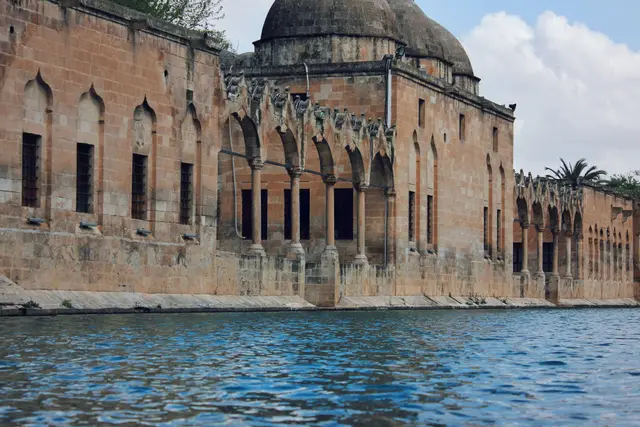
The city's heart, where legend and daily life overlap. According to belief, the fire into which Abraham was thrown turned to water and the logs to fish, which is why the fish in the lake are considered sacred, respected and never eaten. Of the two lakes in the centre, Halil-ür Rahman has the mosque complex of the same name at its south-west corner, with the Ayn-ı Zeliha lake beside it. Walking the shore early, before the crowds, and watching the fish crowd at the surface is the calmest start to the day.
Getting there
- Walk
Good to know
There are two lakes in the city centre, Halil-ür Rahman and Ayn-ı Zeliha. The fish are considered sacred and are not eaten; visitor numbers are highest on Mevlit and Kandil nights.
Source: Şanlıurfa Büyükşehir Belediyesi · last checked 2026-10-22
Tips
Visitor numbers peak on Mevlit and Kandil nights. Be respectful in places of worship and mind prayer times.
Day 2 · 2 · 10:00–10:45
Mevlid-i Halil Mosque and the cave
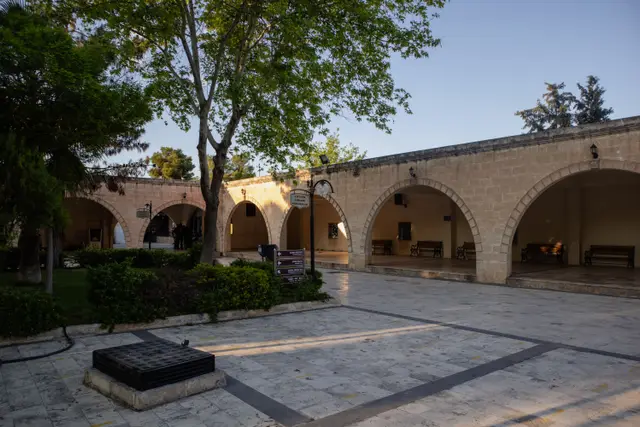
A few minutes' walk from Balıklıgöl brings you to the place that best shows the city's role in faith tourism. According to belief, Abraham was born in the cave south of the mosque courtyard and lived there until the age of seven; the water in the cave is believed to heal. This is not a museum but a living place of pilgrimage: standing quietly among the waiting visitors shows you how the city lives today.
Getting there
- Walk
Good to know
According to the municipality, Abraham was born in the cave south of the Mevlid-i Halil Mosque courtyard and lived there until he was seven (as tradition holds).
Source: Şanlıurfa Büyükşehir Belediyesi · last checked 2026-10-22
Tips
Visiting hours and entry arrangements are not published by an official source; avoid prayer times and dress appropriately.
Day 2 · 3 · 10:45–11:30
Şanlıurfa Castle (from below)
Rising on Dambak Hill just south of Balıklıgöl, the castle defines the city's skyline. The remains you see date from the Abbasid period, while the two columns with Corinthian capitals on top are far older, from the days of the Kingdom of Edessa. A rock-cut ditch surrounds three sides. Because the official page lists the castle as closed, the plan suggests seeing it from its foot and the lakeshore, which is anyway where the columns line up best with the lakes and mosque domes.
Getting there
- Walk
Good to know
The castle stands on Dambak Hill south of the Halil-ür Rahman and Ayn-ı Zeliha lakes; the present remains date from the Abbasid period (812–814). The official page lists it as "Closed".
Source: muze.gov.tr · last checked 2026-10-22
Good to know
The two columns with Corinthian capitals on the castle were made in AD 240–242; three sides of the castle are surrounded by a rock-cut ditch.
Source: Şanlıurfa Büyükşehir Belediyesi · last checked 2026-10-22
Tips
Check muze.gov.tr before you go in case the castle has reopened; if it has, climb up for the view over the city.
Day 2 · 4 · 14:30–17:00
Harran: the beehive houses (site currently closed)
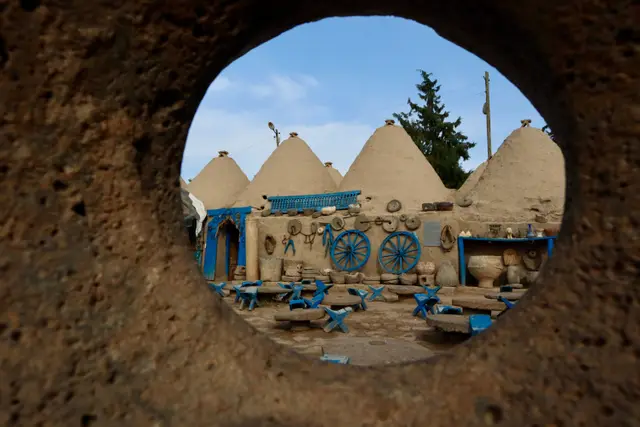
After lunch around Haşimiye Square, you can head out to Harran. The beehive-shaped mud-brick houses of today's village are the last examples of a building type used in the region since very early times; they stay cool in summer and warm in winter and can be enlarged by adding domes. The archaeological site, however, is currently closed after the earthquake. Check its status before going; if it is closed, spend the afternoon on a second, longer visit to the Şanlıurfa Museum or at the craft workshops by Balıklıgöl.
Getting there
Harran is 48 km from central Şanlıurfa.
Source: Şanlıurfa Büyükşehir Belediyesi · last checked 2026-10-22
Good to know
Currently closed to visitors: the Harran archaeological site is closed because of the earthquake.
Source: muze.gov.tr · last checked 2026-10-22
Good to know
Harran's beehive-shaped mud-brick houses are a building type used in the region since the Neolithic; the houses are thought to be about 200 years old.
Source: muze.gov.tr · last checked 2026-10-22
Tips
No official public transport to Harran could be confirmed, so go by car. GoTürkiye suggests having tea in a garden in Harran.


Getting around
Getting there
Şanlıurfa GAP Airport is 35 km from the city centre; it is served by the HAVAŞ shuttle, municipal buses, taxis and car rental.
Source: DHMİ · last checked 2026-10-22
Getting there
Public transport in the centre uses the rechargeable Urfa Kart. Use the "Nasıl Giderim" journey planner, or call ALO 153 for information.
Source: Urfa Ulaşım A.Ş. · last checked 2026-10-22
What and where to eat
What to eat and where to look
Tirit soup and liver kebab
The restaurants around Haşimiye Square
Source: GoTürkiye · last checked 2026-10-22
Liver kebab
The liver-kebab places around the new bazaar
Source: GoTürkiye · last checked 2026-10-22
Mırra coffee
The courtyard of Gümrük Han
Source: GoTürkiye · last checked 2026-10-22
Tea and mırra
The tea gardens on the shore of Ayn-ı Zeliha lake
Source: GoTürkiye · last checked 2026-10-22
Sıra gecesi: a local dinner with music
The old mansions of the historic centre
Source: GoTürkiye · last checked 2026-10-22
Local specialities
Urfa liver kebab
Lamb liver cut to hazelnut size and grilled over charcoal with tail fat; served with lavash, parsley, onion, mint and roasted isot pepper.
Source: TÜRKPATENT Coğrafi İşaret · Geographical indication (reg. no 323) · last checked 2026-10-22
Urfa egg köfte
Bulgur, isot pepper and egg fried in clarified butter; one of the region's köfte traditions beyond çiğ köfte.
Source: TÜRKPATENT Coğrafi İşaret · Geographical indication (reg. no 318) · last checked 2026-10-22
Urfa aubergine kebab
Locally called "balcanlı kebap"; hand-chopped mince and Birecik aubergine grilled over charcoal.
Source: TÜRKPATENT Coğrafi İşaret · Geographical indication (reg. no 351) · last checked 2026-10-22
Urfa şıllık dessert
A syrupy dessert of thin şıllık pancakes with walnuts and syrup with clarified butter.
Source: TÜRKPATENT Coğrafi İşaret · Geographical indication (reg. no 232) · last checked 2026-10-22
Isot pepper
Şanlıurfa's general name for green and red peppers; dried isot is made by sun-drying fresh red peppers and pounding them.
Source: GoTürkiye · Official tourism source · last checked 2026-10-22
Çiğ köfte
One of the city's essential dishes; traditionally made with meat and plenty of isot.
Source: GoTürkiye · Official tourism source · last checked 2026-10-22
Mırra coffee
A bitter, dark coffee boiled for a long time; served in handleless cups starting with the eldest, and the cup is handed back to the host rather than set down.
Source: GoTürkiye · Official tourism source · last checked 2026-10-22
Opening hours and prices vary by venue; check the venue’s own site before you go. Recommendations are not paid placements.
Where to stay
Candidates were picked by distance to the area, star rating, guest rating (weighted by number of reviews) and completeness of hotel details. Ratings, review counts and details come live from our catalogue. Tiers follow the star rating.
Sample dates: 26.11–27.11 (1 night), 2 adults. Prices change with dates; choose your own dates on the hotel page.
Balıklıgöl and the historic centre
Balıklıgöl, Mevlid-i Halil, the castle and Gümrük Han are within walking distance, making evening strolls and a mırra stop easy. GoTürkiye's three-day route also suggests staying in the centre.
Good for: Culture-focused visitors and first-timers
Budget


Mid-range


Around Abide
Abide is one of the starting points of the municipal buses to Göbeklitepe, and the municipal airport bus leaves from the Göbeklitepe (Abide Junction) stop.
Good for: Public-transport users and travellers with early flights
Budget

Mid-range


Haleplibahçe (around the museums)
The Şanlıurfa Museum and the Haleplibahçe Mosaic Museum are here, and the first Göbeklitepe bus leaves from in front of the museum.
Good for: Museum-focused travellers who want an early start to Göbeklitepe
Budget


Photos: Pexels (Sami Aksu, sivildikkatsizlik, Zülfü Demir📸, Konevi)
