Self-guided itinerary · free
Bursa in 2 days: the first Ottoman capital and Cumalıkızık
In 2014 Bursa was added to the UNESCO World Heritage List as "Bursa and Cumalıkızık: the Birth of the Ottoman Empire", and this plan spreads the site's components over two days. Day one starts at the tombs of Osman and Orhan Gazi in the citadel and goes down to the Grand Mosque, Koza Han with its silk shops and the Han District; after lunch in Kayhan, where İskender kebab was born, you cross Irgandı Bridge to the Green Mosque and the Museum of Turkish and Islamic Arts, open every day. Day two brings the garden of tombs at Muradiye in the morning, Cumalıkızık village on the slopes of Uludağ at midday, and the Atatürk House Museum or Uludağ in the afternoon. Bursa Archaeological Museum and the Ottoman House Museum are currently closed, so they are left out. Hours and rules link to the official source with the date we last checked them.
Prepared by: Kolay Seyahat content teamLast updated 22/10/2026Every fact links to an official source

This is not a package tour. This itinerary is free information. Flights, hotels and experiences are each sold separately, under their own seller’s terms, with separate payment and a separate contract. Prices are never linked to one another.
Day by day
Progress is saved on this device only. Your location is never sent.
Day 1 · Tophane, the Grand Mosque, the Han District and Yeşil
Walk down from the tombs of Osman and Orhan Gazi in the citadel to the bazaar; see the Grand Mosque and Koza Han, lunch in Kayhan, then cross Irgandı Bridge to the Green Mosque and the Museum of Turkish and Islamic Arts, open every day.
Day 1 · 1 · 09:00–09:45
Tophane: the tombs of Osman Gazi and Orhan Gazi, and the Clock Tower
Start the day on the hill where Bursa's first Ottoman town took shape, inside the old citadel. After Orhan Gazi took the city in 1326 this became the early Ottoman seat of government, and in Tophane Park the founder of the dynasty, Osman Gazi, and his son Orhan Gazi lie in tombs side by side. The six-storey Clock Tower at the edge of the park took its present form in 1905 and works as a landmark looking down over the city. The tombs are places of prayer and remembrance, so keep your voice low and follow any notices about shoes. The road down from here towards the bazaar shapes the rest of the day on its own.
Good to know
The citadel walls run for about 3.5 km and have five main gates; after Orhan Gazi took the city in 1326 this was the early Ottoman seat of government.
Source: GoTürkiye · last checked 2026-10-22
Good to know
The Clock Tower was first built under Sultan Abdülaziz and later fell down; it was rebuilt in 1905 in its present six-storey, 33 m cut-stone form.
Source: GoTürkiye · last checked 2026-10-22
Tips
Clothing that covers shoulders and knees is appropriate at the tombs, and women may want a headscarf. Check the notices at the entrance for visiting rules.
Day 1 · 2 · 10:00–10:45
The Grand Mosque (Ulu Cami)
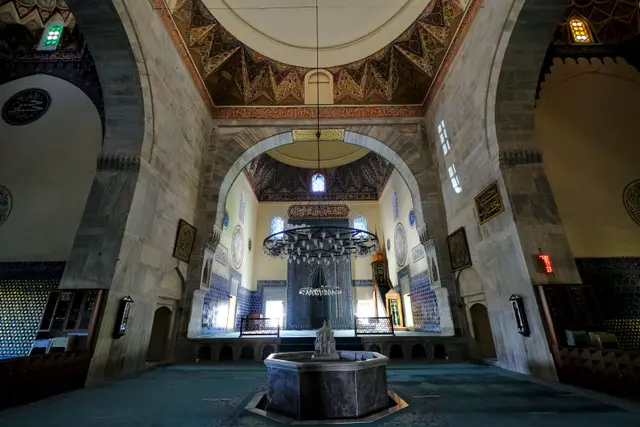
Coming down from the hill you reach the city's largest early Ottoman mosque. Built under Bayezid I, the Grand Mosque is counted as the first of the monumental multi-domed Ottoman mosques: twenty domes carried on twelve great square piers create an interior that feels almost like a forest of columns. The large calligraphy panels on the walls and the fountain in the middle remind you that this is a busy city mosque, not a museum. Pause inside for a while and watch how the light falls through the domes; it is a place of worship in use all day.
Getting there
- Walk
Good to know
It was built under Bayezid I between 1396 and 1400; it has 20 domes on twelve great square piers and two minarets.
Source: GoTürkiye · last checked 2026-10-22
Tips
Visit outside prayer times and skip the Friday noon prayer. Modest dress and quiet are expected.
Day 1 · 3 · 10:45–12:00
Koza Han and the Han District
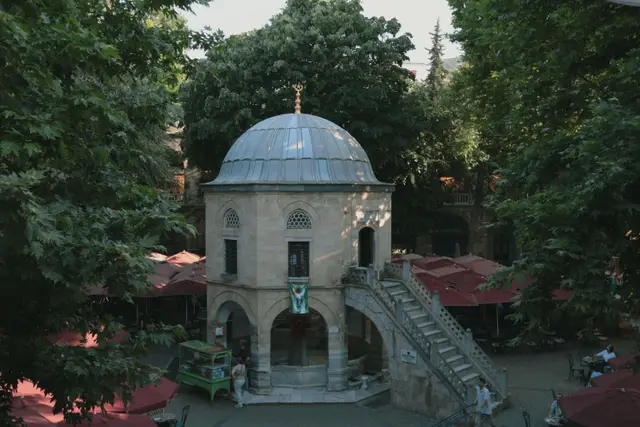
Right beside the Grand Mosque, the Han District is the heart of a trading life built on silk, and part of the UNESCO World Heritage site. Koza Han was built to fund Bayezid II's mosque in Istanbul; the small prayer room in the middle of its two-storey courtyard and the arcades around it still make a pleasant corner for tea and a rest. The upper-floor rooms are lined with shops selling silk and silk goods, and while you look at scarves or fabric it is easy to picture the old caravanserai at work. For lunch, walk to the nearby Kayhan Bazaar; two of Bursa's best-known dishes were born there.
Getting there
- Walk
Good to know
Built in 1492 to fund Bayezid II's mosque and madrasa in Istanbul, it has two floors and 95 rooms, and every room upstairs is a shop selling silk goods.
Source: GoTürkiye · last checked 2026-10-22
Good to know
The Orhangazi Complex and the surrounding Han District are one of the components of the World Heritage site "Bursa and Cumalıkızık: the Birth of the Ottoman Empire".
Source: Kültür Varlıkları ve Müzeler Genel Müdürlüğü · last checked 2026-10-22
Tips
When shopping, comparing a few shops is easier than bargaining. Kayhan Bazaar for lunch is a few minutes away on foot.
Day 1 · 4 · 13:15–13:45
Irgandı Bridge
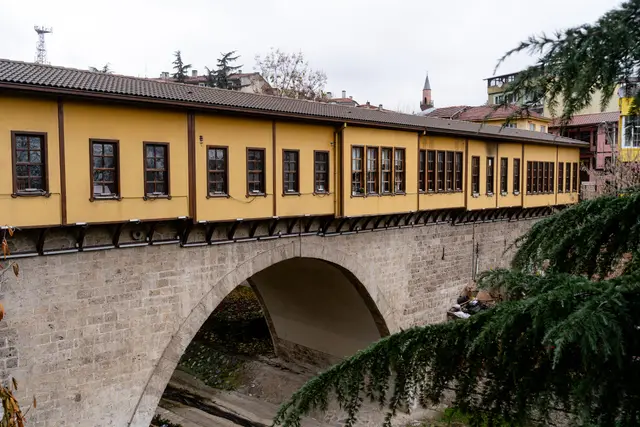
After lunch, walk to the Yeşil quarter across this bridge lined with shops over the Gökdere stream. Small workshops sit on both sides, many of them making or selling crafts and gifts today. Bridges with shops on them are rare, so a short stop here gives you more than a quick crossing. Look down at the stream between the shops, then start the climb towards the Green Mosque on the opposite slope.
Getting there
- Walk
Good to know
It is thought to have been built in 1442, under Murad II, by the merchant Hoca Muslihuddin, son of Irgandı Ali; it has 32 shops along its two sides.
Source: GoTürkiye · last checked 2026-10-22
Tips
The way up from the bridge to the Green Mosque is uphill; wear comfortable shoes.
Day 1 · 5 · 14:00–14:45
The Green Mosque (Yeşil Cami)
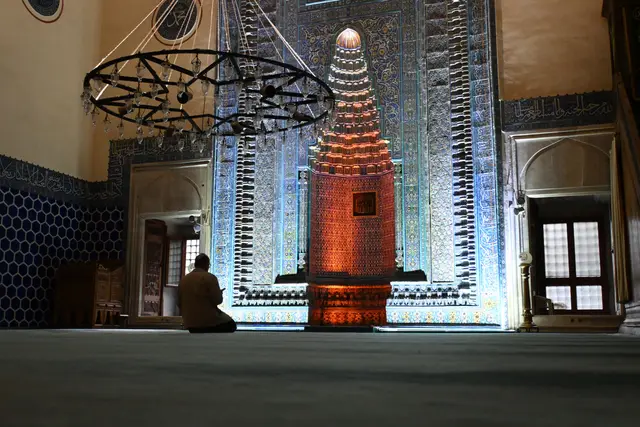
The mosque that gave the Yeşil (Green) quarter its name is one of the most refined examples of early Ottoman decoration. Pass through the marble portal with its stalactite carving and you meet green and blue tiles covering much of the walls; the tiled mihrab, more than ten metres high, is counted among the building's most precious parts. The tomb of Mehmed I, who built the mosque, stands on the rise just opposite, and its outer walls give colour to the whole quarter. Take your time inside; the tile patterns separate from one another when you look closely.
Getting there
- Walk
Good to know
Built in 1419 by Mehmed I, with Hacı İvaz Paşa as architect. Much of the interior is tiled, and its mihrab, over 10 metres high, is among the finest tile work.
Source: GoTürkiye · last checked 2026-10-22
Tips
Visit outside prayer times. Check the information at the entrance for visiting the Green Tomb.
Day 1 · 6 · 14:45–16:15
Museum of Turkish and Islamic Arts (Green Madrasa)
Opposite the mosque, the Green Madrasa is one of the earliest Ottoman colleges and now houses the Museum of Turkish and Islamic Arts. Rooms around its arcaded courtyard show tiles and ceramics from the Seljuk, Beylik and Ottoman periods, along with woodwork, metalwork, coins and crafts. Here you can study, at eye level in the cases, close relatives of the tiles you saw in the mosques all day. The museum is open every day, so this part of the plan works whichever day of the week it falls on.
Getting there
- Walk
Opening hours
Daily 08:00–17:00; the ticket office closes at 16:30.
Source: Müzeler (muze.gov.tr) · last checked 2026-10-22
Good to know
Bursa's first museum was founded in 1902 and officially opened by Osman Hamdi Bey in September 1904 as a branch of the Imperial Museum.
Source: Müzeler (muze.gov.tr) · last checked 2026-10-22
Tips
Enter before the ticket office closes at 16:30. The Museum Card is valid for Turkish citizens; check the admission fee at the ticket office.
Day 1 · 7 · 16:30
Emir Sultan Mosque
End the day at Emir Sultan Mosque, on a hill on the lower slopes of Uludağ a little east of the Yeşil quarter. From the hill, with the mosque and its graveyard, the view opens over the city in the late afternoon. The single-domed building was raised by Hundi Hatun, daughter of Bayezid I, after the death of her husband Emir Sultan. Tea gardens and coffee houses are nearby, a good place to rest before dinner.
Good to know
It was built in the early 15th century by Hundi Hatun, daughter of Bayezid I, on a hill on the slopes of Uludağ after the death of her husband Emir Sultan.
Source: GoTürkiye · last checked 2026-10-22
Tips
The mosque and graveyard are places of prayer and remembrance; keep quiet during your visit.


Day 2 · Muradiye, Cumalıkızık and optional Uludağ
Morning in Muradiye's garden of tombs, midday in the stone lanes of Cumalıkızık; in the afternoon the Atatürk House Museum or Uludağ. The Atatürk House is closed on Mondays; choose Uludağ on that day.
Day 2 · 1 · 09:00–10:30
The Muradiye Complex
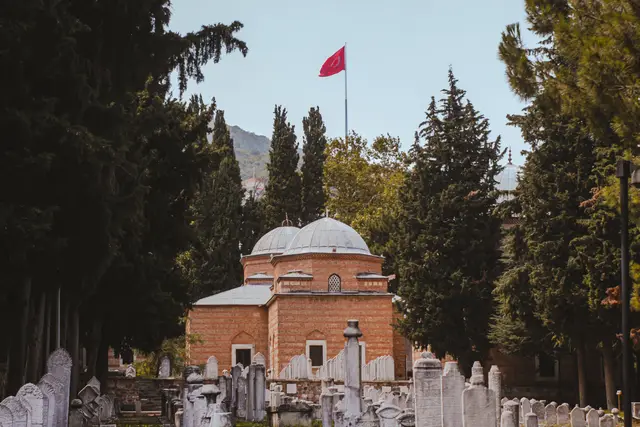
Start day two at Muradiye, the last complex the Ottoman sultans built in Bursa. Alongside the mosque, madrasa, soup kitchen and bath built by Murad II, tombs belonging to the sultan's family are gathered in a wide, tree-filled garden. In the morning the garden is calm and shaded; the tombs were decorated in different periods and each tells its own story. Muradiye is also one of the components of the UNESCO World Heritage site. The nearby Ottoman House Museum is currently closed, so it is not part of this plan.
Good to know
Built by Murad II between June 1425 and November 1426, it consists of a mosque, madrasa, soup kitchen, bath and tombs, and is the last complex Ottoman sultans built in Bursa.
Source: GoTürkiye · last checked 2026-10-22
Good to know
The Ottoman House Museum (Muradiye) is currently closed to visitors.
Source: Müzeler (muze.gov.tr) · last checked 2026-10-22
Tips
Check the information at the entrance for the tombs' visiting hours and rules; we found no official opening times.
Day 2 · 2 · 11:30–15:00
Cumalıkızık village
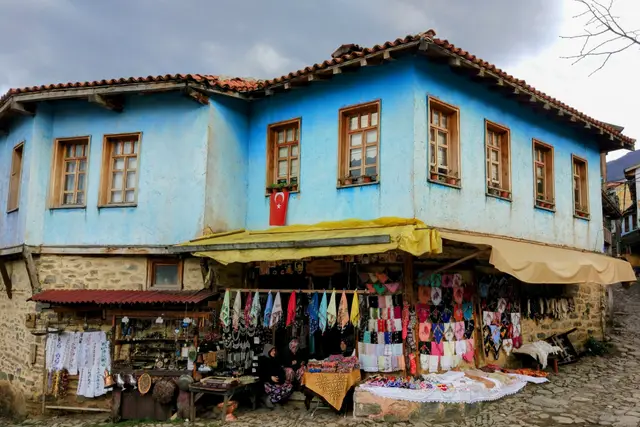
Towards midday, head up to Cumalıkızık on the lower slopes of Uludağ. The village is one of the endowment villages founded in Orhan Gazi's time, and its economic ties with the hans and mosque complexes in central Bursa are why it belongs to the UNESCO site that tells the story of the Ottoman shift from principality to empire. Walk its narrow cobbled lanes between stone and timber houses; people still live in most of them. Having lunch in the village and browsing breakfast produce in the shade gives you the calmest hours of the trip.
Good to know
The economic ties between Cumalıkızık and the other endowment villages and the hans and complexes in the capital's centre helped the Ottoman principality become an empire; the village is one of the six components of the UNESCO site.
Source: Kültür Varlıkları ve Müzeler Genel Müdürlüğü · last checked 2026-10-22
Tips
Cumalıkızık is a living village: do not photograph homes or residents without permission, and keep noise down. Check the current bus line with Bursa Metropolitan Municipality.
Day 2 · 3 · 15:45–16:45
Atatürk House Museum (optional)
ClosedBack in town, if you have time, stop at the Atatürk House Museum in Çekirge. During his visit to Bursa in 1923, Atatürk received this house as a gift from Bursa Municipality and stayed here on each of his visits. The items on show in the rooms are originals he used, and even a short visit gives a close sense of everyday life in the period. The museum is closed on Mondays; if your second day falls on a Monday, skip this stop or take the Uludağ option instead.
Opening hours
08:00–17:00; the ticket office closes at 16:30.
Source: Müzeler (muze.gov.tr) · last checked 2026-10-22
Closed
Closed on Mondays.
Source: Müzeler (muze.gov.tr) · last checked 2026-10-22
Good to know
Atatürk received the building from Bursa Municipality as a gift on his second visit to Bursa in January 1923; it opened as a museum on 29 October 1973.
Source: Müzeler (muze.gov.tr) · last checked 2026-10-22
Tips
The ticket office closes at 16:30; plan your return from Cumalıkızık accordingly.
Day 2 · 4
Uludağ (optional)
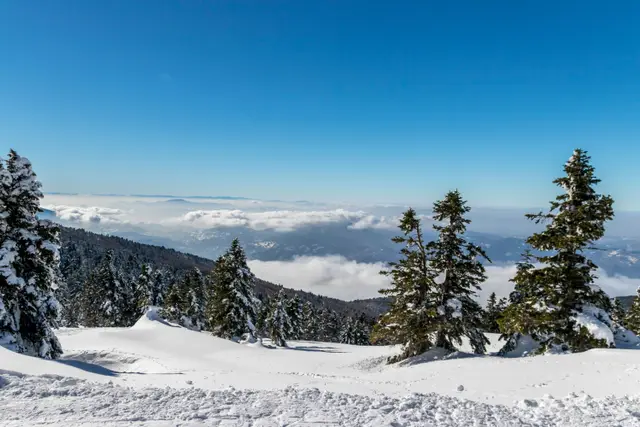
For those who prefer nature, the afternoon alternative is Uludağ. The mountain rising right behind the city is a national park, with glacial lakes near the summit, and it is known as a ski centre in winter. You can go up by cable car or by road; check the cable car's operating details and hours through official channels before you go. Cool air and pine forests in summer and snowy slopes in winter make even a short escape feel far from the city.
Entrance fee
Uludağ National Park entry in 2026 is 75 TL per person (Marmara-2, category I protected area).
Source: Doğa Koruma ve Milli Parklar Genel Müdürlüğü · last checked 2026-10-22
Good to know
Kilimli Lake lies at about 2,420 metres near the summit.
Source: GoTürkiye · last checked 2026-10-22
Tips
It is much cooler on the mountain than in town, so bring layers. Check road and weather conditions before you set off.


Getting around
Entrance fee
Burulaş's 2026 fare table lists a full fare of 50.00 TL on BursaRay and 40.75 TL on the T1–T3 trams; reduced fares are separate. Check payment options and current fares with Burulaş.
Source: Burulaş · last checked 2026-10-22
Good to know
"Bursa and Cumalıkızık: the Birth of the Ottoman Empire" was inscribed in the cultural category at the 38th session of the World Heritage Committee; it has six components: the Orhangazi Complex and Han District, the Hüdavendigar, Yıldırım, Yeşil and Muradiye complexes, and Cumalıkızık village.
Source: Kültür Varlıkları ve Müzeler Genel Müdürlüğü · last checked 2026-10-22
Good to know
Bursa joined the UNESCO World Heritage List in 2014, and in 2021 it joined the UNESCO Creative Cities Network in the "crafts and folk art" category.
Source: Bursa Büyükşehir Belediyesi · last checked 2026-10-22
Good to know
Bursa Archaeological Museum is temporarily closed to visitors and is not part of this plan.
Source: Müzeler (muze.gov.tr) · last checked 2026-10-22
What and where to eat
What to eat and where to look
İskender kebab
Around Kayhan Bazaar; according to GoTürkiye the dish was born in a shop in Kayhan in 1867
Source: GoTürkiye · last checked 2026-10-22
Pideli köfte (meatballs on pide)
The historic Kayhan Bazaar
Source: GoTürkiye · last checked 2026-10-22
Candied chestnuts (kestane şekeri)
Confectioners across Bursa; made from Uludağ chestnuts
Source: GoTürkiye · last checked 2026-10-22
Tahini pide
At breakfast tables and stone-oven bakeries
Source: GoTürkiye · last checked 2026-10-22
Cantık and milk halva
Bakeries and dessert shops across Bursa
Source: GoTürkiye · last checked 2026-10-22
Zeyniler hınkal
Zeyniler neighbourhood in Yıldırım district; part of the Ahiska Turks' culinary heritage
Source: GoTürkiye · last checked 2026-10-22
Local specialities
Bursa döner kebab
Döner kebab registered in the name of the Bursa Chamber of Commerce and Industry. İskender kebab is a separate dish and is not covered by this registration.
Source: TÜRKPATENT Coğrafi İşaret · Geographical indication (reg. no 1151) · last checked 2026-10-22
Bursa milk halva
A dessert of butter and flour toasted together, then baked with milk and sugar until golden on top.
Source: TÜRKPATENT Coğrafi İşaret · Geographical indication (reg. no 912) · last checked 2026-10-22
Bursa walnut lokum
Walnut lokum registered in the name of the Bursa Chamber of Commerce and Industry; a common gift to take home.
Source: TÜRKPATENT Coğrafi İşaret · Geographical indication (reg. no 942) · last checked 2026-10-22
Bursa peach
Peaches grown in the Bursa region and registered with a designation of origin; found in markets in summer.
Source: TÜRKPATENT Coğrafi İşaret · Geographical indication · designation of origin (reg. no 430) · last checked 2026-10-22
Bursa black fig
A black fig typical of the Bursa region, registered with a designation of origin.
Source: TÜRKPATENT Coğrafi İşaret · Geographical indication · designation of origin (reg. no 391) · last checked 2026-10-22
Bursa candied chestnuts
A confection made from Uludağ chestnuts; according to TÜRKPATENT it is also registered in the European Union.
Source: TÜRKPATENT · Official tourism source · last checked 2026-10-22
İskender kebab
According to GoTürkiye, İskender Efendi, son of Mehmet, cooked lamb on a horizontal spit in his shop in Kayhan in 1867 and served it on pide with tomato sauce and yoghurt.
Source: GoTürkiye · Official tourism source · last checked 2026-10-22
Opening hours and prices vary by venue; check the venue’s own site before you go. Recommendations are not paid placements.
Where to stay
Candidates were picked by distance to the area, star rating, guest rating (weighted by number of reviews) and completeness of hotel details. Ratings, review counts and details come live from our catalogue. Tiers follow the star rating.
Sample dates: 26.11–27.11 (1 night), 2 adults. Prices change with dates; choose your own dates on the hotel page.
City centre: the Han District and Tophane
The Grand Mosque, Koza Han, the Tophane tombs and Kayhan Bazaar are all within walking distance, so almost all of day one needs no car.
Good for: First-time visitors and travellers without a car
Budget


Yeşil and Emir Sultan
A quieter historic setting around the Green Mosque, the Green Madrasa and Emir Sultan, and closer to the Uludağ option.
Good for: Those after quiet evenings and the mountain option


Çekirge
The district of the Atatürk House Museum, close to Muradiye, with a wider choice of places to stay.
Good for: Families and those wanting more choice
Budget


Mid-range


Photos: Pexels (Semih Başaran, Bülent Özgöç, Nur, Oktay Köseoğlu, Hilal, Reyyan Orgun, Bahar Oztop, Zafer Erdoğan)
