Self-guided itinerary · free
Tbilisi in 3 days: the Old Town, Rustaveli and Mtskheta
Tbilisi's historic core lies on both banks of the Mtkvari (Kura) river in districts within walking distance of each other, so day one is a walk through the Old Town. Ride the cable car from Rike Park up to Narikala, walk down to the domed sulphur baths and end the evening with the lights of the Peace Bridge. Day two shows the newer city: Sameba Cathedral on the Avlabari hill, the National Museum and cultural landmarks along Rustaveli Avenue, the flea market at the Dry Bridge and, in the evening, Fabrika in a converted factory. Day three is a short trip to the old capital Mtskheta and its UNESCO-listed Jvari and Svetitskhoveli, with sunset over the city from Mtatsminda Park. The National Museum closes on Mondays, so keep museum day off a Monday. Hours and fees link to the official source with the date we last checked them.
Prepared by: Kolay Seyahat content teamLast updated 23/10/2026Every fact links to an official source

This is not a package tour. This itinerary is free information. Flights, hotels and experiences are each sold separately, under their own seller’s terms, with separate payment and a separate contract. Prices are never linked to one another.
For this trip
Day by day
Progress is saved on this device only. Your location is never sent.
Itinerary map
Follow the stops day by day on the map; stops you mark as done turn green.
Map tiles come from OpenStreetMap servers. Your location is never read or sent anywhere; progress stays on this device.
Day 2 · Sameba, Rustaveli, the National Museum and the Dry Bridge
Day 2: 3 stops are not in the route because the exact location is missing; open them one by one from the list below.
A day route appears on days with at least two stops at a verified location; on other days you can open each stop in Google Maps.
Stops without a map location (10)
These stops have no verified location yet, so they are not placed at a guessed spot. Google Maps searches them by name.
- Day 1 · 2 Cable car, Narikala Fortress and Kartlis DedaOpen in Google Maps
- Day 1 · 3 The Abanotubani sulphur bathsOpen in Google Maps
- Day 1 · 4 Meidan, Shardeni Street and the craft lanesOpen in Google Maps
- Day 1 · 5 The Peace Bridge (evening lights)Open in Google Maps
- Day 2 · 3 Rustaveli AvenueOpen in Google Maps
- Day 2 · 4 The Dry Bridge marketOpen in Google Maps
- Day 2 · 5 Fabrika and MarjanishviliOpen in Google Maps
- Day 3 · 1 Jvari Monastery (Mtskheta)Open in Google Maps
- Day 3 · 2 Svetitskhoveli Cathedral and MtskhetaOpen in Google Maps
- Day 3 · 3 Mtatsminda Park and the funicularOpen in Google Maps
Day 1 · Old Tbilisi, Narikala and the sulphur baths
Take the cable car from Rike Park up to Narikala, see Kartlis Deda and walk down to the Abanotubani baths; spend the afternoon in the old craft streets and end the evening on the Peace Bridge.
Day 1 · 1 · 10:00–10:45
Rike Park
On the left bank, Rike Park is modern Tbilisi's face directly opposite the Old Town. Wandering among a giant piano, a chessboard with metre-tall pieces and a ten-metre metal oak tree with 25 doors, you look across at the old houses, domes and the fortress on the hill. The cable car up to Narikala leaves from here, making it a natural starting point.
Getting there
- Walk
Good to know
The park is on the left bank between Avlabari and Chugureti; a musical fountain with a light show runs in the warmer months, and the cable car to Narikala starts here.
Source: Georgia National Tourism Administration · last checked 2026-10-22
Tips
In the warmer months come back in the evening for the light show at the musical fountain beside the oak tree.
Day 1 · 2 · 10:45–12:15
Cable car, Narikala Fortress and Kartlis Deda
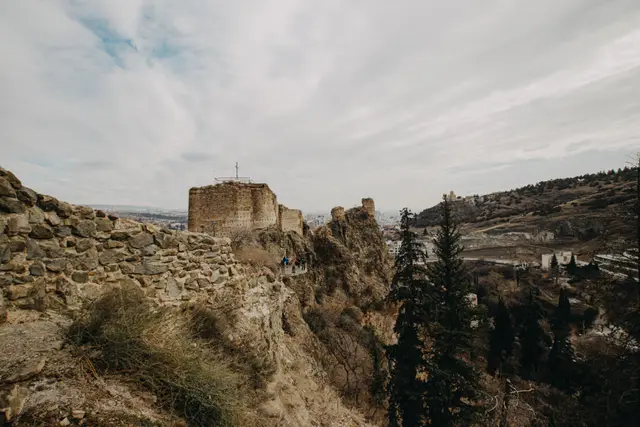
The short cable-car ride gives a bird's-eye view of the river, the Old Town and the bath domes. Looking over the city from the Sololaki ridge, Narikala is first mentioned in Tbilisi's records at the end of the 4th century; with its walls and towers it is now one of the city's symbols. A short walk from the fortress brings you to Kartlis Deda, holding a bowl of wine for hospitality in one hand and a sword for defence in the other, the quickest way to understand Georgian hospitality. On a clear day the view reaches the Caucasus.
Entrance fee
Rike–Narikala cable car: 2.5 GEL one way; payable with the Metromoney card.
Source: Tbilisi Transport Company · last checked 2026-10-22
Good to know
Kartlis Deda is a 20-metre aluminium statue on the Sololaki hill, erected in 1958 for Tbilisi's 1,500th anniversary.
Source: Georgia National Tourism Administration · last checked 2026-10-22
Good to know
The cable-car line between Rike Park and Narikala Fortress is about 500 metres long, with 7 cabins of up to 8 people each.
Source: Georgia National Tourism Administration · last checked 2026-10-22
Tips
Cable-car hours are not published by an official source, so check at the station. You can also walk up via the Betlemi Street stairs instead.
Day 1 · 3 · 13:00–15:00
The Abanotubani sulphur baths
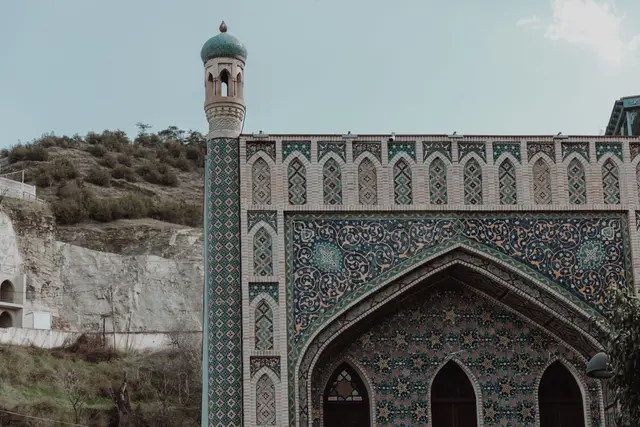
Walking down from the fortress you reach Abanotubani and its domes rising from the ground: "abano" means bath and "ubani" district. According to the legend told by the city, Tbilisi's name comes from "tbili", meaning warm, and the story is set right in this bath district. The baths are fed by naturally hot sulphur water; there were more than 60 of them in the Middle Ages, and fewer than a dozen work today. Chreli Abano, with its blue mosaic façade, is the best known. After lunch, an hour in a private room can be the perfect break on a walking day.
Getting there
- Walk
Entrance fee
General range given by the tourism administration: private rooms 80–600 GEL depending on group size (up to 12) and facilities; public sections about 10–30 GEL per person per hour. Confirm the current price with the bathhouse.
Source: Georgia National Tourism Administration · last checked 2026-10-22
Good to know
A legend links the city's name to the word "tbili" (warm), with the story set in the Abanotubani bath district; in the 5th century Vakhtang Gorgasali moved the capital from Mtskheta to Tbilisi.
Source: Tbilisi City Hall · last checked 2026-10-22
Tips
Hours vary by bathhouse, and some stay open past midnight; call ahead to confirm the time and price.
Day 1 · 4 · 15:00–17:30
Meidan, Shardeni Street and the craft lanes
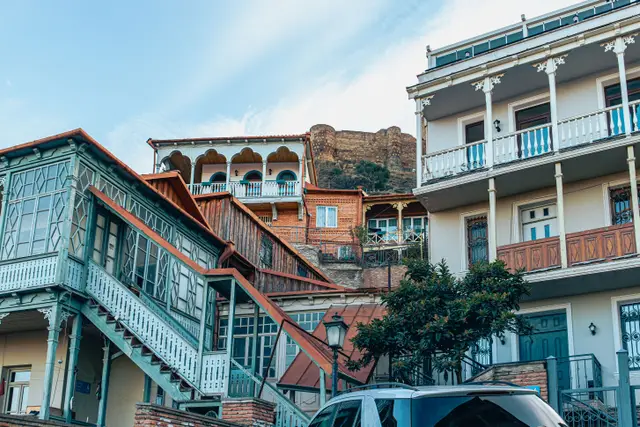
Old Tbilisi's street names still carry the crafts once practised there: Silver Street, Iron Row, Bread Square, Wine Rise. In the Kala district Georgian and Armenian churches, mosques and a Catholic church stand side by side, the clearest sign of a city that has held many faiths for centuries. Shardeni Street, known for its bars and restaurants, is named after Jean Chardin, the French traveller who introduced Tbilisi to Europe. The crooked Gabriadze clock tower on Shavteli Street, next to its puppet theatre, is one of the Old Town's best-loved corners.
Getting there
- Walk
Good to know
Old Tbilisi's street names come from crafts: Silver (Vertskhli) Street, Iron Row (Rkinis Rigi), Bread (Puri) Square, Wine Rise (Ghvinis Aghmarti). Shardeni Street is named after the French traveller Jean Chardin.
Source: Georgia National Tourism Administration · last checked 2026-10-22
Tips
Crowds gather at the Gabriadze tower on the hour; if it is busy you can watch from further down the street.
Day 1 · 5 · 18:30–20:00
The Peace Bridge (evening lights)
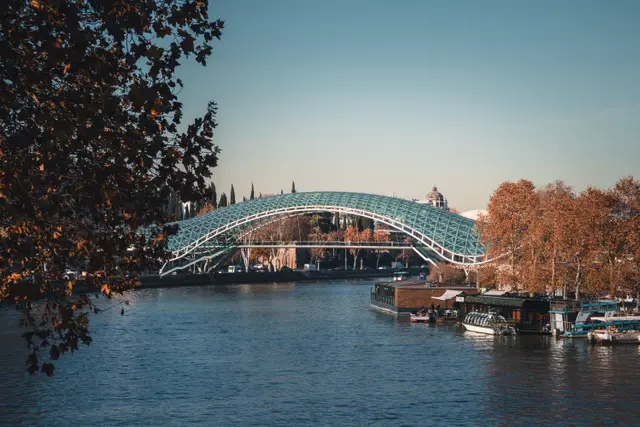
End the day at the point that best shows the contrast between old and new Tbilisi. The glass-and-steel footbridge linking Erekle II Street with Rike Park lights up at night with thousands of lamps; standing over the river you see domes and the fortress on one side and modern buildings on the other. Afterwards walk back into the Old Town for dinner.
Getting there
- Walk
Good to know
Built in 2010, the bridge crosses the Mtkvari to link Erekle II Street with Rike Park and is lit at night by a system of 50,000 lamps.
Source: Georgia National Tourism Administration · last checked 2026-10-22
Tips
The lights look best once it is fully dark; for photos, shoot from the Rike Park bank.


Day 2 · Sameba, Rustaveli, the National Museum and the Dry Bridge
See Sameba Cathedral in Avlabari in the morning, take the metro to Rustaveli for the National Museum and walk past the avenue's cultural landmarks; the Dry Bridge market in the afternoon and Fabrika in the evening.
Day 2 · 1 · 09:30–10:15
Sameba (Holy Trinity) Cathedral
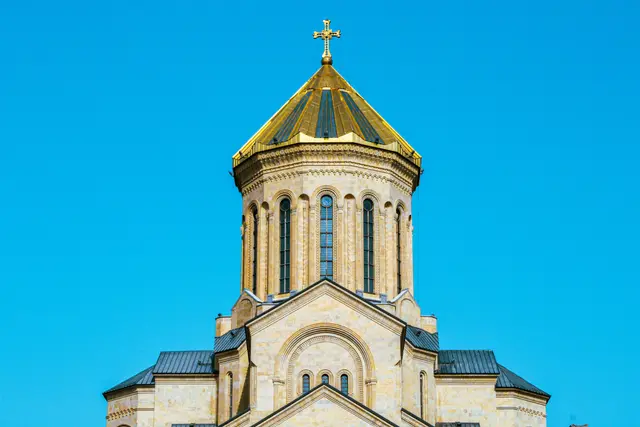
Rising on the Avlabari hill, Sameba is one of the largest Orthodox cathedrals in the world. Begun in the mid-1990s and completed in the early 2000s, it is a modern national symbol of independent Georgia. Its courtyard and steps offer a wide view of the city; early morning, amid the sound of services, is the right time for a quiet visit.
Good to know
One of the largest Orthodox cathedrals in the world; construction began in 1996 and was completed in 2004.
Source: Georgia National Tourism Administration · last checked 2026-10-22
Tips
Orthodox churches may expect shoulders and knees to be covered; follow the signs at the entrance and ask before taking photos inside.
Day 2 · 2 · 10:30–12:30
Georgian National Museum
ClosedThe Simon Janashia Museum of Georgia on Rustaveli Avenue tells the country's archaeology and cultural history under one roof; the national tourism administration strongly recommends it to anyone interested in Georgian culture. Allow two hours: millennia of finds bring together the long story behind the churches, fortresses and crafts you see around the city.
Opening hours
Exhibition halls Tuesday–Sunday 10:00–18:00; last entry 17:30.
Source: Georgian National Museum · last checked 2026-10-22
Closed
Closed on Mondays and public holidays.
Source: Georgian National Museum · last checked 2026-10-22
Entrance fee
Foreign adults 40 GEL, students (with ID) 15 GEL, pensioners (with ID) 30 GEL; under 6 free. The page has no update date, so check before you go.
Source: Georgian National Museum · last checked 2026-10-22
Tips
The museum's hours and prices pages carry no update date; check museum.ge before you go.
Day 2 · 3 · 12:30–13:30
Rustaveli Avenue
From the museum, walk along the city's main avenue. The Parliament, the Opera, the National Gallery, the Rustaveli Theatre and Kashveti Church line the same axis, and the tree-lined squares, cafés and shops between them show 19th- and 20th-century Tbilisi in a single walk. Have lunch around the avenue.
Getting there
- Walk
Good to know
The city's 1.5 km main avenue is home to the Parliament, the Opera House, the National Gallery, the Rustaveli Theatre, the National Library and Kashveti Church.
Source: Georgia National Tourism Administration · last checked 2026-10-22
Tips
Check the opera and theatre programmes on their own sites; an evening show is a good rainy-day alternative.
Day 2 · 4 · 14:30–16:00
The Dry Bridge market
Set up on and around the bridge between Saarbrücken Square and 9 April Garden, this open-air market is a window into the city's memory. Antiques, Soviet-era objects, medals, old books and records sit alongside crafts, ceramics and felt work, and the painters' section shows local artists. Bargain, but take your time: browsing the stalls is as much fun as buying.
Getting there
- Walk
Good to know
The market is on and around the bridge between Saarbrücken Square and 9 April Garden, selling antiques, vintage clothing, books, medals, Soviet-era objects, crafts and paintings.
Source: Georgia National Tourism Administration · last checked 2026-10-22
Tips
Official sources give different market hours; the safest window is 12:00–17:00. It does not open on public holidays. Carry some cash.
Day 2 · 5 · 16:30–19:00
Fabrika and Marjanishvili
Cross the Galaktioni Bridge to the other bank and Tbilisi's young, creative side. Fabrika, a former Soviet sewing factory, comes alive in the late afternoon with its cafés and bars, artists' studios, shops and big open courtyard. Then stroll along nearby Aghmashenebeli Avenue and its restored façades and pick a place for dinner.
Getting there
- Walk
Good to know
Fabrika, at 8 Ninoshvili Street, is a multi-purpose cultural centre created from a former Soviet sewing factory, with cafés and bars, artists' studios, shops and a large open courtyard.
Source: Fabrika · last checked 2026-10-22
Tips
The courtyard fills up in the evening; come early if you want a quiet corner.

Day 3 · Mtskheta and Mtatsminda
In the morning go to the old capital Mtskheta for the UNESCO-listed Jvari Monastery and Svetitskhoveli Cathedral; back in Tbilisi, take the funicular up to Mtatsminda Park for sunset.
Day 3 · 1 · 09:30–10:30
Jvari Monastery (Mtskheta)
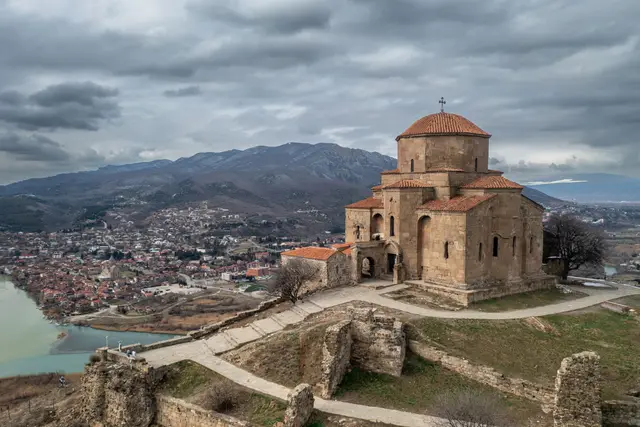
On a rocky hill east of Mtskheta, Jvari is a cross-domed church that became a model for Georgian church architecture. Tradition says Saint Nino raised her wooden cross here; the present monastery was built at the turn of the 7th century. The view from the hilltop over the meeting of two rivers and the old capital below explains why Mtskheta is seen as Georgia's heart.
Getting there
Mtskheta is about 20 minutes from Tbilisi by road.
Source: Georgia National Tourism Administration · last checked 2026-10-22
Good to know
Jvari stands on a rocky hill east of Mtskheta; the cross-domed monastery was built between 585 and 604 and was Georgia's first nomination to the UNESCO World Heritage List.
Source: Georgia National Tourism Administration · last checked 2026-10-22
Tips
Mtskheta is about 20 minutes by road; no public transport could be confirmed from an official source, so plan a taxi or transfer. If you would rather stay in Tbilisi, spend the day on the Wine Museum, Metekhi Church and the Old Town's craft lanes instead.
Day 3 · 2 · 11:00–13:00
Svetitskhoveli Cathedral and Mtskheta
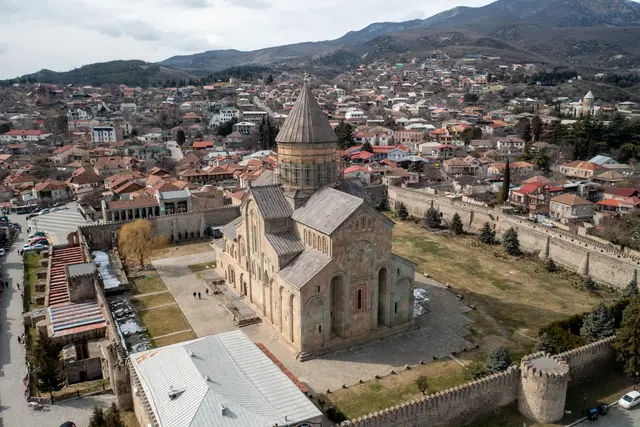
Known as a "city-museum" and "Little Jerusalem", Mtskheta was the capital of an ancient kingdom and the place where Christianity became the state religion. Svetitskhoveli Cathedral in the centre of town was built in the early 11th century; the relic of Christ's robe believed to be kept here makes it one of the Orthodox world's important centres. Stalls of craftspeople and wine sellers line the road up to the cathedral; have lunch in town.
Good to know
The present cathedral was built between 1010 and 1029; an inscription on the west façade names the chief architect as Arsukidze. The cathedral is on the UNESCO list.
Source: Georgia National Tourism Administration · last checked 2026-10-22
Good to know
Mtskheta is called a "city-museum" and "Little Jerusalem"; Jvari, Svetitskhoveli and Samtavro are on the UNESCO World Heritage List.
Source: Georgia National Tourism Administration · last checked 2026-10-22
Tips
Visiting hours and dress code are not published by an official source; wear clothes that cover shoulders and knees and follow the signs at the entrance.
Day 3 · 3 · 17:30–20:00
Mtatsminda Park and the funicular
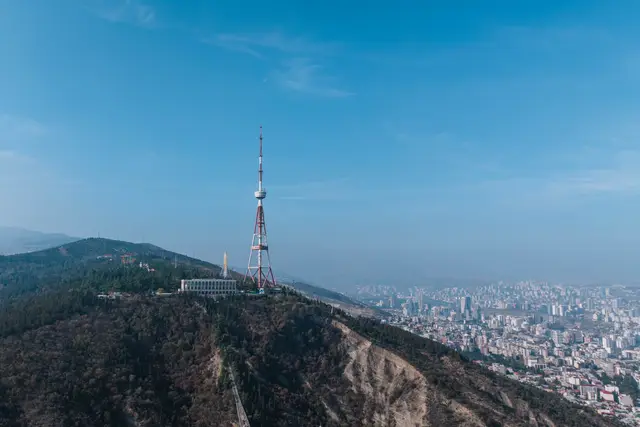
Back in Tbilisi, the last stop is the city's highest point. The funicular takes you on a short ride up to forest-ringed Mtatsminda Park, whose view the national tourism administration counts among the city's most striking. At sunset everything you have explored over three days appears together below: the fortress, the bath domes, the river, Sameba and the lights of Rustaveli. The park has restaurants and cafés, so you can have the trip's last dinner looking out over the city.
Getting there
- Funicular
Getting there
The funicular's lower station is at 22 Daniel Chonkadze Street and the ride takes about 3 minutes. The park covers 100 hectares surrounded by forest.
Source: Georgia National Tourism Administration · last checked 2026-10-22
Tips
Funicular and park hours and prices are not published by an official source; check at the lower station.


Getting around
Getting there
The metro runs daily 06:00–00:00.
Source: Georgia National Tourism Administration · last checked 2026-10-22
Entrance fee
1 GEL buys 90 minutes of unlimited travel on the metro, buses, minibuses and the Bagebi–University cable car (with a Metromoney card or bank card); a 1-day unlimited ticket is 3 GEL and a 1-week ticket 20 GEL. The 90-minute rule does not apply to app or cash payments. The Metromoney card costs 2 GEL at metro ticket offices.
Source: Tbilisi Transport Company · last checked 2026-10-22
Good to know
The currency is the Georgian lari (GEL); cards are widely accepted, but carry some cash for flea markets. When hailing a taxi on the street, agree the destination and fare first. Ask before taking photos inside churches.
Source: Georgia National Tourism Administration · last checked 2026-10-22
Good to know
In an emergency call 112.
Source: Georgia National Tourism Administration · last checked 2026-10-22
What and where to eat
Recommended places
Barbarestan
South of the Dezerter BazaarGeorgian
Georgia's national tourism administration highlights this family-run restaurant in its article on khachapuri.
Source: Georgia National Tourism Administration · Official tourism source · last checked 2026-10-22
Retro
TbilisiKhachapuri house
According to the national tourism administration, a classic khachapuri house making Adjarian boat-shaped khachapuri, run by an owner from Adjara.
Source: Georgia National Tourism Administration · Official tourism source · last checked 2026-10-22
Gunda
TbilisiKhachapuri house
The national tourism administration describes it as a bright, modern khachapuri house making pan-cooked Imeretian khachapuri.
Source: Georgia National Tourism Administration · Official tourism source · last checked 2026-10-22
Leila
City centreMostly vegetarian café
The national tourism administration lists it as a city-centre café with a mostly vegetarian menu.
Source: Georgia National Tourism Administration · Official tourism source · last checked 2026-10-22
Tsiskvili – Wine Yard
Beliashvili StreetGeorgian
According to the official venue guide, a semi-open space styled like an old Tbilisi courtyard with balconies, with Georgian folk dance in the evenings.
Source: Georgia National Tourism Administration · Official tourism source · last checked 2026-10-22
Askaneli Falestra
VakeGeorgian and international
The official venue guide presents it as a wine brand's gastro-cultural centre, with Georgian classics, grills and live music.
Source: Georgia National Tourism Administration · Official tourism source · last checked 2026-10-22
Shua Kalaki Arena
Giorgi Tsabadze StreetGeorgian and European
According to the official venue guide, it serves traditional Georgian cooking in a modern, warm setting with fresh local produce.
Source: Georgia National Tourism Administration · Official tourism source · last checked 2026-10-22
Local specialities
Khinkali
Dumplings filled with spiced meat, herbs and broth, eaten by hand by the top knot, sipping the broth first. The Tbilisi "kalakuri" style is herby and many-pleated.
Source: Georgia National Tourism Administration · Official tourism source · last checked 2026-10-22
Khachapuri
Almost every region has its own cheese bread: Imeretian, Megrelian, Meskhetian and the egg-topped, boat-shaped Adjarian.
Source: Georgia National Tourism Administration · Official tourism source · last checked 2026-10-22
Lobiani
Bean-filled bread, much loved in Tbilisi.
Source: Georgia National Tourism Administration · Official tourism source · last checked 2026-10-22
Churchkhela
Walnuts on a string dipped several times in thickened grape must and sun-dried; made after the grape harvest.
Source: Georgia National Tourism Administration · Official tourism source · last checked 2026-10-22
Pkhali
Small portions of spinach, beetroot or aubergine blended with walnuts.
Source: Georgia National Tourism Administration · Official tourism source · last checked 2026-10-22
Lobio
Usually kidney beans with coriander, walnuts, garlic and onion, eaten hot or cold.
Source: Georgia National Tourism Administration · Official tourism source · last checked 2026-10-22
The qvevri method
The traditional Georgian method of making wine in egg-shaped clay vessels buried in the ground; inscribed on UNESCO's intangible cultural heritage list in 2013.
Source: UNESCO Intangible Cultural Heritage · UNESCO intangible cultural heritage · last checked 2026-10-22
Opening hours and prices vary by venue; check the venue’s own site before you go. Recommendations are not paid placements.
Where to stay
Candidates were picked by distance to the area, star rating, guest rating (weighted by number of reviews) and completeness of hotel details. Ratings, review counts and details come live from our catalogue. Tiers follow the star rating.
Sample dates: 23.11–25.11 (2 nights), 2 adults. Prices change with dates; choose your own dates on the hotel page.
Old Tbilisi (Kala, Abanotubani, Sololaki)
According to the national tourism administration, all of historic Tbilisi's main sights are walkable from here, with the Dry Bridge and the parks towards Rustaveli close by. The streets are hilly and can be tiring for those with limited mobility.
Good for: First-time visitors, couples and walkers
Budget


Mid-range


Around Rustaveli Avenue
A central location among century-old buildings, close to the National Museum, the Opera and the metro.
Good for: Families and business travellers adding sightseeing
Budget


Mid-range


Fabrika and Marjanishvili (left bank)
A short walk from Aghmashenebeli Avenue and the Dry Bridge; lively at all hours with cafés, bars and studios.
Good for: Young, social and budget-minded travellers
Budget


Mid-range


Photos: Pexels (ROMAN ODINTSOV, Max Photography, Виктор Соломоник, Ahmet AZAKLI, Aykut, Artem Yellow, K)
