Self-guided itinerary · free
Rome in 3 days: Ancient Rome, the Vatican and the Baroque centre
The plan splits Rome's three layers across three days and keeps each day within one area, so you only need public transport to start the day. Day one is Ancient Rome: the Colosseum, the Roman Forum and the Palatine, then the Capitoline Museums on Piazza del Campidoglio and an evening in Trastevere by way of Tiber Island. Day two is the Vatican and the right bank of the Tiber: the Vatican Museums and the Sistine Chapel, St Peter's Basilica, Castel Sant'Angelo and Piazza Navona in the evening. Day three is the Baroque centre: the Galleria Borghese, the Spanish Steps, the Trevi Fountain and the Pantheon. Timed sites that need tickets in advance go in the morning. The Vatican Museums are closed on Sundays; if day two falls on a Sunday, swap days two and three. Hours and fees link to the official source with the date we last checked them.
Prepared by: Kolay Seyahat content teamLast updated 22/10/2026Every fact links to an official source

This is not a package tour. This itinerary is free information. Flights, hotels and experiences are each sold separately, under their own seller’s terms, with separate payment and a separate contract. Prices are never linked to one another.
Day by day
Progress is saved on this device only. Your location is never sent.
Day 1 · Ancient Rome and Trastevere
Start early at the Colosseum, walk through the Roman Forum and the Palatine to the Capitoline Hill, spend the afternoon in the Capitoline Museums and cross via Tiber Island to Trastevere for the evening.
Day 1 · 1 · 08:30–10:30
The Colosseum
ClosedBooking recommended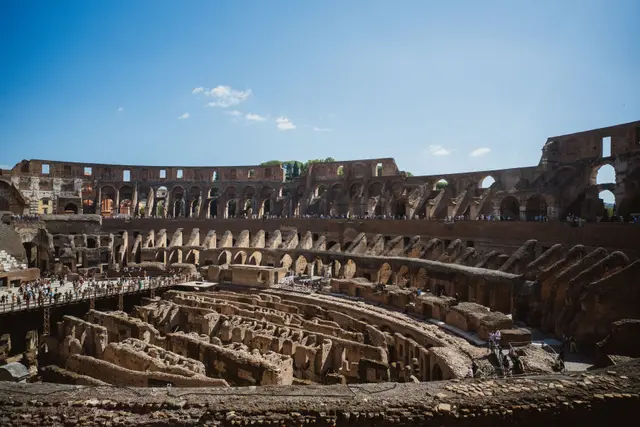
Begin the day at the heart of Imperial Rome's world of spectacle. Work on the Flavian Amphitheatre began under Vespasian in AD 70 and his son Titus completed it in 80; it was built where the artificial lake of Nero's Domus Aurea had been and held about 50,000 spectators. Going in at the first slot of the morning, before the crowds build, makes the visit easier. Remember that once you have entered the site, the same ticket will not let you in a second time.
Getting there
- Metro Colosseo
Opening hours
25 Oct 2026–28 Feb 2027: 08:30–16:30, last entry 15:30. 1–28 Mar 2026: 08:30–17:30; 29 Mar–30 Sep 2026: 08:30–19:15; 1–24 Oct 2026: 08:30–18:30 (last entry one hour before closing).
Source: Turismo Roma · last checked 2026-10-22
Closed
25 December 2026 and 1 January 2027.
Source: Turismo Roma · last checked 2026-10-22
Entrance fee
Check the official site for current information
Source: Turismo Roma · last checked 2026-10-22
Tickets and booking
Online sales at ticketing.colosseo.it; phone bookings on 06 21115843. The same ticket does not allow a second entry.
Source: Turismo Roma · last checked 2026-10-22
Tips
Ticket prices and types could not be read from the official site; check current prices at ticketing.colosseo.it.
Day 1 · 2 · 10:30–13:00
The Roman Forum and the Palatine
Closed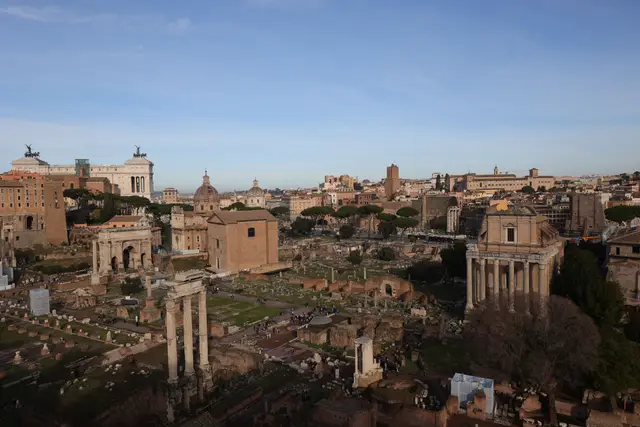
In the same archaeological area next to the Colosseum, walk among the temple ruins of the Roman Forum, where the city's political and religious life took place, then climb to the high gardens of the Palatine, where the emperors lived. Moving from arena to Forum to Palatine reads like the story of how Rome was born, in order. There is little shade, so bring water and comfortable shoes.
Getting there
- Walk
Opening hours
25 Oct 2026–28 Feb 2027: 09:00–16:30, last entry 15:30. 29 Mar–30 Sep 2026: 09:00–19:15; 1–24 Oct 2026: 09:00–18:30 (last entry one hour before closing).
Source: Turismo Roma · last checked 2026-10-22
Closed
25 December 2026 and 1 January 2027.
Source: Turismo Roma · last checked 2026-10-22
Tips
On a rainy day, shorten this part and give the Capitoline Museums more time.
Day 1 · 3 · 14:15–17:00
Piazza del Campidoglio and the Capitoline Museums
Closed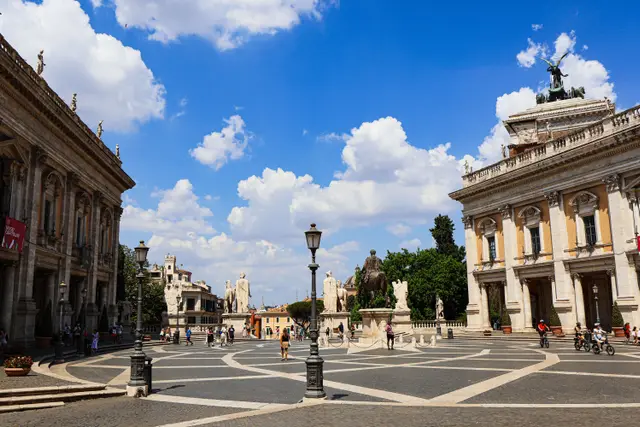
After lunch around the Jewish Ghetto, climb to Piazza del Campidoglio, designed by Michelangelo. The Capitoline Museums on the square hold one of the most important collections of ancient Roman sculpture and look down over the Roman Forum, so you see the morning's ruins again from above. In winter, when the archaeological area closes early, spending the afternoon here balances the day.
Getting there
- Walk
Opening hours
Daily 09:30–19:30; 24 and 31 December 09:30–14:00. Last entry one hour before closing. Address: Piazza del Campidoglio 1.
Source: Musei Capitolini · last checked 2026-10-22
Closed
1 May and 25 December.
Source: Musei Capitolini · last checked 2026-10-22
Entrance fee
For non-residents of Rome, museum only: full €15.00, reduced €9.50; prices change during exhibitions. Free under 6. Advance presale adds a €1.00 fee; none at the desk on the day.
Source: Musei Capitolini · last checked 2026-10-22
Tips
Advance presale tickets are non-refundable; you can also buy on the day at the desk. The Sale degli Horti di Mecenate are closed for works; check before you go.
Day 1 · 4 · 17:30–21:30
Tiber Island and Trastevere
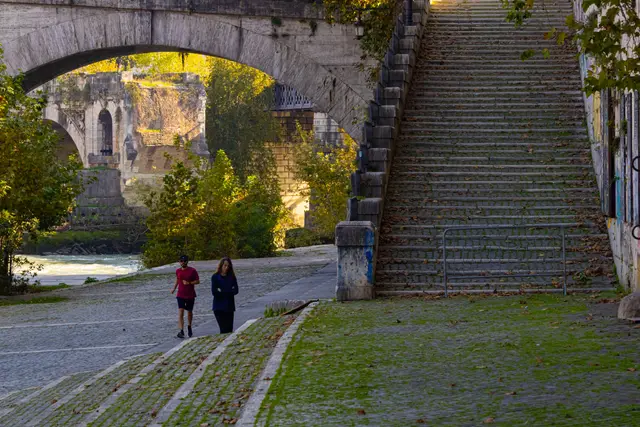
Isola Tiberina, the Tiber's only urban island, is joined to the Jewish Ghetto and Trastevere by two bridges; cross over to the right bank. With its narrow lanes and squares recalling old Rome, Trastevere is the city's most neighbourly corner for ending the day. Stop at Santa Maria in Trastevere, probably Rome's first official place of Christian worship, meet at Piazza Trilussa and have dinner at a trattoria serving traditional Roman food.
Getting there
- Walk
Good to know
Tiber Island is the Tiber's only urban island, linked to Trastevere and the Jewish Ghetto by two bridges. Santa Maria in Trastevere is probably the first official place of Christian worship in Rome.
Source: Turismo Roma · last checked 2026-10-22
Tips
In the evening there are also places serving traditional food around Piazza San Callisto.


Day 2 · The Vatican and the right bank
Start early with the Vatican Museums and the Sistine Chapel, move on to St Peter's Basilica, see Castel Sant'Angelo in the afternoon and end the evening around Piazza Navona and Campo de' Fiori.
Day 2 · 1 · 08:00–11:30
The Vatican Museums and the Sistine Chapel
ClosedBooking recommendedThe collections the popes built up over centuries culminate in the Sistine Chapel with Michelangelo's ceiling and "Last Judgement" frescoes. This is the longest and most intense visit of the plan; buy your ticket in advance so you can go in at opening and move ahead before the rooms fill up. Wear clothes that cover shoulders and knees and leave large bags at the free cloakroom. No photos or video in the Sistine Chapel, where complete silence is requested.
Getting there
- Metro Ottaviano
Opening hours
Monday–Saturday 08:00–20:00, last entry 18:00. Last Sunday of the month 09:00–14:00, free, last entry 12:30. Visitors must leave the rooms 30 minutes before closing.
Source: Musei Vaticani · last checked 2026-10-22
Closed
Sundays (except the last Sunday of the month, unless it falls on Easter, 29 June, or 25, 26 or 31 December). Also 8, 25 and 26 December.
Source: Musei Vaticani · last checked 2026-10-22
Entrance fee
Full ticket €20.00; "Skip the Line" booked on the official site €20.00 + €5.00. Reduced €10.00; "Skip the Line" €10.00 + €5.00.
Source: Musei Vaticani · last checked 2026-10-22
Good to know
No sleeveless or low-cut clothing, shorts above the knee, miniskirts or hats. Large bags, backpacks and umbrellas go to the free cloakroom. Flash, tripods, selfie sticks and drones are not allowed.
Source: Musei Vaticani · last checked 2026-10-22
Tips
Buy online only at tickets.museivaticani.va; the museums warn against look-alike sites. A ticket is valid only on its date and is non-refundable.
Day 2 · 2 · 11:45–13:15
St Peter's Basilica
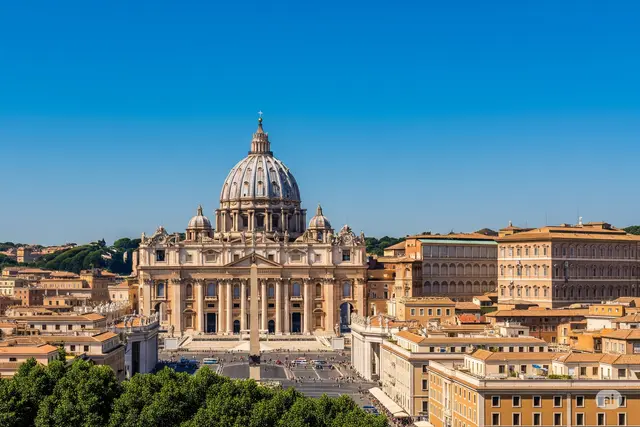
Michelangelo's dome, his Pietà and Bernini's bronze baldachin share one space. Michelangelo took on the dome in 1547, aged 72, and died before it was finished; the Pietà (1498–99) in the first chapel of the right aisle is the only work he signed. Bernini's baldachin, about 29 metres high, dates from 1624–33. Entry begins with a security check by the Italian State Police, at the right-hand colonnade as you face the basilica.
Getting there
- Walk
Opening hours
26 Oct 2026–28 Mar 2027: 07:00–19:00. 1 Jun–25 Oct 2026: daily 07:00–20:00, last entry 19:15. Dome: winter 07:30–17:00, summer 07:00–18:00.
Source: Basilica di San Pietro · last checked 2026-10-22
Entrance fee
Check the official site for current information
Source: Basilica di San Pietro · last checked 2026-10-22
Good to know
Entry only in clothing suitable for a place of worship: no very short clothing, sleeveless tops or hats. No food, drink or smoking inside, and no pets.
Source: Basilica di San Pietro · last checked 2026-10-22
Tips
The official page does not state an entry fee; check the official site for current information. A dome ticket includes entry to the basilica with a digital audio guide. The basilica asks visitors not to take photos inside.
Day 2 · 3 · 14:30–16:30
Castel Sant'Angelo and Ponte Sant'Angelo
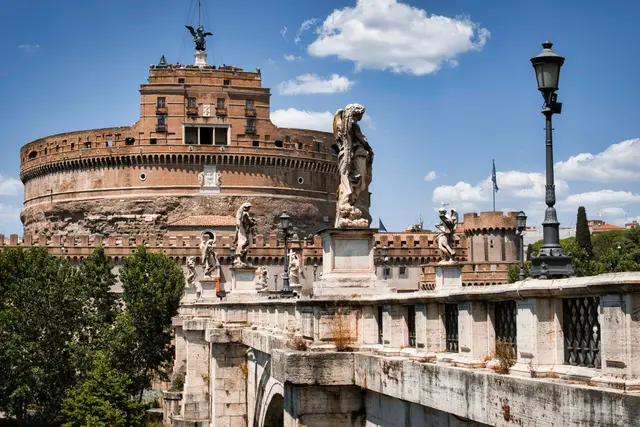
After lunch in Borgo or Prati, walk to Hadrian's Mausoleum on the right bank of the Tiber. An emperor's tomb turned fortress, papal refuge and museum shows Rome's layered history in a single building. In 1625 the bronzes of the Pantheon's portico were stripped for St Peter's baldachin and for this castle's cannons, a link you will recall at the Pantheon tomorrow. The angel statues on the bridge and the view of the Tiber are worth stopping for even if you do not go inside.
Getting there
- Walk
Opening hours
Check the official site for current information
Source: Turismo Roma · last checked 2026-10-22
Good to know
Castel Sant'Angelo stands on the right bank of the Tiber near the Vatican and is also known as Hadrian's Mausoleum.
Source: Turismo Roma · last checked 2026-10-22
Tips
Hours, closing days and fees could not be verified from an official source; if you want to go in, check the official site for current information.
Day 2 · 4 · 17:00–21:30
Piazza Navona and Campo de' Fiori
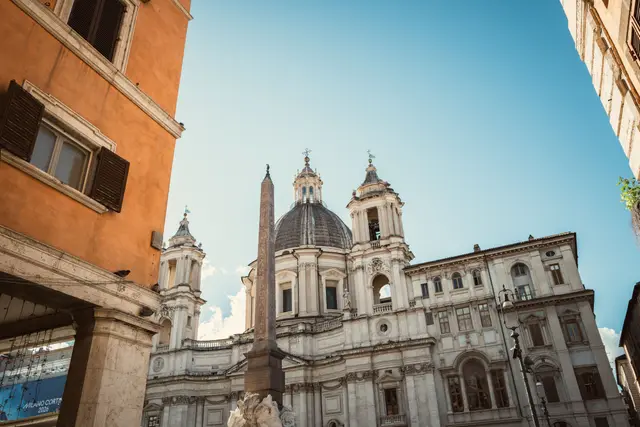
Built over the track of the Stadium of Domitian, Piazza Navona still keeps the shape of the ancient racecourse. The square sets the two great rivals of Roman Baroque face to face: Bernini's Fountain of the Four Rivers, commissioned by Pope Innocent X, and Borromini's church of Sant'Agnese in Agone. Walk the square in the late-afternoon light, then have dinner a few streets away around Campo de' Fiori.
Getting there
- Walk
Good to know
The square sits on the track of the Stadium of Domitian; Bernini's Fountain of the Four Rivers and Borromini's Sant'Agnese in Agone are here.
Source: Italia.it (ENIT) · last checked 2026-10-22
Tips
The square is an open public space with no entry fee.


Day 3 · The Baroque centre
See Bernini and Caravaggio at the Galleria Borghese in the morning, walk down through Villa Borghese and the Pincio to the Spanish Steps, then the Trevi Fountain at midday and the Pantheon in the afternoon.
Day 3 · 1 · 09:00–11:00
Galleria Borghese
Booking recommended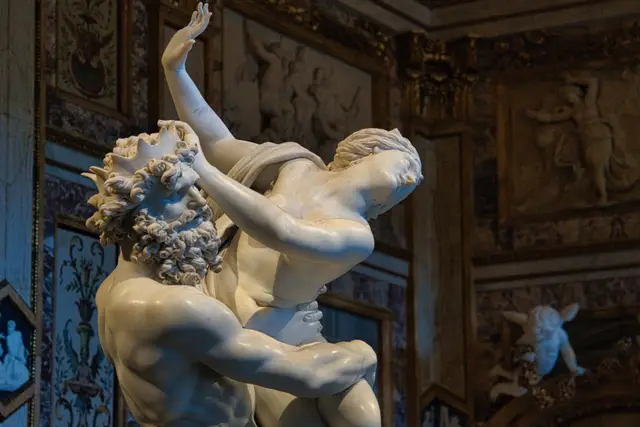
Sculptures in which Bernini turned marble into flesh and paintings by Caravaggio can be seen up close, at the scale of a villa. Here are Bernini's "David", "Apollo and Daphne" and "The Rape of Proserpina"; Caravaggio's "Saint Jerome Writing" and "Young Sick Bacchus"; Canova's "Paolina Borghese"; and works by Raphael, Titian and Correggio. Plan your visit ahead by choosing a time slot.
Tickets and booking
Check the official site for current information
Source: Italia.it (ENIT) · last checked 2026-10-22
Good to know
The collection includes Bernini's "David", "Apollo and Daphne" and "The Rape of Proserpina"; Caravaggio's "Saint Jerome Writing" and "Young Sick Bacchus"; and Canova's "Paolina Borghese".
Source: Italia.it (ENIT) · last checked 2026-10-22
Tips
Hours, closing days, fees and booking rules could not be read from the official site; check current rules at galleriaborghese.cultura.gov.it.
Day 3 · 2 · 11:30–12:15
The Spanish Steps
Walk through Villa Borghese and the Pincio to reach the top of the steps at Trinità dei Monti. Linking the Pincian Hill to Piazza di Spagna, the steps were built between 1723 and 1726 by the architect Francesco De Sanctis and opened by Pope Benedict XIII for the 1725 Jubilee. The view from the top down Via Condotti shows the city's elegant side. In spring, from about mid-April to mid-May, around 450 azaleas are placed on the steps.
Getting there
- Walk
Good to know
Francesco De Sanctis built the steps between 1723 and 1726; after the 2015–2016 restoration they reopened on 22 September 2016.
Source: Turismo Roma · last checked 2026-10-22
Tips
The steps are a public space; follow local rules.
Day 3 · 3 · 12:30–13:15
The Trevi Fountain
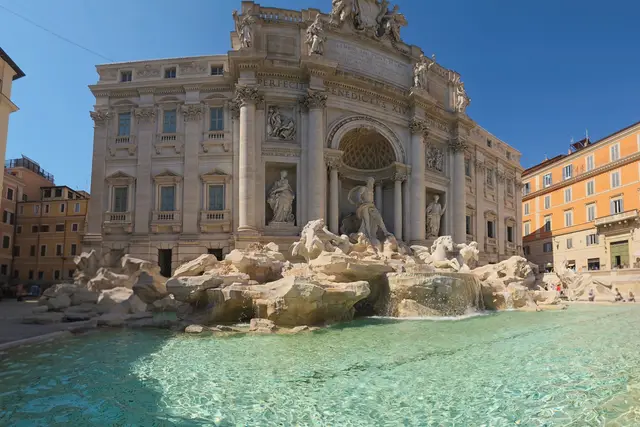
The end point of the ancient Aqua Virgo aqueduct, still working today, where Baroque sculpture meets water. Nicola Salvi won the competition Pope Clement XII launched in 1732, and Giuseppe Pannini completed the work. The famous scene in Fellini's "La Dolce Vita" was filmed here, and tradition says that whoever throws a coin into the fountain will return to Rome. Because the inner area opens at 11:30 on Mondays and Fridays, the visit is set for midday.
Getting there
- Walk
Opening hours
Inner area Monday and Friday 11:30–22:00; Tuesday, Wednesday, Thursday, Saturday and Sunday 09:00–22:00. Last entry 21:00. May change on some days.
Source: Fontana di Trevi · Roma Capitale · last checked 2026-10-22
Entrance fee
Since 2 February 2026, entering the inner area of the fountain costs €2 for non-residents of Rome; viewing it from the square is free. Free for Rome residents, disabled visitors plus one companion, and Roma MIC Card holders.
Source: Fontana di Trevi · Roma Capitale · last checked 2026-10-22
Tips
Seeing the fountain from the square outside is free. For the inner area, on-site payment is by card only; tickets are also sold online.
Day 3 · 4 · 14:30–15:30
The Pantheon
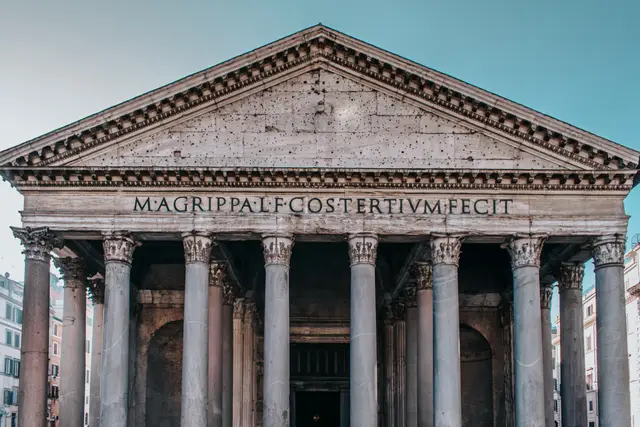
After lunch around the Pantheon, go inside: light falling only through the opening at the top of the dome tells the whole story of the building. Agrippa built the first temple in 27 BC; Hadrian rebuilt it in AD 118–125, and it became a church in 609. The dome's height equals its diameter (just over 43 metres) and the oculus is about 8.92 metres across. Raphael and the kings of Italy are buried here. Afterwards, enjoy free time in the streets between Navona and Campo de' Fiori.
Getting there
- Walk
Opening hours
Daily 09:00–19:00, last entry 18:30; the ticket office closes at 18:00.
Source: Turismo Roma · last checked 2026-10-22
Entrance fee
Check the official site for current information
Source: Turismo Roma · last checked 2026-10-22
Good to know
Mass times: Saturdays and eves of feast days 17:00; Sundays and feast days 10:30.
Source: Basilica di Santa Maria ad Martyres · last checked 2026-10-22
Tips
The fee could not be verified from an official source; check at the entrance or on the official ticket portal. Hours may change during Mass.


Getting around
Getting there
The Leonardo Express runs non-stop between Fiumicino Airport and Roma Termini in 32 minutes, usually every 15 minutes. Pay at the gates with a contactless card, phone or watch (one ticket per card and passenger).
Source: Trenitalia · last checked 2026-10-22
Getting there
Reach the Colosseum on Metro B at "Colosseo" and the Vatican Museums on Metro A at "Ottaviano".
Source: Italia.it (ENIT) · last checked 2026-10-22
Entrance fee
Leonardo Express ticket €14; with "Minigruppi", 4 tickets in one purchase for €40. Free under 4.
Source: Trenitalia · last checked 2026-10-22
Entrance fee
City transport: BIT €1.50 (100 minutes); ROMA 24H €8.50, 48H €15.00, 72H €22.00. You can pay Tap & Go with a contactless bank card on buses and trams and at metro gates.
Source: ATAC Roma · last checked 2026-10-22
Good to know
Rome's licensed taxis are white with "TAXI" on the roof; call 060609. The tourist call centre is 06 06 08.
Source: Turismo Roma · last checked 2026-10-22
Good to know
Call 112 in an emergency; the European emergency number is free throughout the EU.
Source: European Commission · last checked 2026-10-22
What and where to eat
Recommended places
L'Osteria della Trippa
TrastevereTraditional Lazio cooking
MICHELIN Guide Bib Gourmand; the guide mentions its offal-led menu, tripe, carciofi alla giudia and a wine list focused on Lazio. It fits the evening of day one.
Source: MICHELIN Guide · MICHELIN Guide · last checked 2026-10-22
Romanè
Trionfale, behind the VaticanRoman and Lazio cooking
MICHELIN Guide Bib Gourmand; the guide notes its generous, simple Lazio cooking very close to the Vatican, including trippa alla romana and saltimbocca alla romana. Handy for lunch on day two.
Source: MICHELIN Guide · MICHELIN Guide · last checked 2026-10-22
Hosteria Grappolo d'Oro
Piazza della Cancelleria, behind NavonaTraditional Roman cooking
MICHELIN Guide Bib Gourmand; the guide mentions its classic, generous Roman cooking, pastas such as amatriciana, carbonara and cacio e pepe, and the "Percorso Romano" tasting menu.
Source: MICHELIN Guide · MICHELIN Guide · last checked 2026-10-22
Roscioli
Around Campo de' FioriRoman and Italian cooking
Selected by the MICHELIN Guide; the guide mentions Roman pastas, fish and meat dishes and a wide choice of cured meats and cheeses, and advises booking ahead.
Source: MICHELIN Guide · MICHELIN Guide · last checked 2026-10-22
Armando al Pantheon
PantheonClassic Roman cooking
Selected by the MICHELIN Guide; the guide describes a small restaurant beside the Pantheon, run by the Gargioli family since 1961, serving traditional Roman and Lazio food.
Source: MICHELIN Guide · MICHELIN Guide · last checked 2026-10-22
Poldo e Gianna Osteria
Near the ParliamentTraditional Roman cooking
Selected by the MICHELIN Guide; the guide presents it as a contemporary osteria true to Roman tradition with seasonal produce, and suggests booking for the terrace.
Source: MICHELIN Guide · MICHELIN Guide · last checked 2026-10-22
What to eat and where to look
Roman-Jewish cooking and kosher restaurants
The Jewish Ghetto, for lunch on day one
Source: Italia.it (ENIT) · last checked 2026-10-22
Local specialities
Carbonara
Pasta made with egg, guanciale and Roman pecorino; Italy's official tourism site calls it "almost the city's official dish".
Source: Italia.it (ENIT) · Official tourism source · last checked 2026-10-22
Cacio e pepe and gricia
According to Rome's tourism site, Pecorino Romano is the essential ingredient of the city's four signature pastas: cacio e pepe, carbonara, gricia and amatriciana.
Source: Turismo Roma · Official tourism source · last checked 2026-10-22
Pecorino Romano PDO
A sheep's cheese that gained Protected Designation of Origin status in 1996; genuine wheels carry the PDO mark and a stylised sheep's head logo on the rind.
Source: Turismo Roma · Official tourism source · last checked 2026-10-22
Carciofi alla romana and alla giudia
The Roman artichoke (Carciofo Romanesco del Lazio PGI) stars in markets from December to May. "Alla romana" is slow-cooked in plenty of olive oil with garlic, parsley and Roman mint; "alla giudia" is fried twice stem-up and is a classic of Roman-Jewish cooking.
Source: Italia.it (ENIT) · Official tourism source · last checked 2026-10-22
Saltimbocca alla romana
Veal slices topped with prosciutto and sage.
Source: Italia.it (ENIT) · Official tourism source · last checked 2026-10-22
Abbacchio a scottadito
Lamb chops considered the centrepiece of holidays and spring; the name, meaning "finger-burning", comes from eating them by hand while hot.
Source: Turismo Roma · Official tourism source · last checked 2026-10-22
Maritozzo
A sweet bun whose name comes from "marito" (husband); in the 19th century suitors gave it to their fiancées on the first Friday of March. Today it is eaten at breakfast and throughout the day.
Source: Turismo Roma · Official tourism source · last checked 2026-10-22
Opening hours and prices vary by venue; check the venue’s own site before you go. Recommendations are not paid placements.
Where to stay
Candidates were picked by distance to the area, star rating, guest rating (weighted by number of reviews) and completeness of hotel details. Ratings, review counts and details come live from our catalogue. Tiers follow the star rating.
Sample dates: 26.11–28.11 (2 nights), 2 adults. Prices change with dates; choose your own dates on the hotel page.
Historic centre: Pantheon, Navona, Campo de' Fiori
All of day three and the evening of day two are within walking distance, and it has the widest choice for dinner.
Good for: First-timers, keen walkers and couples
Budget


Mid-range


Prati and the Vatican
An orderly district centred on Piazza Cavour, the closest base for an early start at the Vatican Museums on day two, with Metro A links to the rest of the city.
Good for: Families and travellers who want a quieter district
Budget


Termini and Monti
Around Roma Termini, where the Leonardo Express arrives, making it the easiest base for the airport. Monti is described as Rome's oldest district and is close to the Colosseum.
Good for: Short stays, early or late flights and budget travellers
Budget


Mid-range


Photos: Pexels (Görkem Özdemir, John (Giannis) Tekeridis, Ludovic Delot, C1 Superstar, Ariadne Barroso, Omar Ramírez Vallejo, Travel with Lenses, Joshuan Barboza, LUIS ANTONIO FUNCIA, Heather R, Ceyda Çiftci)
