Self-guided itinerary · free
Edirne in 2 days: the Selimiye, the bazaars and the bridges
Edirne has two faces: a city of mosque complexes and markets built around Mimar Sinan's Selimiye, and a border city of rivers, bridges and bastions. On day one you walk from the Selimiye Mosque to the Museum of Turkish and Islamic Arts in its complex, the Archaeology and Ethnography Museum, the Arasta, the Old Mosque, the Bedesten and the Rüstem Paşa Caravanserai, ending at the Necmi İğe House. On day two you visit Hıdırlık Bastion and the Sultan Bayezid II Complex, cross the Tunca bridges and reach the Meriç Bridge at sunset. The Necmi İğe House is closed on Mondays; the other museums open every day.
Prepared by: Kolay Seyahat content teamLast updated 22/10/2026Every fact links to an official source

This is not a package tour. This itinerary is free information. Flights, hotels and experiences are each sold separately, under their own seller’s terms, with separate payment and a separate contract. Prices are never linked to one another.
Day by day
Progress is saved on this device only. Your location is never sent.
Day 1 · The Selimiye, the museums and the markets
The whole day is on foot: the Selimiye and the two museums of its complex in the morning, the Arasta at midday, the Old Mosque, the Bedesten and the Rüstem Paşa Caravanserai in the afternoon, and the Necmi İğe House late in the day. The Necmi İğe House is closed on Mondays, so do not plan this day for a Monday.
Day 1 · 1 · 09:00–10:15
The Selimiye Mosque
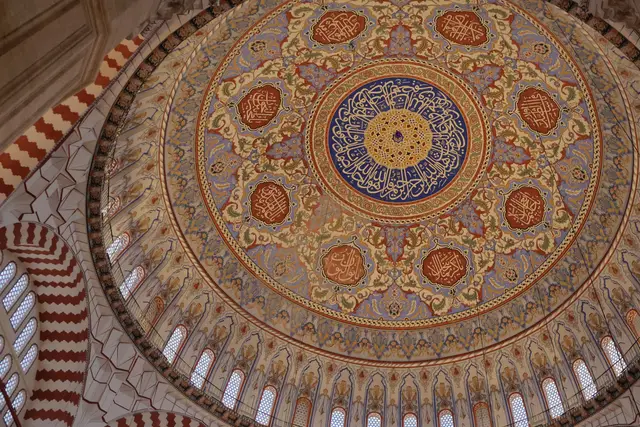
Whichever way you approach Edirne, the first thing you see is the dome of the Selimiye and the four slender minarets around it. Mimar Sinan built the mosque between 1569 and 1575, and in 2011 it was inscribed on the UNESCO World Heritage List together with its complex. Inside, the eye goes first to the breadth of the dome and then to the details: the stone and marble work, the tiles, the carved wood and the mother-of-pearl inlay. The Directorate General of Foundations has completed a four-year restoration, and the mosque reopened for worship in 2026; the painted decoration of the dome, the tiles and the interlocking wooden doors were all part of the work. Starting the day here makes the rest of the programme easier to read, because the Arasta, the museums and the markets all grew up around this building.
Good to know
Built by Mimar Sinan between 1569 and 1575; the mosque and its complex were inscribed on the UNESCO World Heritage List in 2011.
Source: GoTürkiye · last checked 2026-10-22
Good to know
The Directorate General of Foundations completed a four-year restoration, and the mosque officially reopened for worship in 2026.
Source: Vakıflar Genel Müdürlüğü · last checked 2026-10-22
Tips
The mosque is a place of worship, so be mindful of prayer times and dress respectfully. Visiting hours are not published in the official sources.
Day 1 · 2 · 10:15–11:00
The Museum of Turkish and Islamic Arts
ClosedThis museum inside the Selimiye complex continues the city's first museum: the collection was founded in a madrasa of the complex in the early years of the Republic, and took its present name when the new archaeology museum opened in 1971. Its rooms hold regional costumes from the Balkans, wooden chests, calligraphic panels and examples of Edirnekâri, the decorative painting style named after the city. Fifteenth-century and Janissary gravestones stand in the courtyard, and cannons used in the Balkan Wars sit in the garden. The room at the entrance is dedicated to Mimar Sinan, so seeing it straight after the mosque rounds off the architect's mark on the city.
Opening hours
Open 09:00–19:00; the ticket office closes at 18:30.
Source: muze.gov.tr · last checked 2026-10-22
Closed
Open every day.
Source: muze.gov.tr · last checked 2026-10-22
Entrance fee
€3 (muze.gov.tr, English page). Check the lira equivalent at the ticket office.
Source: muze.gov.tr · last checked 2026-10-22
Tips
The listed hours make no seasonal distinction; between November and March, check the hours at the entrance.
Day 1 · 3 · 11:00–12:00
The Archaeology and Ethnography Museum
ClosedWalk fifty metres from the eastern gate of the Selimiye and you reach this museum. Construction began in 1969 and the building opened on 13 June 1971. In the garden you will find Aeolic capitals from a temple at Enez, along with fish ponds and birdhouses that reflect Ottoman water culture. The ethnography hall shows Balkan costumes, calligraphy, carpets and a reconstructed Edirne bridal room, as well as some of the personal belongings Atatürk used on his visit to the city. The archaeology hall runs from fossils to Thracian Horseman grave stelae and finds from the excavations at Enez, which have continued since 1971–72.
Opening hours
Open 09:00–19:00; the ticket office closes at 18:30.
Source: muze.gov.tr · last checked 2026-10-22
Closed
Open every day.
Source: muze.gov.tr · last checked 2026-10-22
Good to know
Construction began in 1969 and it opened on 13 June 1971; it is 50 m from the eastern gate of the Selimiye Mosque.
Source: muze.gov.tr · last checked 2026-10-22
Tips
Leave time for the stonework in the garden. Closing time may change in winter, so ask at the entrance before you visit.
Day 1 · 4 · 12:00–12:45
The Selimiye Arasta
Running right below the mosque, the Arasta was commissioned in the reign of Sultan Murad III from Davut Ağa, Mimar Sinan's assistant, to provide income for the Selimiye. The 225-metre market is covered by 73 arches with four gates, and 124 shops line its length. It also had a structural role, supporting the mosque on its western and southern sides. As Evliya Çelebi described it, it is also known as the Cobblers' Market. Before lunch it is a good place to look for Edirne sweets such as almond paste and deva-i misk halva.
Good to know
Commissioned from Davut Ağa in the reign of Murad III to provide income for the Selimiye; 225 m long, with 73 arches, 4 gates and 124 shops.
Source: Edirne Valiliği · last checked 2026-10-22
Tips
Shop hours vary from one shop to the next.
Day 1 · 5 · 14:00–14:45
The Old Mosque
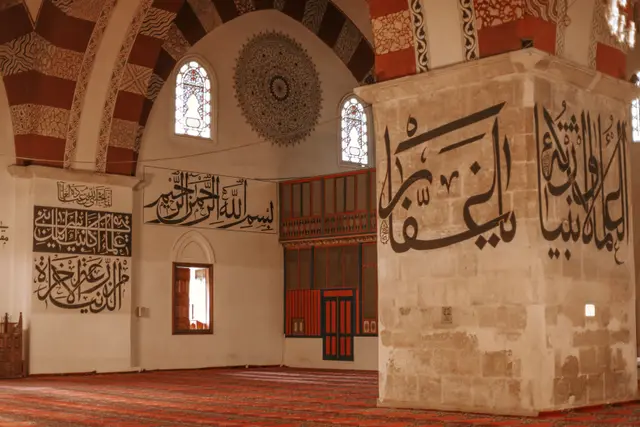
After lunch, head to the Old Mosque in the town centre. It is the first original monumental building in Edirne to survive, and a classic example of the multi-domed mosque; work began in 1403 and was completed in 1414. Built about a century and a half before the Selimiye, it shows the early architecture of the period when the city was the Ottoman capital, and it is a good place to compare with the dome you saw in the morning.
Good to know
The first original monumental building in Edirne to survive; work began in 1403 and was completed in 1414.
Source: GoTürkiye · last checked 2026-10-22
Tips
The mosque is a place of worship; be mindful of prayer times and dress respectfully.
Day 1 · 6 · 14:45–15:30
The Bedesten
Right beside the Old Mosque, the Bedesten was built in 1418 and stands out for its 14 lead-covered domes and walls decorated with two-coloured cut stone. Evliya Çelebi wrote about the value of the jewellery sold here and the 60 night watchmen who guarded the market. It is still a place to shop today; walking between the stalls, it is enough to notice the cool air under the domes and the scale of the building.
Good to know
Built in 1418 with 14 lead-covered domes and walls decorated with two-coloured cut stone; today it is a place to shop.
Source: GoTürkiye · last checked 2026-10-22
Tips
Shop hours vary; the Bedesten is also a good choice on a rainy day.
Day 1 · 7 · 15:30–16:15
Rüstem Paşa Caravanserai
Built by Mimar Sinan in 1561, the Rüstem Paşa Caravanserai is described as one of the grandest caravanserais of classical Ottoman architecture. Two-storey rooms line a rectangular open courtyard, and there are 21 shops along the façade. Stepping into the courtyard and taking in the layout brings home the city's role as a stop on the trade routes.
Good to know
Built by Mimar Sinan in 1561; two-storey rooms surround a rectangular open courtyard, with 21 shops on the façade.
Source: GoTürkiye · last checked 2026-10-22
Tips
The building is in commercial use today; check at the door whether the courtyard is open to visitors.
Day 1 · 8 · 16:15–17:00
The Necmi İğe House Ethnography Museum
ClosedThe last stop of the day is the Necmi İğe House beside the Yellow Mosque. This eighteenth-century mansion, the oldest surviving example of civil architecture in Edirne, covers about 900 square metres, with 7 rooms and 6 raised alcoves across its harem and selamlık sections. Necmi İğe, one of the founders of the Edirne Museum, lived here from 1922 until his death in 1953. The museum tells the story of local wedding customs, from asking for the bride's hand and the dowry room to the henna night and the groom's shave, alongside costumes from Rumelia and the Balkans; after the formal museums of the morning, it is a warm close that looks at everyday life.
Opening hours
Open 09:00–17:30; the ticket office closes at 17:00.
Source: muze.gov.tr · last checked 2026-10-22
Closed
Closed on Mondays.
Source: muze.gov.tr · last checked 2026-10-22
Good to know
An eighteenth-century mansion, the oldest surviving example of civil architecture in Edirne; Necmi İğe (1898–1953) lived here from 1922 until his death.
Source: muze.gov.tr · last checked 2026-10-22
Tips
Closed on Mondays; if day 1 falls on a Monday, move this stop to day 2. The ticket office closes at 17:00, so do not arrive late; in winter, check the hours at the entrance.


Day 2 · Hıdırlık Bastion, the Bayezid Complex and the bridges
In the morning, explore the city's defensive history at Hıdırlık Bastion and then the Sultan Bayezid II Complex on the Tunca; in the afternoon, walk the bridges and finish the day at the Meriç Bridge at sunset. On a rainy day you can swap the bridge walk for the Bedesten and the Ali Paşa Bazaar.
Day 2 · 1 · 09:00–10:30
Hıdırlık Bastion Balkan History Museum
ClosedThe second day begins with the city's defensive layer. Hıdırlık Bastion is the largest of Edirne's 24 bastions and was built between 1886 and 1888. During the Balkan Wars it served as the headquarters of the defence of Edirne under Şükrü Paşa. You can visit the headquarters building, 18 gun rooms, a 120-metre tunnel and 4 tunnel chambers; on display are finds from the excavation and restoration along with cannons, rifles, pistols, cannonballs and military uniforms of the period. Walking the tunnels explains how the city was defended a century ago far better than any plan.
Opening hours
Open 09:00–19:00; the ticket office closes at 18:30.
Source: muze.gov.tr · last checked 2026-10-22
Closed
Open every day.
Source: muze.gov.tr · last checked 2026-10-22
Good to know
The largest of Edirne's 24 bastions; built in 1886–1888, it was the headquarters of the defence of Edirne under Şükrü Paşa in the Balkan Wars.
Source: muze.gov.tr · last checked 2026-10-22
Tips
The tunnel floors are uneven in places, so wear comfortable shoes. Between November and March, confirm the opening and closing times at the ticket office.
Day 2 · 2 · 10:45–12:30
The Sultan Bayezid II Complex
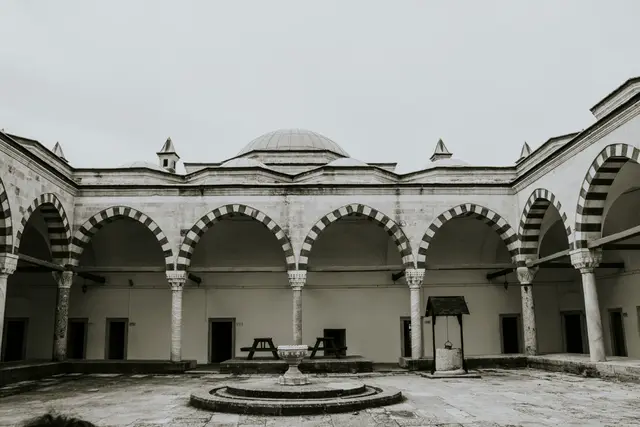
On the bank of the Tunca, the Sultan Bayezid II Complex is now home to the Health Museum run by Trakya University. The museum's website highlights the complex's medical history and the theme of healing through music. Set a little apart from the centre in a bend of the river, the group of buildings also suits an unhurried walk, and the bridges are an easy stroll away.
Tips
The museum's opening hours and fees could not be read on its official website; check saglikmuzesi.trakya.edu.tr before you go.
Day 2 · 3 · 14:00–16:00
The Tunca bridges
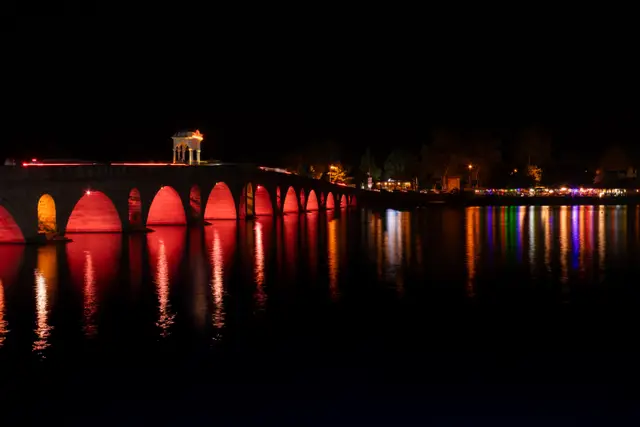
Edirne is ringed by four rivers, the Arda, the Tunca, the Meriç and the Ergene, so bridges are part of the city's character. Spend the afternoon on a riverside walk that links the Bayezid II, Saraçhane and Yalnızgöz (Single-Eye) bridges. Each bridge gives a different view of the river and the city, and finishing towards Karaağaç sets you up for the evening's last stop.
Good to know
The city is surrounded by the Arda, Tunca, Meriç and Ergene rivers; its notable bridges include the Bayezid II, Saraçhane, Yalnızgöz (Single-Eye) and Meriç (Mecidiye) bridges.
Source: GoTürkiye · last checked 2026-10-22
Tips
The walk is long; wear comfortable shoes, and take a taxi for one leg if you need to.
Day 2 · 4 · 16:30–17:30
The Meriç (Mecidiye) Bridge
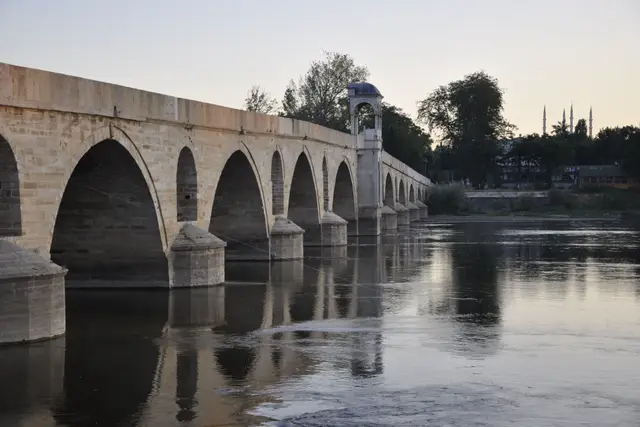
Finish the programme at the Meriç Bridge on the road to Karaağaç. Here the river widens, and the late-afternoon light falls on the water and the trees along the bank; it is a popular spot to watch the sun go down over Edirne. Afterwards, a taxi is the most practical way back to the centre.
Tips
Time your arrival to the sunset.


What and where to eat
What to eat and where to look
Edirne fried liver
The liver restaurants in the town centre
Source: TÜRKPATENT Coğrafi İşaret · last checked 2026-10-22
Edirne liver wrap (ciğer sarma)
Restaurants in the centre
Source: TÜRKPATENT Coğrafi İşaret · last checked 2026-10-22
Edirne almond paste and deva-i misk halva
Confectioners around the Selimiye Arasta and the Ali Paşa Bazaar
Source: TÜRKPATENT Coğrafi İşaret · last checked 2026-10-22
Edirne white cheese
Delicatessens and breakfast places
Source: TÜRKPATENT Coğrafi İşaret · last checked 2026-10-22
Local specialities
Edirne fried liver
Thinly sliced liver fried in hot oil; registered with an indication of source.
Source: TÜRKPATENT Coğrafi İşaret · Geographical indication (reg. no 128) · last checked 2026-10-22
Edirne white cheese
Edirne's white cheese; registered with a designation of origin.
Source: TÜRKPATENT Coğrafi İşaret · Geographical indication · designation of origin (reg. no 93) · last checked 2026-10-22
Edirne almond paste
An Edirne sweet made with almonds; registered with an indication of source.
Source: TÜRKPATENT Coğrafi İşaret · Geographical indication (reg. no 656) · last checked 2026-10-22
Deva-i misk halva
A halva particular to Edirne; registered with an indication of source.
Source: TÜRKPATENT Coğrafi İşaret · Geographical indication (reg. no 643) · last checked 2026-10-22
Edirne liver wrap (ciğer sarma)
Edirne's liver wrap; registered with an indication of source.
Source: TÜRKPATENT Coğrafi İşaret · Geographical indication (reg. no 1186) · last checked 2026-10-22
Opening hours and prices vary by venue; check the venue’s own site before you go. Recommendations are not paid placements.
Where to stay
Candidates were picked by distance to the area, star rating, guest rating (weighted by number of reviews) and completeness of hotel details. Ratings, review counts and details come live from our catalogue. Tiers follow the star rating.
Sample dates: 26.11–27.11 (1 night), 2 adults. Prices change with dates; choose your own dates on the hotel page.
Selimiye – Kaleiçi (centre)
The Selimiye, the museums, the Arasta, the Old Mosque and the Bedesten are all within walking distance; day one can be done entirely on foot.
Good for: First-time visitors and travellers without a car


Meydan quarter – around the Yellow Mosque
Close to the Necmi İğe House and the historic residential streets; the centre is a walk away.
Good for: Couples who want quiet streets


Photos: Pexels (Maarten van den Heuvel, Ahmety 911, Şeyda Nur Uğur, Fatih Yavaşoğlu, Fatih Doğrul, Nihal Sönmez)
