Self-guided itinerary · free
Sarajevo in 3 days: Baščaršija, Trebević and Mostar
Sarajevo's Ottoman core, its Austro-Hungarian buildings and the traces of the 1990s siege sit within walking distance of each other; the plan spreads these three layers over two days and gives Mostar the third. Day one covers Baščaršija and the Sebilj, the Gazi Husrev-beg Mosque and the foundation museum in the Kuršumli Madrasa, the Latin Bridge where the 1914 assassination took place, and the City Hall (Vijećnica), opened in 1896. On day two the Trebević cable car gives a view over the city, and the afternoon is given to a respectful look at the siege years. On day three a morning train runs down the Neretva valley to Mostar for the Old Bridge and the old bazaar, with the Blagaj Tekke as an option. The cable car's website says it is closed Monday to Wednesday, so put day two between Thursday and Sunday. Hours and fees link to the official source with the date we last checked them.
Prepared by: Kolay Seyahat content teamLast updated 22/10/2026Every fact links to an official source

This is not a package tour. This itinerary is free information. Flights, hotels and experiences are each sold separately, under their own seller’s terms, with separate payment and a separate contract. Prices are never linked to one another.
Day by day
Progress is saved on this device only. Your location is never sent.
Day 1 · Baščaršija, the Gazi Husrev-beg complex, the Latin Bridge and the City Hall
Start the day with Bosnian coffee in Baščaršija and visit the Gazi Husrev-beg Mosque and the foundation museum; in the afternoon walk along the Miljacka to the Latin Bridge and the City Hall.
Day 1 · 1 · 09:00–09:45
Baščaršija and the Sebilj fountain
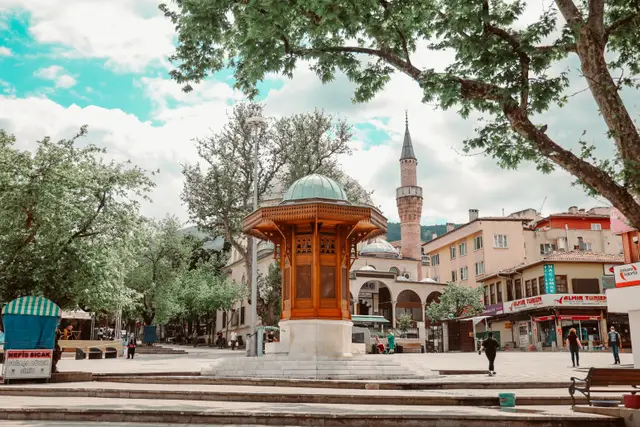
Baščaršija was founded in the 15th century by the city's founder Isa-beg Ishaković and by Gazi Husrev-beg and completed by the end of the 16th century; at one time it held 45 bazaars and more than 80 crafts. The Sebilj on the square was built in 1753, and the story goes that whoever drinks from Sarajevo's fountains will come back. As Visit Sarajevo suggests, begin the day with a traditional Bosnian coffee.
Getting there
- Walk
Good to know
Baščaršija and the Sebilj are open public spaces with no admission.
Source: Visit Sarajevo (Saraybosna Kantonu Turizm Birliği) · last checked 2026-10-22
Day 1 · 2 · 09:45–11:15
The Gazi Husrev-beg Mosque and the Kuršumli Madrasa
The largest mosque built in these lands; its architect was Adžem Esir Ali of Tabriz, chief architect of the empire until his death in 1538, and the building is a key example of the early Istanbul school. The mosque, clock tower, covered market and Morića Han show the Gazi Husrev-beg foundation as a whole. The Kuršumli Madrasa opposite was founded in 1537 and now houses the foundation's museum. Tickets are sold at the information centre in the mosque courtyard.
Getting there
- Walk
Opening hours
Summer hours for interior visits: 09:00–12:30 (Fridays until 12:00), 14:00–16:00, 17:30–19:00. In winter, morning visits run until 11:30 (Fridays until 11:00); for 13:00–16:00, ask the information service about availability in advance.
Source: Gazi Hüsrev Bey Vakfı · last checked 2026-10-22
Entrance fee
Interior visit of the mosque 5 KM (BAM).
Source: Gazi Hüsrev Bey Vakfı · last checked 2026-10-22
Tips
Tourist visits are only possible between prayer times; dress modestly and take your shoes off before entering the prayer area. Summer hours may shift slightly with prayer times.
Day 1 · 3 · 11:15–12:30
Lunch on Bravadžiluk
Bravadžiluk, named after the 16th-century locksmiths' bazaar, is known today for its ćevapi, pie and cook-shops. For lunch, see the Visit Sarajevo lists in the eating and drinking section.
Getting there
- Walk
Day 1 · 4 · 12:45–13:30
The Latin Bridge and the site of the 1914 assassination
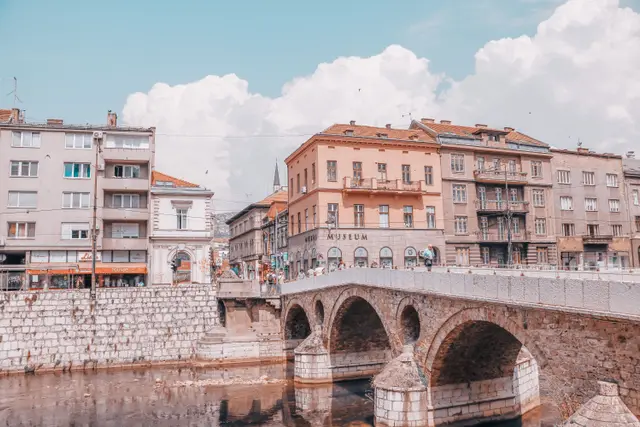
On 28 June 1914, Gavrilo Princip killed Archduke Franz Ferdinand, heir to the Austro-Hungarian throne, and his wife Sophie at today's corner of Obala Kulina bana and Zelenih beretki; the First World War followed. The museum across from the bridge covers the period of Austro-Hungarian rule.
Getting there
- Walk
Day 1 · 5 · 13:45–15:15
Vijećnica (City Hall)
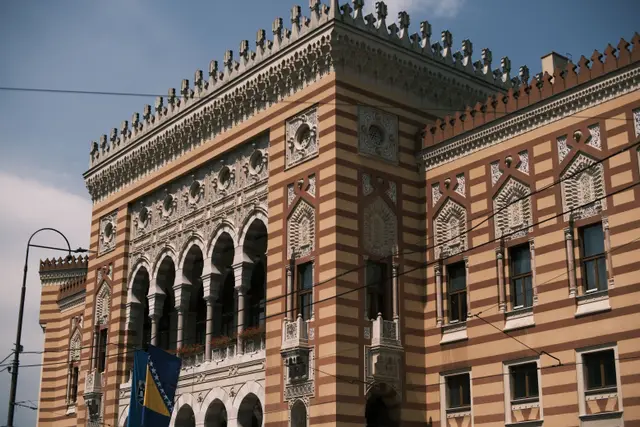
The City Hall opened on 20 April 1896 and was given to the National Library after the Second World War. Designed by Alexander Wittek, it was one of the most expensive projects of Austria-Hungary; it burned with the library collections during the siege and reopened after restoration in 2014. The halls and exhibitions inside tell this recent history quietly.
Getting there
- Walk
Opening hours
Daily 09:00–17:00, except during events.
Source: Gradska vijećnica Sarajevo (JP Sarajevo) · last checked 2026-10-22
Tips
It may be closed to visitors during events.
Day 1 · 6 · 15:30
Free time on Ferhadija and in Baščaršija
Walk from the Ottoman bazaar onto Ferhadija, the Austro-Hungarian-era street; the line where the two periods meet is one of the city's most photographed spots. Head back to Baščaršija for dinner.
Getting there
- Walk


Day 2 · The Trebević cable car and traces of the siege
Take the cable car up Trebević in the morning for a view over the city; in the afternoon, remember the siege years respectfully. The cable car is closed Monday to Wednesday, so put this day between Thursday and Sunday.
Day 2 · 1 · 09:30–12:30
The Trebević cable car
ClosedThe cable car runs from its lower station at Hrvatin up to Mount Trebević, a favourite outing for the city. At the top you can follow the walking paths and take in the whole Sarajevo valley.
Getting there
- Cable car
Getting there
The cable car's lower station: Hrvatin bb, Sarajevo.
Source: Sarajevska žičara (JP Sarajevo) · last checked 2026-10-22
Opening hours
Thursday–Sunday 09:00–19:00.
Source: Sarajevska žičara (JP Sarajevo) · last checked 2026-10-22
Closed
Closed Monday to Wednesday (notice on the website).
Source: Sarajevska žičara (JP Sarajevo) · last checked 2026-10-22
Tips
The website doesn't say whether the closing days are seasonal, so check it before you go. If you land on a closed day, spend this morning at the City Hall or the foundation museum instead.
Day 2 · 2 · 12:30–14:00
Lunch at a cook-shop in Baščaršija
Come down on the cable car and head back to the centre; try traditional dishes Visit Sarajevo recommends, such as japrak, bosanski lonac or klepe, at a cook-shop.
Getting there
- Walk
Day 2 · 3 · 14:30–17:00
Traces of the siege: the Sarajevo roses and the Tunnel of Hope
Throughout the siege, a tunnel dug under the airport runway between Dobrinja and Butmir was the city's only link with the outside world; it was built in 1993 and is 800 metres long. Part of it can be seen at the museum near Ilidža. In the city, shrapnel scars where civilians were killed have been filled with red resin and are known as the "Sarajevo roses" because they look like flowers. Visit these places quietly and respectfully.
Good to know
The tunnel was dug under the airport runway in 1993; 800 metres in total.
Source: Visit Sarajevo (Saraybosna Kantonu Turizm Birliği) · last checked 2026-10-22
Tips
We could not confirm the tunnel museum's hours, fees or transport from an official source; check the museum's own website before you go.
Day 2 · 4 · 17:30
Evening in Baščaršija
End the day in Baščaršija with baklava, kadayif or tufahija.
Getting there
- Walk
Day 3 · Mostar: the Old Bridge, the old bazaar and an optional trip to Blagaj
Take the morning train down the Neretva valley to Mostar; see the Old Bridge and the old bazaar, and if you like, the Blagaj Tekke at the source of the Buna. Return to Sarajevo on the evening train.
Day 3 · 1 · 07:15
Train from Sarajevo to Mostar
Fast train 723 leaves Sarajevo at 07:15 and runs down the Neretva valley to Čapljina, with Mostar as an intermediate stop. The valley and mountain views along the way are the first part of the day.
Getting there
- Train · Saraybosna → Mostar
Getting there
Sarajevo–Čapljina fast train 723: Sarajevo 07:15, Čapljina 09:40 (2025/2026 timetable); Mostar is an intermediate stop.
Source: Željeznice Federacije BiH · last checked 2026-10-22
Tips
The timetable only shows the end-station times; confirm the Mostar arrival time, and the Mostar departure time for the way back, with ŽFBH.
Day 3 · 2 · 10:00–13:00
Mostar's Old Bridge and old bazaar
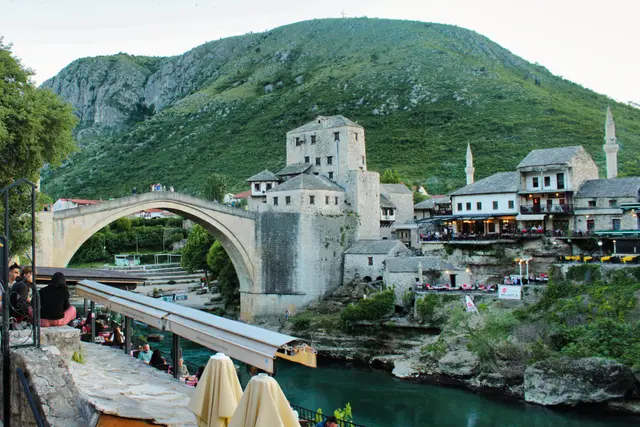
Mostar is the cultural and historical centre of Herzegovina. Its symbol is the Old Bridge (Stari most), a masterpiece of Ottoman architecture that has linked the two banks of the Neretva for centuries. Stone lanes, the bazaar and traditional crafts come together in the old town; see the bridge from both banks and from the riverside.
Getting there
- Walk
Tickets and booking
No booking is needed for this destination.
Source: Hersek-Neretva Kantonu Turizm Birliği · last checked 2026-10-22
Day 3 · 3 · 13:00–14:15
Lunch in Mostar's old town
For lunch, try traditional Herzegovinian cooking in the old town.
Getting there
- Walk
Day 3 · 4 · 14:30–16:00
Optional: the Blagaj Tekke and the source of the Buna
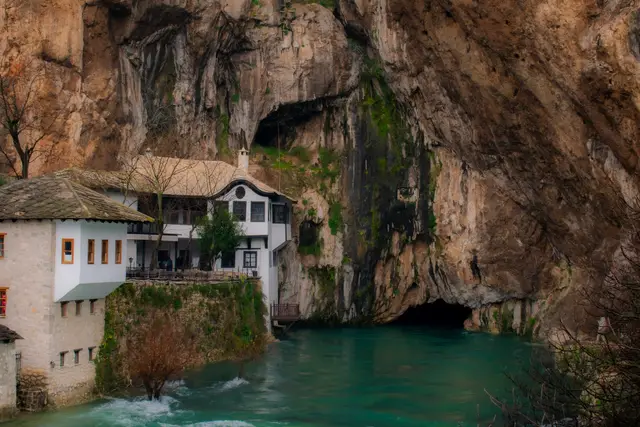
Blagaj, near Mostar, sits at the source of the River Buna. Its symbol is the 16th-century dervish tekke at the foot of the cliff right beside the spring, with the medieval Stjepan grad fortress above. A walk along the Buna and traditional Herzegovinian food make it a good short trip.
Tickets and booking
No booking is needed for this destination.
Source: Hersek-Neretva Kantonu Turizm Birliği · last checked 2026-10-22
Tips
Transport to Blagaj and the tekke's hours and fee were not available from an official source; keep the visit short so you don't miss your train back.
Day 3 · 5
Evening train back to Sarajevo
Fast train 722 leaves Čapljina at 16:42 and reaches Sarajevo at 19:07, passing Mostar a little after it leaves Čapljina. Check the Mostar departure time at the station or with ŽFBH.
Getting there
- Train · Mostar → Saraybosna
Getting there
Čapljina–Sarajevo fast train 722: Čapljina 16:42, Sarajevo 19:07 (2025/2026 timetable).
Source: Željeznice Federacije BiH · last checked 2026-10-22


Getting around
Getting there
The Federation Railways' 2025/2026 timetable has two fast trains from Sarajevo to Čapljina: 723 (07:15–09:40) and 721 (16:46–19:18). In the other direction, 722 leaves Čapljina at 16:42 and reaches Sarajevo at 19:07. Mostar is an intermediate stop on this line; the table does not list intermediate times, so check the Mostar departure and arrival times with ŽFBH before you travel.
Source: Željeznice Federacije BiH · last checked 2026-10-22
Entrance fee
Sarajevo public transport (GRAS): single ticket for tram, trolleybus, bus and minibus 2.20 KM; day ticket 7.10 KM; child tram and trolleybus ticket 1.10 KM. Tickets are sold at GRAS kiosks, including Baščaršija and Ilidža.
Source: KJKP GRAS Sarajevo · last checked 2026-10-22
Good to know
Türkiye and Bosnia and Herzegovina have a visa waiver: Turkish citizens, including holders of ordinary passports, can enter without a visa for up to 90 days in any 180.
Source: T.C. Dışişleri Bakanlığı · last checked 2026-10-22
Good to know
Emergency numbers (Herzegovina-Neretva Canton Tourist Board): police 122, fire brigade 123, ambulance 124, civil protection 121. Contact and duty numbers for Türkiye's Embassy in Sarajevo and Consulate General in Mostar are on the Turkish Foreign Ministry's mission pages.
Source: Hersek-Neretva Kantonu Turizm Birliği · last checked 2026-10-22
Good to know
Türkiye's Embassy in Sarajevo: Vilsonovo Šetalište bb, 71000 Sarajevo; the duty phone is for emergencies such as illness and accidents only.
Source: T.C. Saraybosna Büyükelçiliği · last checked 2026-10-22
What and where to eat
Recommended places
Mrkva
Baščaršija, BravadžilukĆevapi (ćevabdžinica)Near a stop on this plan
On Visit Sarajevo's list of ćevabdžinice. Visit Sarajevo describes Bravadžiluk as the street of ćevapi and pie shops; it fits lunch on day one.
Source: Visit Sarajevo (Saraybosna Kantonu Turizm Birliği) · Official tourism source · last checked 2026-10-22
Hodžić
Baščaršija, BravadžilukĆevapi (ćevabdžinica)
On Visit Sarajevo's list of ćevabdžinice, on the same street at the heart of Baščaršija's ćevapi tradition.
Source: Visit Sarajevo (Saraybosna Kantonu Turizm Birliği) · Official tourism source · last checked 2026-10-22
Aščinica Hadžibajrić
Baščaršija, Čurčiluk velikiTraditional cook-shop (aščinica)Near a stop on this plan
On Visit Sarajevo's list of restaurants and cook-shops. Stewed dishes such as japrak, bosanski lonac and sogan dolma, which Visit Sarajevo recommends, are what cook-shops serve; handy for lunch on day two.
Source: Visit Sarajevo (Saraybosna Kantonu Turizm Birliği) · Official tourism source · last checked 2026-10-22
Aščinica ASDŽ
Baščaršija, Mali ČurčilukTraditional cook-shop (aščinica)
On Visit Sarajevo's list of restaurants and cook-shops, inside Baščaršija and close by on the evening of day one or two.
Source: Visit Sarajevo (Saraybosna Kantonu Turizm Birliği) · Official tourism source · last checked 2026-10-22
What to eat and where to look
Traditional Herzegovinian cooking
Mostar's old town and Blagaj on the Buna (lunch on day three)
Source: Hersek-Neretva Kantonu Turizm Birliği · last checked 2026-10-22
Local specialities
Bosnian coffee
According to Visit Sarajevo, the day in Sarajevo starts with a cup of coffee, the backbone of the city's social life; traditional Bosnian coffee is served mainly in Baščaršija.
Source: Visit Sarajevo (Saraybosna Kantonu Turizm Birliği) · Official tourism source · last checked 2026-10-22
Ćevapi and pita (pies)
Visit Sarajevo names Baščaršija as the place for traditional ćevapi and pies.
Source: Visit Sarajevo (Saraybosna Kantonu Turizm Birliği) · Official tourism source · last checked 2026-10-22
Japrak, bosanski lonac, klepe and sogan dolma
Traditional dishes Visit Sarajevo recommends: stuffed vine leaves (japrak), Bosnian pot stew (bosanski lonac), minced-meat dumplings (klepe), okra and stuffed vegetables (sogan dolma).
Source: Visit Sarajevo (Saraybosna Kantonu Turizm Birliği) · Official tourism source · last checked 2026-10-22
Baklava, kadayif, tufahija and hurmašice
Homemade desserts Visit Sarajevo mentions; tufahija is a poached stuffed apple and hurmašice a buttery biscuit.
Source: Visit Sarajevo (Saraybosna Kantonu Turizm Birliği) · Official tourism source · last checked 2026-10-22
Opening hours and prices vary by venue; check the venue’s own site before you go. Recommendations are not paid placements.
Where to stay
Candidates were picked by distance to the area, star rating, guest rating (weighted by number of reviews) and completeness of hotel details. Ratings, review counts and details come live from our catalogue. Tiers follow the star rating.
Sample dates: 26.11–28.11 (2 nights), 2 adults. Prices change with dates; choose your own dates on the hotel page.
Baščaršija – Stari Grad
All of day one's stops (the Sebilj, the Gazi Husrev-beg Mosque, Bravadžiluk, the Latin Bridge, the City Hall) are within walking distance, and GRAS sells public transport tickets at its Baščaršija kiosk.
Good for: First-timers and travellers interested in Ottoman heritage
Budget


Mid-range


Ferhadija – Marijin Dvor
Austro-Hungarian-era streets; Baščaršija is a walk away, and the tram links it to the railway station and the western districts.
Good for: Families and travellers who want quieter evenings
Budget


Mid-range


Photos: Pexels (UMA media, Melike Sayar Melikesayar, papatyayameftun, Emirhan Emiroğlu, Matea Gvozdenović, Abdullah Karataş)
