Self-guided itinerary · free
Tokyo in 5 days: Asakusa, Ueno, the palace gardens and Meiji Jingu
Five days in Tokyo, spread over five neighbourhood clusters linked by rail: Senso-ji and Skytree in Asakusa; the Tokyo National Museum and the streets of Nezu and Yanaka in Ueno; the East Gardens of the Imperial Palace and Ginza; Meiji Jingu with Harajuku and Shibuya; and on the last day Shinjuku Gyoen and Shinjuku. Because the closing days overlap, start the plan on a Tuesday: the East Gardens are closed on Mondays and Fridays, and the Tokyo National Museum and Shinjuku Gyoen on Mondays, so a Tuesday start puts each of these stops on an open day. Deposit-free visitor IC cards make getting around the city easier.
Prepared by: Kolay Seyahat content teamLast updated 22/10/2026Every fact links to an official source

This is not a package tour. This itinerary is free information. Flights, hotels and experiences are each sold separately, under their own seller’s terms, with separate payment and a separate contract. Prices are never linked to one another.
Day by day
Progress is saved on this device only. Your location is never sent.
Day 1 · Asakusa and Tokyo Skytree
Explore old Asakusa and the gates and halls of Senso-ji early in the morning, go up Skytree's observation levels in the afternoon and end the day by the Sumida River.
Day 1 · 1 · 08:30–09:00
Kaminarimon Gate
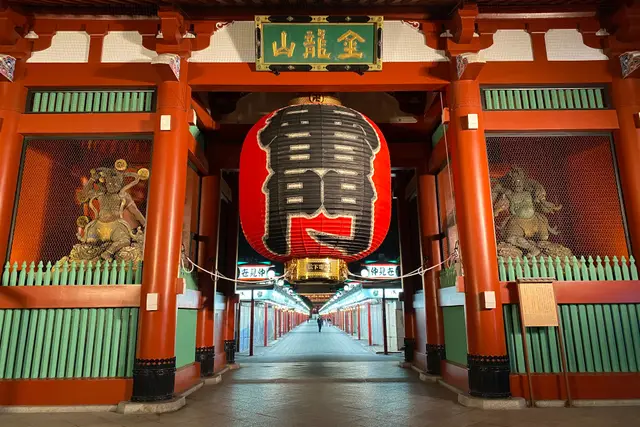
Come to Asakusa early in the morning, before the crowds. Kaminarimon, the main gate of Senso-ji, is flanked by statues of Fujin, the god of wind, and Raijin, the god of thunder. The gate burned down in a fire in 1865; the present structure was rebuilt in 1960 with a donation from Konosuke Matsushita, the founder of Matsushita Electric (today's Panasonic). Beyond the gate begins Nakamise, the street that leads to the temple.
Getting there
- Walk
Tips
The area in front of the gate is quieter for photos early in the morning.
Day 1 · 2 · 09:00–10:30
Senso-ji: Nakamise, Hozomon, the Main Hall and the Five-Storied Pagoda
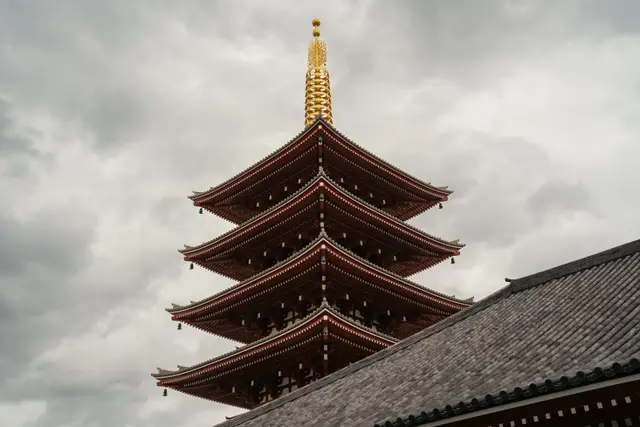
The story of Senso-ji goes back to 628, when a statue of Kannon was caught in a fishing net in the Sumida River; the temple welcomes millions of visitors every year. Walk along Nakamise and pass through Hozomon gate. The Main Hall (Kannondo) was destroyed in the Tokyo air raid of 10 March 1945 and rebuilt in 1958; the Five-Storied Pagoda also burned in 1945 and was rebuilt in 1973. This is a place of worship, so keep your voice down and be respectful.
Getting there
- Walk
Good to know
Its founding story goes back to 628. The Main Hall was destroyed in the air raid of 10 March 1945 and rebuilt in 1958; the Five-Storied Pagoda, first built in 942, burned in 1945 and was rebuilt in 1973; the present Hozomon dates from 1964 and Kaminarimon from 1960.
Source: Sensō-ji · last checked 2026-10-22
Tips
The temple's website does not list hours for the grounds or the Main Hall; check the official site before you go.
Day 1 · 3 · 13:30–16:00
Tokyo Skytree: Tembo Deck and Tembo Galleria
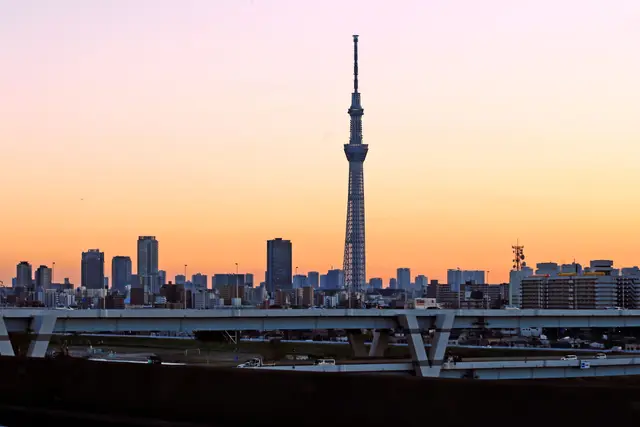
After lunch, take a short train ride from Asakusa to Tokyo Skytree in Oshiage. The entrance is on the 4th floor, and there are two viewing levels: the Tembo Deck on floors 340–350 and the Tembo Galleria on floors 445–450. On a clear day you can see the Sumida River, the roofs of Asakusa and the city stretching into the distance. Go up close to sunset and you can come down as the city lights come on.
Getting there
- Train TOBU SKYTREE / Hanzomon · Asakusa → Oshiage
Getting there
Right next to Oshiage Station; about 5 minutes from Asakusa and about 20 minutes from Tokyo Station. Take the TOBU SKYTREE Line to Tokyo Skytree Station or the Hanzomon Line to Oshiage (Skytree-mae).
Source: Tokyo Skytree · last checked 2026-10-22
Good to know
Observation levels: Tembo Deck (floors 340, 345 and 350) and Tembo Galleria (floors 445 and 450); entrance on the 4th floor.
Source: Tokyo Skytree · last checked 2026-10-22
Tips
Opening hours can change without notice and last entry is one hour before closing; check current hours and tickets on the official site.
Day 1 · 4 · 16:30–18:30
The Sumida riverside and an evening in Asakusa
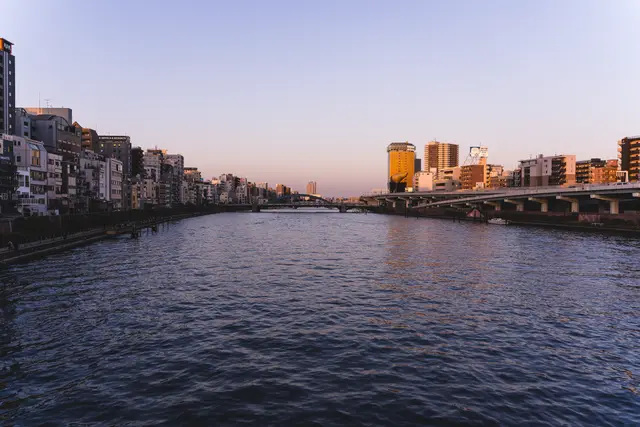
After Skytree, head back to Asakusa and walk along the Sumida River. In the evening light you see the river, its bridges and the tower on the far bank together. You can end the day with dinner in the backstreets of Asakusa.
Getting there
- Walk
Tips
This is an unstructured walk; the riverside paths are public.


Day 2 · Ueno and Nezu–Yanaka
The Tokyo National Museum in the morning, then the old-Tokyo streets of Nezu and Yanaka in the afternoon. The museum is closed on Mondays, so this day should not be a Monday.
Day 2 · 1 · 09:30–13:00
Tokyo National Museum (TNM)
ClosedBooking recommended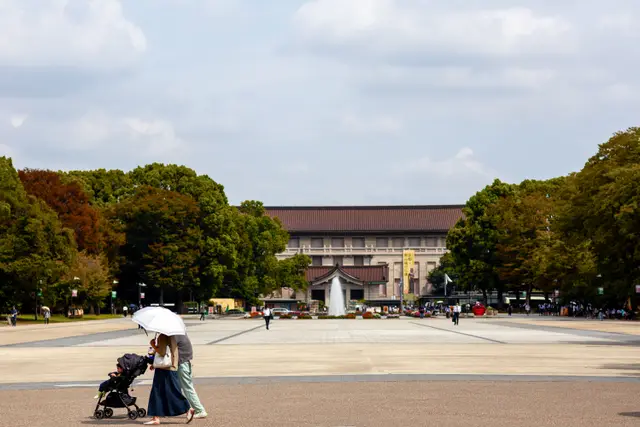
Start the day at opening time at the Tokyo National Museum, at the north end of Ueno Park. The Honkan shows Japanese art, the Toyokan the Asian collections and the Gallery of Horyuji Treasures temple treasures; seeing them without rushing takes half a day. There is a metal detector and bag check at the main gate, and suitcases are not allowed. The museum is closed on Mondays, so this day should not fall on a Monday.
Getting there
- Train JR · Ueno
- Walk · 10 min
Getting there
About a 10-minute walk from JR Ueno or Uguisudani; about 15 minutes from Ueno on the Ginza/Hibiya lines; about 15 minutes from Nezu on the Chiyoda Line; entry through the main gate, no parking.
Source: Tokyo Ulusal Müzesi · last checked 2026-10-22
Opening hours
09:30–17:00; Fridays, Saturdays and Sundays before a public holiday 09:30–20:00; last entry 30 minutes before closing. Special exhibitions may keep different hours.
Source: Tokyo Ulusal Müzesi · last checked 2026-10-22
Closed
Mondays (open if a public holiday, then closed the following day); 26–31 December 2026.
Source: Tokyo Ulusal Müzesi · last checked 2026-10-22
Entrance fee
Collection exhibitions: adults 1,000 yen, university students 500 yen; free for under-18s and over-70s (with proof of age). Online tickets are valid for 2 months from purchase.
Source: Tokyo Ulusal Müzesi · last checked 2026-10-22
Tips
At busy times the ticket queue can exceed 30 minutes; the museum recommends buying online. It stays open late on Friday and Saturday evenings.
Day 2 · 2 · 14:15–16:30
Ueno Park and the streets of Nezu and Yanaka
Spend the afternoon walking from the museum along the park's tree-lined paths and then through the low-rise streets of Nezu and Yanaka. These neighbourhoods show the quieter side of old Tokyo: small shops, temple gardens and narrow lanes. There is no set route; wandering without a map is part of the day.
Getting there
- Walk
Tips
Follow visiting rules when entering temple grounds and keep out of private property.

Day 3 · The Imperial Palace East Gardens and Ginza
The free East Gardens in the morning, then the area around Tokyo Station and Ginza in the afternoon. The gardens are closed on Mondays and Fridays, so this day must not fall on either.
Day 3 · 1 · 09:00–11:30
East Gardens of the Imperial Palace
Closed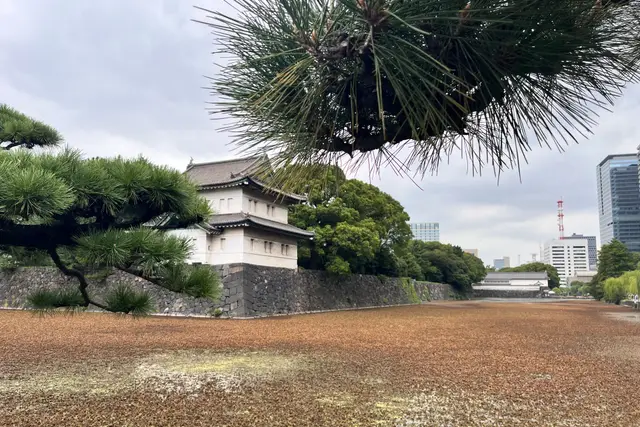
Start the day at the East Gardens of the Imperial Palace, entering through Ote-mon gate. The gardens are open to the public free of charge; you walk among the stone walls, moats and wide lawns of the former castle grounds. The gardens are closed on Mondays and Fridays, so this day is placed on a Thursday in the plan. It is recommended to leave large luggage in a station locker or at your hotel.
Getting there
- Walk
Opening hours
1 March–14 April 09:00–17:00 (entry until 16:30); 15 April–31 August 09:00–18:00 (17:30); September 09:00–17:00 (16:30); October 09:00–16:30 (16:00); 1 November–end of February 09:00–16:00 (15:30).
Source: İmparatorluk Hanedanı Ajansı (Kunaicho) · last checked 2026-10-22
Closed
Every Monday and Friday (open on public holidays except 23 February); if Monday is a holiday, closed the following Tuesday; 28 December–3 January; and during palace events.
Source: İmparatorluk Hanedanı Ajansı (Kunaicho) · last checked 2026-10-22
Entrance fee
Admission is free. Entry/exit gates: Ote-mon, Hirakawa-mon and Kitahanebashi-mon.
Source: İmparatorluk Hanedanı Ajansı (Kunaicho) · last checked 2026-10-22
Tips
From November to February the gardens close earlier, so make them your first stop of the morning. There is a free audio-guide app.
Day 3 · 2 · 13:30–17:00
Around Tokyo Station and Ginza
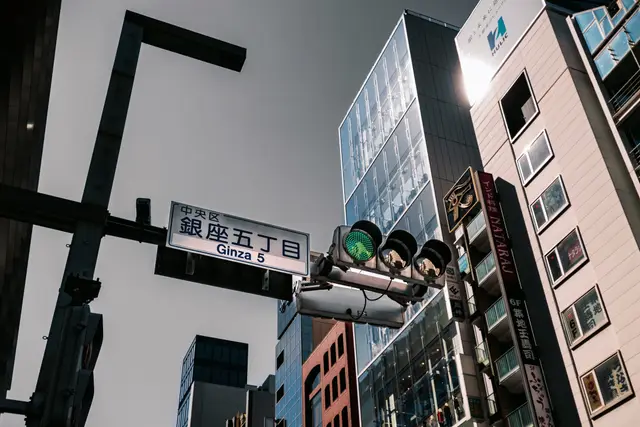
After lunch on the Yaesu side of Tokyo Station, walk over to Ginza. The afternoon is free: wander at your own pace among its wide avenues, shops and galleries. You can also have dinner in Ginza.
Getting there
- Walk
Tips
Some streets may be closed to traffic at weekends, which makes walking easier.


Day 4 · Meiji Jingu, Harajuku and Shibuya
A morning on the forest paths of Meiji Jingu, which is open every day, then Harajuku, Omotesando and Shibuya into the evening.
Day 4 · 1 · 08:00–10:00
Meiji Jingu
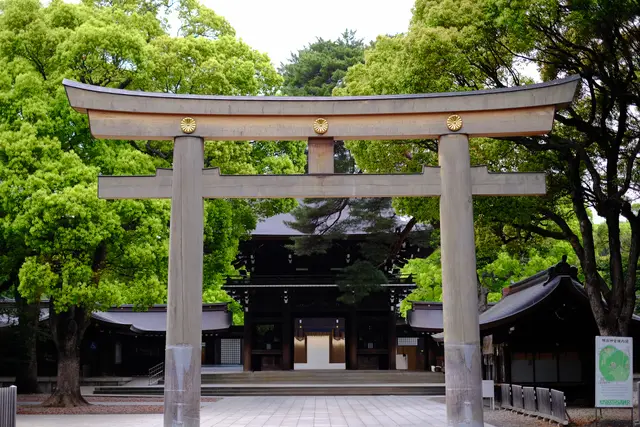
Start the day at the broad, forest-lined entrance of Meiji Jingu. The shrine is open every day of the year, opening at sunrise and closing at sunset, and there is no admission fee. After walking from the station to the entrance gate, allow at least 10 more minutes to reach the main buildings. It is a place of worship, so walk quietly and follow the rules. It does not matter if this day falls on a Friday.
Getting there
- Walk
Getting there
In addition to the walk from the station to the gate, allow at least 10 minutes from the entrance to the main buildings; motorcycles and bicycles are not allowed; wheelchairs are available at the entrance.
Source: Meiji Jingu · last checked 2026-10-22
Opening hours
Open every day of the year from sunrise to sunset, e.g. 05:40–16:40 in October, 06:10–16:10 in November and 06:40–16:00 in December. Some facilities inside keep shorter hours.
Source: Meiji Jingu · last checked 2026-10-22
Entrance fee
Admission is free.
Source: Meiji Jingu · last checked 2026-10-22
Tips
Bicycles and motorcycles are not allowed in the grounds, and some facilities inside keep shorter hours; see the official site for details.
Day 4 · 2 · 10:00–12:00
Harajuku and Omotesando
Leave the shrine and walk into Harajuku. On one side are the narrow streets known for youth street fashion, on the other the tree-lined Omotesando avenue. That two such different neighbourhoods sit so close together is one of the most striking things about Tokyo.
Getting there
- Walk
Tips
The streets get very crowded at weekends; mornings are calmer.
Day 4 · 3 · 14:00–18:00
Shibuya
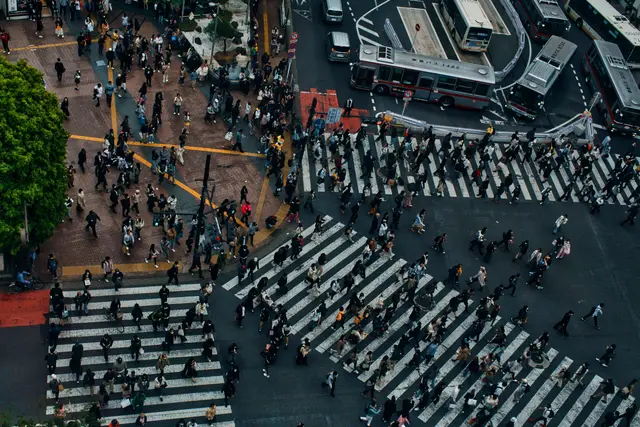
In the afternoon, walk on to Shibuya and spend the rest of the day here at your own pace. You can look down on the famous crossing from one of the surrounding buildings, then explore the side streets for dinner.
Getting there
- Walk
Tips
The crossing is at its busiest in the evening; keep an eye on your bag.


Day 5 · Shinjuku Gyoen and Shinjuku
The gardens of Shinjuku Gyoen in the morning, Shinjuku in the afternoon and evening. The garden is closed on Mondays (except during the cherry blossom season and the chrysanthemum exhibition).
Day 5 · 1 · 09:00–12:00
Shinjuku Gyoen National Garden
Closed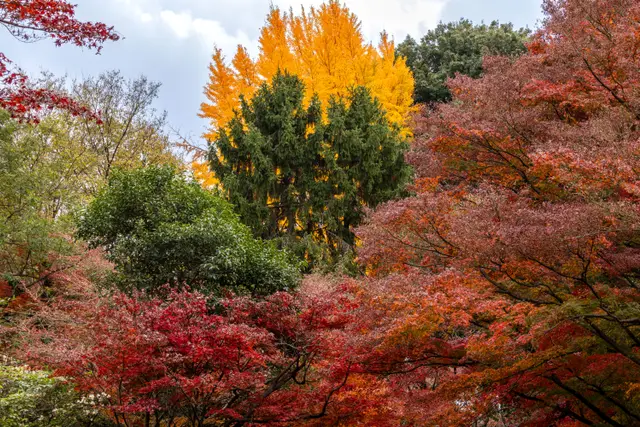
Open your last day at Shinjuku Gyoen. In this national garden run by Japan's Ministry of the Environment, Japanese, English and French gardens sit side by side with a greenhouse. During the cherry blossom season and the early-November chrysanthemum exhibition the garden opens every day; at other times it is closed on Mondays, which is why this day is placed on a Saturday.
Getting there
- Walk
Opening hours
15 March–30 September 09:00–18:00 (last entry 17:30); 11 June–31 July 09:00–19:00 (18:30); 1 October–14 March 09:00–16:30 (16:00).
Source: Japonya Çevre Bakanlığı · Shinjuku Gyoen · last checked 2026-10-22
Closed
Mondays (if a holiday, the next working day); 29 December–3 January. Open every day during the cherry blossom season (25 March–24 April) and the Chrysanthemum Exhibition (1–15 November).
Source: Japonya Çevre Bakanlığı · Shinjuku Gyoen · last checked 2026-10-22
Entrance fee
Adults 500 yen; over-65s 250 yen; students (16 and over) 250 yen; free for 15 and under. Transport IC cards are accepted at the entrances.
Source: Japonya Çevre Bakanlığı · Shinjuku Gyoen · last checked 2026-10-22
Good to know
Alcohol, animals (except assistance dogs), drones, large carts and some play equipment are prohibited.
Source: Japonya Çevre Bakanlığı · Shinjuku Gyoen · last checked 2026-10-22
Tips
Alcohol, drones and pets (except assistance dogs) are not allowed. You can pay at the entrance with a transport IC card.
Day 5 · 2 · 14:00–18:00
Shinjuku
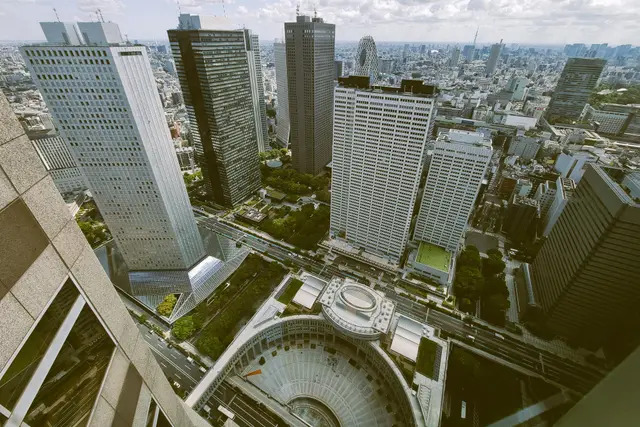
In the afternoon, walk from the garden into central Shinjuku and spend your last hours at leisure. With its skyscrapers, the area around its huge station and its evening lights, Shinjuku shows the city's busiest side after the programme's quiet start. You can have your farewell dinner here.
Getting there
- Walk
Tips
Opening hours and availability of the Tokyo Metropolitan Government Building's observation deck could not be verified; check the official site before you go.


Getting around
Getting there
Haneda (HND) is about 30 minutes from central Tokyo by train. The Keikyu Line runs from all three terminals to Shinagawa in about 20 minutes; the Tokyo Monorail reaches Hamamatsucho in about 20 minutes, with a change there for the Yamanote Line. A free shuttle links the terminals; Terminal 3 is international.
Source: JNTO (Japonya Ulusal Turizm Örgütü) · last checked 2026-10-22
Getting there
Narita (NRT): the Narita Express reaches Tokyo Station in a little under an hour, with about two trains an hour during the day, and also serves Shinagawa, Shibuya, Shinjuku, Ikebukuro and Yokohama. The Keisei Skyliner reaches Nippori and Ueno in about 40 minutes (it is not JR, so the Japan Rail Pass is not valid).
Source: JNTO (Japonya Ulusal Turizm Örgütü) · last checked 2026-10-22
Entrance fee
Most IC cards require a 500-yen deposit; visitor cards such as Welcome Suica and TOURIST PASMO have no deposit.
Source: JNTO (Japonya Ulusal Turizm Örgütü) · last checked 2026-10-22
Good to know
Under the Turkey–Japan visa exemption agreement, Turkish citizens do not need a visa for tourist and business visits of up to 3 months; at entry you may be asked about the purpose of your visit, where you will stay and how much money you are carrying. Overstaying the 3-month limit leads to deportation.
Source: T.C. Dışişleri Bakanlığı · last checked 2026-10-22
Good to know
JNTO advises carrying your passport as ID at all times. Smoking is banned outside designated areas in most restaurants and bars, and smoking while walking in big cities can lead to a fine. There is zero tolerance for drug offences.
Source: JNTO (Japonya Ulusal Turizm Örgütü) · last checked 2026-10-22
Good to know
Turkish Embassy in Tokyo: 2-33-6 Jingumae, Shibuya-ku, Tokyo 150-0001; tel. (+81-3) 6439-5700; consular application hours 09:00–12:00 and 13:00–16:00.
Source: T.C. Tokyo Büyükelçiliği · last checked 2026-10-22
What and where to eat
Recommended places
Asakusa Hirayama
Asakusa (Nishiasakusa)Soba
MICHELIN Guide Bib Gourmand; the calligraphy on its curtain is by the chef's grandmother, a calligraphy teacher. A good fit for lunch on day one.
Source: MICHELIN Guide · MICHELIN Guide · last checked 2026-10-22
wokotote
NezuJapanese (kaiseki-based)
MICHELIN Guide Bib Gourmand; a kaiseki-trained chef offers omakase and set menus with à la carte additions. A good fit for lunch on day two.
Source: MICHELIN Guide · MICHELIN Guide · last checked 2026-10-22
Yaesu Unagi Hashimoto
Tokyo Station (Yaesu)Unagi (eel)
MICHELIN Guide Bib Gourmand; the fourth-generation chef continues the founder's view of eel as a nourishing food. A good fit for lunch on day three.
Source: MICHELIN Guide · MICHELIN Guide · last checked 2026-10-22
Chukasoba Ginza Hachigou
GinzaRamen
MICHELIN Guide Bib Gourmand; the chef brings a French-cooking background to Chinese-style soba, which the guide calls "a full course in a bowl".
Source: MICHELIN Guide · MICHELIN Guide · last checked 2026-10-22
BRAMASOLE
Jingumae (Harajuku)Italian
MICHELIN Guide Bib Gourmand; the chef cooks recipes learned in different regions of Italy. A good fit for lunch on day four.
Source: MICHELIN Guide · MICHELIN Guide · last checked 2026-10-22
Shokudo Wata
ShinjukuJapanese (izakaya)
MICHELIN Guide Bib Gourmand; a casual, everyday izakaya run by a chef trained in Japanese cuisine. A good fit for dinner on day five.
Source: MICHELIN Guide · MICHELIN Guide · last checked 2026-10-22
Local specialities
Washoku
The traditional dietary cultures of the Japanese, notably for the celebration of New Year, were inscribed on UNESCO's Representative List of the Intangible Cultural Heritage of Humanity in 2013.
Source: UNESCO · UNESCO intangible cultural heritage · last checked 2026-10-22
Monjayaki
According to JNTO, a working-class dish said to have originated in Tokyo's old shitamachi districts; a batter of flour, sauce and dashi is cooked by diners themselves on a hotplate at the table.
Source: JNTO (Japonya Ulusal Turizm Örgütü) · Official tourism source · last checked 2026-10-22
Fukagawa-don
According to JNTO, a dish from the old Fukagawa fishing community: asari clams simmered in soy sauce and sugar, served over rice.
Source: JNTO (Japonya Ulusal Turizm Örgütü) · Official tourism source · last checked 2026-10-22
Opening hours and prices vary by venue; check the venue’s own site before you go. Recommendations are not paid placements.
Where to stay
Candidates were picked by distance to the area, star rating, guest rating (weighted by number of reviews) and completeness of hotel details. Ratings, review counts and details come live from our catalogue. Tiers follow the star rating.
Sample dates: 26.11–30.11 (4 nights), 2 adults. Prices change with dates; choose your own dates on the hotel page.
Asakusa – Ueno
Day one and day two are based here; the Keisei Skyliner links Ueno with Narita, and Skytree is a short train ride away.
Good for: Families, travellers who want a traditional feel and those arriving at Narita
Budget


Mid-range


Tokyo Station – Ginza
The East Gardens and Ginza are within walking distance, and the Narita Express connects to Tokyo Station.
Good for: First-time visitors and those who want central transport links
Budget


Mid-range


Shinjuku
Shinjuku Gyoen and day five are here; it is close to Meiji Jingu, and the Narita Express also serves Shinjuku.
Good for: Travellers who want nightlife and shopping
Budget


Mid-range


Photos: Pexels (Rin Gakusho, Yumiko Yamanaka, Iban Lopez Luna, Jeffry Surianto, Szymon Shields, Mauricio Ortiz, Grace Chen, NHP&Co, Vinny Anugraha, Travel with Lenses, Emiliano Lara, Francesco Albanese)
